
Russia’s Former Transport Minister Dies by Suicide Hours After Dismissal

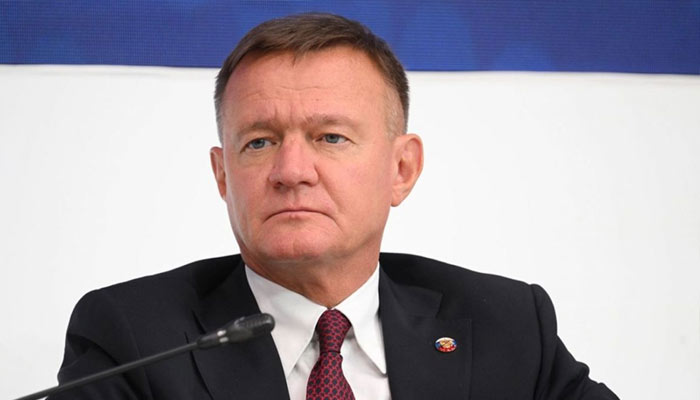
Russia’s Former Transport Minister Dies by Suicide Hours After Dismissal.
Roman Starovoit, Russia’s former Transport Minister and ex-governor of the Kursk region, died by suicide on Monday, just hours after President Vladimir Putin formally dismissed him from his ministerial post.
According to Russian media reports, Starovoit shot himself in a suburb of Moscow. The Investigative Committee later confirmed that his body was found in his vehicle. No official motive has been provided for the apparent suicide.
Starovoit had held the position of transport minister since May 2024, following nearly five years as the governor of the Kursk region, which shares a border with Ukraine. His abrupt dismissal was announced via a presidential decree published on Russia’s official legal information portal, though it offered no explanation for the decision.
The Kremlin quickly named Andrei Nikitin, former governor of Novgorod, as the acting transport minister. When questioned about the sudden change in leadership, Kremlin spokesperson Dmitry Peskov stated that President Putin believed Nikitin’s “professional qualities and experience” were best suited to lead the ministry at this time.
Behind the Dismissal
Though the Kremlin offered no formal reason for Starovoit’s removal, sources within the transport sector told Reuters that the leadership change had been in the works well before last month’s St. Petersburg International Economic Forum. The move comes amid growing disruptions in Russia’s transportation sector, including the grounding of nearly 300 flights on July 5–6 due to drone-related security threats at several major airports, and an explosion aboard a tanker at Ust-Luga port that caused an ammonia leak and emergency response.
However, officials familiar with internal discussions suggested that Starovoit’s troubles may have extended beyond his ministerial performance. His previous tenure as governor of the Kursk region had come under scrutiny following corruption investigations involving local officials. Some were arrested on charges of abuse of office, and in April 2025, his successor, Alexei Smirnov, was charged with embezzling defence funds.
Complicating his legacy further, Starovoit’s departure from Kursk came just months before Ukrainian forces launched a significant cross-border incursion into the region—the largest military incursion onto Russian soil since World War II. Though Russian forces eventually regained control, the breach had raised questions about regional governance and security preparedness.
Starovoit’s death now adds a tragic chapter to an already turbulent period in Russia’s domestic political and security landscape.
Comments are closed.