

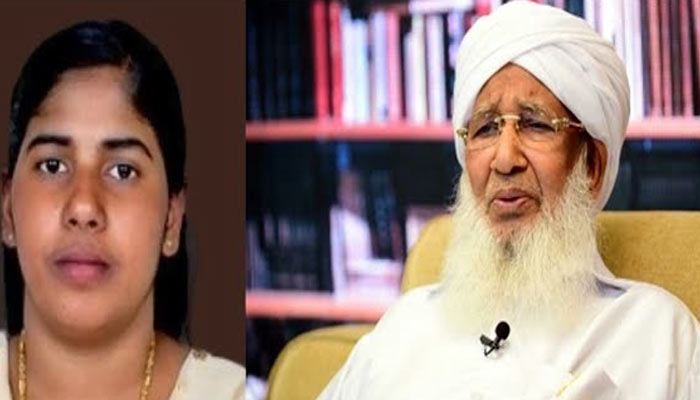
Grand Mufti’s Intervention Delays Execution of Kerala Nurse in Yemen.
Sheikh Abubakr Ahmad, the Grand Mufti of India, has emerged as a key figure in halting — at least temporarily — the execution of Kerala nurse Nimisha Priya in Yemen. Priya, sentenced to death for the 2017 killing of a Yemeni national, was granted a critical four-hour delay after high-level religious intervention.
According to sources, Sheikh Abubakr reached out to influential Yemeni scholar Sheikh Umar bin Hafiz, urging him to appeal to the victim’s family. In response, Sheikh Umar dispatched his students to initiate dialogue. The family agreed to pause the execution, providing Priya’s legal team with a narrow window to seek further relief or negotiate a blood money settlement.
Who Is Sheikh Abubakr Ahmad?
Known formally as the Grand Mufti of India, Sheikh Abubakr Ahmad is a respected Islamic scholar from Kerala. Though the title is not state-sanctioned, it holds significance in India’s Sunni (Barelvi) community. He was given the title in 2019 by the All India Tanzeem Ulama-e-Islam.
Sheikh Abubakr leads Markaz Knowledge City, an education and cultural complex in Kozhikode, and is active on global Islamic platforms. His religious opinions (fatwas) influence followers across South Asia and the Gulf.
Significance of His Intervention
This is the first notable religious intervention in Priya’s high-profile case. While Indian authorities have limited diplomatic leverage in Yemen due to the ongoing civil conflict, the Mufti’s appeal to religious networks has opened a parallel channel of negotiation.
The case hinges on Yemen’s “blood money” law, which allows a death sentence to be commuted if the victim’s family accepts compensation. However, the amount being demanded — reportedly over ₹2 crore — remains a major hurdle for Priya’s family and supporters.
Controversies and Influence
While widely respected, Sheikh Abubakr has also faced criticism for conservative remarks — including during the anti-CAA protests, where he discouraged women’s participation in public demonstrations. Despite such controversies, his recent involvement in Priya’s case has been viewed as a positive step by many, particularly in Kerala.
As efforts intensify to secure a permanent stay on Priya’s execution, the Grand Mufti’s outreach may prove crucial — not through diplomatic pressure, but through cultural and religious influence.
Comments are closed.