

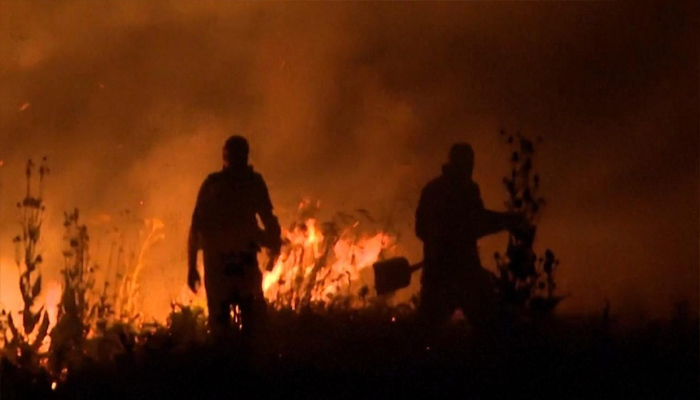
A scorching heatwave has gripped parts of Europe, pushing temperatures as high as 43°C in southern France and raising wildfire risks across the region.
Bulgaria experienced wildfires along its southern borders, while Hungary recorded record-breaking weekend temperatures. Europe is warming faster than any other continent, with land temperatures now about 2.3°C above pre-industrial levels—nearly double the global average. This trend has intensified heatwaves, and 2025 is forecasted to be one of the warmest years on record.
The EU’s Copernicus climate service reports that the area burned by wildfires this summer is well above average, with major fires in Spain, Portugal, and deadly blazes in Greece since June. The UK Met Office predicts a fourth heatwave this summer, with temperatures reaching around 33°C in London by Tuesday. The UK Health Security Agency issued a yellow alert, urging caution for older adults and people with health issues.
In France’s Aude region, firefighters continue to battle a massive wildfire that scorched 16,000 hectares of vineyards and scrubland last week. Though under control, hotspots remain and could reignite, with full containment expected to take weeks.
Météo-France has issued red alerts—the highest level—in 12 departments stretching from the Atlantic coast to the Mediterranean, with 41 additional departments on orange alert. The neighboring microstate of Andorra is also affected.
Agricultural climatologist Serge Zaka called the situation “a nightmare,” stressing that such extreme heat is far from normal. Residents have been closing shutters and avoiding outdoor spaces, leaving cafes and streets unusually empty.
Since its creation in 2004 after a deadly heatwave, France’s red alert is reserved for extreme, prolonged heatwaves that pose serious health risks and disrupt daily life. The alert allows authorities to cancel outdoor events, close public places, and adjust school and camp schedules to protect people.
Comments are closed.