
Air India Dreamliner Mid-Air Scare Rekindles Memories of Fatal AI 171 Crash

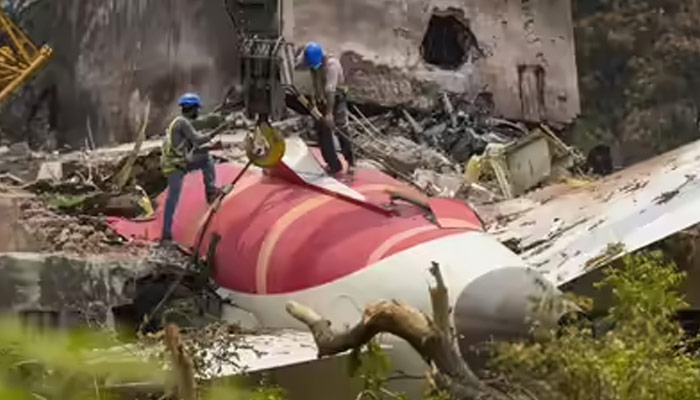
The recent mid-air scare involving the Air India Boeing 787-8 Dreamliner flying from Amritsar to Birmingham.
Which unexpectedly deployed its Ram Air Turbine (RAT) before landing, has reignited chilling memories of the AI 171 crash in Ahmedabad, which claimed 274 lives earlier this year.
Eerie Similarities
Both incidents involved the same aircraft model and the same airline, with the RAT deploying either shortly after takeoff or just before landing, highlighting a striking resemblance. The RAT is an emergency device that provides electrical and hydraulic power if both engines fail.
In Saturday’s case, all electrical and hydraulic systems were reported normal, and the plane made a safe landing in Birmingham. No engine failure was detected, leaving the reason for RAT deployment unclear. The aircraft has been grounded for thorough inspections, and all passengers are reported safe.
How the RAT Works
The RAT, considered the plane’s last lifeline, deploys from the underside of the aircraft when both engines fail. Seconds before the AI 171 crash, the RAT had deployed, a detail captured in viral footage shot from a nearby rooftop. Aviation experts, analyzing audio and visual cues, confirmed its deployment shortly after takeoff.
Former US Navy pilot Captain Steve Scheibner noted a distinct “high-pitched squeal” characteristic of RAT operation, describing it as sounding “like a Cessna going by.” He emphasized that RATs are not designed for planes flying at 400–500 feet, as there is insufficient time to restart engines or gain meaningful benefit. The AI 171, for instance, was at 625 feet before the crash.
Findings from the Interim Probe Report
The AI 171 investigation revealed that a fuel supply cutoff caused both engines to shut down, triggering the emergency mechanism. Within seconds of takeoff, the fuel control switches for both engines were moved from RUN (fuel flowing) to CUTOFF (fuel stopped), separated by just a one-second gap—a sequence that ultimately led to the deployment of the RAT.
The Birmingham incident serves as a stark reminder of the critical role of RATs and the fine line between a routine emergency deployment and a catastrophic event. Experts are now closely monitoring the investigation into why the RAT was deployed without any engine failure to prevent similar scares in the future.
Comments are closed.