

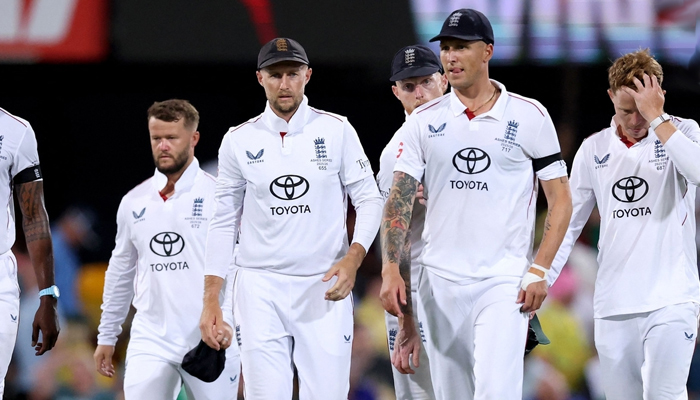
England arrived in Australia with swagger, belief and a mission. Ben Stokes and Brendon McCullum’s Bazball revolution was meant to redefine Test cricket and finally topple Australia in their own backyard.
Instead, across the first two Tests of the 2025–26 Ashes, that bold vision has been torn apart by a ruthless home side missing even their regular captain, Pat Cummins.
Bazball itself was born out of humiliation — the 0–4 drubbing under Joe Root in 2021–22. Stokes and McCullum rebuilt England’s identity with one goal: to crack the Australian code. But in Perth and Brisbane, the philosophy meant to liberate England ended up exposing them brutally.
The collapses were largely self-inflicted. In the two-day series opener, England held control before one reckless batting session destroyed them. In the Brisbane day-night Test, they were thrashed by eight wickets, spared an innings defeat only by Australia’s brief stutter.
England’s batting bravado repeatedly turned into carelessness — expansive drives, risky strokes and soft dismissals gifting wickets to Australia’s seamers. The aggression that once electrified the team has started to resemble impatience rather than intent.
Their bowling and fielding offered little relief. England’s pace unit, hyped as their potent weapon, lacked discipline and bite. Dropped catches and muddled planning compounded the damage. The Australian resistance held firm; England’s response crumbled.
McCullum admitted after the second Test that England may have “trained too much,” suggesting the squad was technically primed but mentally jaded. He stressed that clarity of mind mattered more than more hours in the nets and said the players now needed a reset before the third Test starting December 17 in Adelaide.
ENGLAND GREATS FUME AS ASHES SLIP AWAY
The backlash has been fierce. Former England captains and legends have criticised the team’s attitude, execution and blind loyalty to Bazball, calling the performances “stupid,” “brainless” and “embarrassing.” Michael Atherton (The Times) said McCullum’s talk of being “overprepared” was deliberate deflection, not an accidental comment.
Nasser Hussain (The Athletic) argued England “just aren’t playing good enough cricket,” pointing out they were outclassed even without Cummins, Hazlewood and Lyon in the second Test. Ian Botham (Triple M) didn’t hold back: “If I were an England supporter, I’d be asking for a refund. This team is not prepared. The bowlers aren’t fit or strong enough for Test cricket.”
Geoffrey Boycott (The Telegraph) delivered the harshest verdict: “They talk the talk but can’t walk the walk. With this batting and bowling, they couldn’t win an egg cup. Four years of planning? What a load of rubbish.” Michael Vaughan (The Telegraph) said English cricket hands out praise too easily, warning that “mediocrity will continue” until the system toughens up.
Mark Butcher (Wisden) noted that Australia, with a stand-in captain and multiple replacements, still prevailed through “old-school determination, technique, hard work and discipline.”
BAZBALL AT A CROSSROADS
Stokes admitted England had “not stood up under pressure” but insisted the dressing room “is not a place for weak men.” Yet the honesty of the captain’s words doesn’t mask the deeper cracks. With speedster Mark Wood ruled out of the remainder of the series and Pat Cummins returning for Australia, the gap between the two sides threatens to widen further.
Across the cricketing world, the conversation has shifted from criticism to existential doubt: can Bazball adapt and survive this reckoning, or is it now facing a collapse as dramatic as England’s own?
The philosophy once hailed as cricket’s great disruptor is suddenly fighting for legitimacy — and the architects of the movement could soon face much harsher consequences if England fail to script a miraculous turnaround in Adelaide.
Comments are closed.