

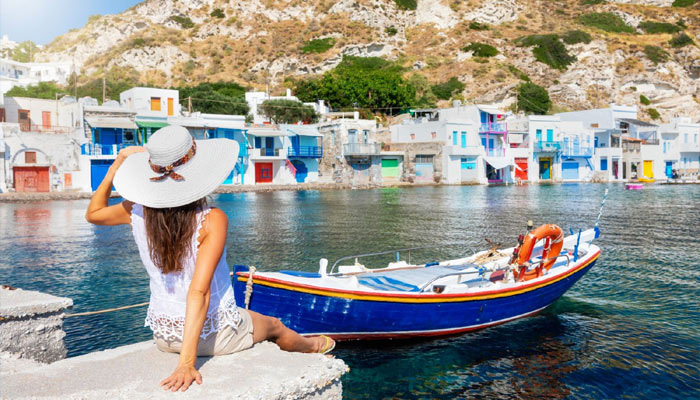
A controversial hotel expansion on the Greek island of Milos has reignited debate over rapid construction across the country’s most famous island destinations.
On a rugged stretch of Milos’s volcanic coastline, excavation work for a 59-room luxury resort extension has carved into the island’s distinctive rock formations. The project drew national attention last year, with Greece’s top administrative court temporarily suspending its building permit following public outcry.
Milos Mayor Manolis Mikelis has strongly opposed the development, arguing that the island’s unique geological landscape must be protected. Milos is internationally known not only for its dramatic terrain but also as the discovery site of the ancient statue known as the Venus de Milo.
The dispute reflects a broader trend unfolding across the Cyclades, where a tourism-driven real estate boom is reshaping traditional island scenery. Whitewashed homes and blue-domed churches — long symbols of Cycladic architecture — are increasingly overshadowed by large-scale construction projects.
In December, mayors from the Cyclades and the neighbouring Dodecanese, including major tourist hubs such as Rhodes and Kos, issued a joint resolution warning that uncontrolled development threatens the sustainability and identity of their islands.
On Santorini, one of Greece’s most visited destinations, local leaders have expressed concern that tourism growth is increasingly tied to luxury housing projects rather than carefully managed expansion. Despite its small resident population, Santorini receives millions of visitors each year, intensifying pressure on infrastructure and natural resources.
Developers maintain that projects are legally approved. V Tourism, which operates the Milos resort, has stated that its expansion secured favourable opinions from relevant authorities. Critics, however, point to planning loopholes and fast-track procedures for designated “strategic investments” as enabling excessive construction with limited oversight.
Environmentalists are also alarmed about Sarakiniko, Milos’s famed white-rock beach known for its lunar-like landscape. Despite its popularity and geological significance, the site lacks formal protection under Greek law. A separate hotel project near the area was halted last year, with authorities ordering corrective action at the site.
Beyond Milos, construction activity is accelerating. Dozens of new hotel developments are underway on the island, while hundreds of building permits have been granted across Paros and Santorini. On Mykonos, another high-profile destination, growth has remained steady, though recent visitor figures suggest a possible cooling in demand compared to previous years.
Tourism is a cornerstone of Greece’s economy, contributing a significant share of national income and drawing record visitor numbers in recent years. But the surge has also led to rising housing costs for locals, pressure on water and waste systems, and concerns that modern structures are drifting away from traditional Cycladic design.
As construction cranes continue to dot island skylines, communities across the Cyclades are grappling with how to balance economic opportunity with the preservation of landscapes that have defined the Aegean for generations.
Comments are closed.