
India Moves Closer to Indigenous Jet Engines with DRDO Test Complex Plan

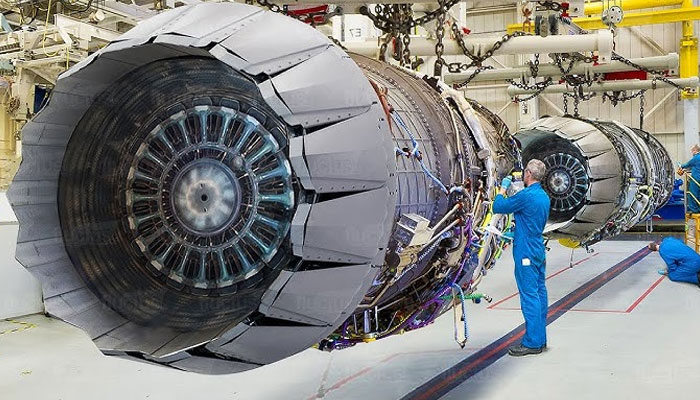
India is quietly taking a major step toward self-reliance in defence aviation by focusing on one of the most complex technologies: jet engines.
The Defence Research and Development Organisation (DRDO) has tasked its Bengaluru-based lab, the Gas Turbine Research Establishment (GTRE), with creating a National Aero Engine Test Complex, issuing a Request for Information (RFI) to both domestic and international firms to help set up the facility.
Addressing a Long-Standing Gap
For decades, India has struggled to build fully indigenous jet engines. The proposed test complex aims to remove a critical barrier in engine development: advanced testing infrastructure. DRDO is already developing an Indigenous Advanced High Thrust Class Aero Engine, and the new facility will allow engineers to test both complete engines and individual components — fans, compressors, turbines, combustors, and afterburners — under simulated real-world conditions. This includes recreating high-altitude environments, temperature extremes, and pressure variations, enabling ground testing equivalent to operations at 40,000 feet.
Lessons from the Kaveri Programme
Past programmes, like the Kaveri engine programme, faced setbacks including insufficient thrust and reliability challenges. A significant reason was the lack of world-class testing facilities within India. Even well-designed engines cannot be fully validated or refined without rigorous testing under extreme conditions.
Joining an Elite Club
Jet engine technology is one of the most demanding fields in aerospace, mastered by only a few countries — the US, UK, France, Russia, and China. Establishing a comprehensive test complex is a critical step for India toward joining that elite group and building long-term capability in aviation technology.
Reducing Strategic Dependence
Currently, India’s frontline aircraft, including the HAL Tejas, rely on engines from foreign suppliers like General Electric. While these partnerships are vital, they create dependencies that can affect upgrades, technology access, and readiness in the event of geopolitical disruptions.
Building Future Capability
The National Aero Engine Test Complex will accelerate indigenous engine development, shorten testing cycles, and improve reliability. It will be pivotal for powering next-generation fighter jets with homegrown engines, reducing reliance on imported technology, and strengthening India’s defence self-reliance.
In short, this initiative is not just about constructing a testing facility — it’s about creating the foundation for India to master one of the toughest challenges in aerospace engineering and secure the future of its military aviation.
Comments are closed.