

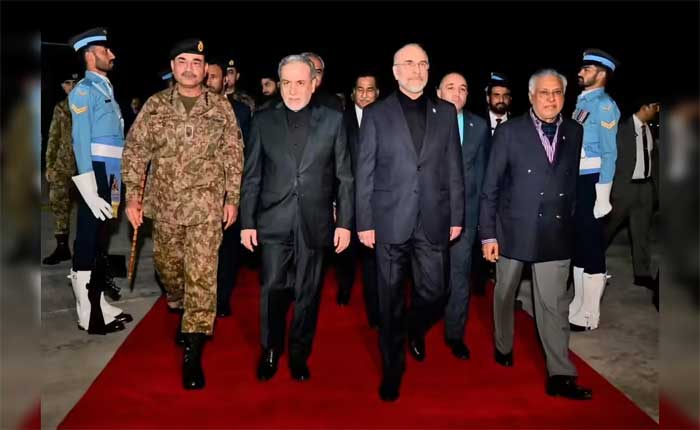
The United States and Iran were set to hold high-stakes negotiations in Islamabad on Saturday aimed at ending their six-week-long conflict, though uncertainty loomed after Tehran insisted the talks could not begin without firm commitments on Lebanon and sanctions relief.
The US delegation—led by Vice President JD Vance and including President Donald Trump’s envoy Steve Witkoff and son-in-law Jared Kushner—was en route to Pakistan after a refuelling stop in Paris. The Iranian side, headed by parliamentary Speaker Mohammad Baqer Qalibaf and Foreign Minister Abbas Araghchi, had already arrived a day earlier.
Iran sets preconditions
Qalibaf said Washington had earlier agreed to unblock Iranian assets and push for a ceasefire in Lebanon, where Israeli strikes on Iran-backed Hezbollah fighters have killed nearly 2,000 people since March. He warned that negotiations would not begin until those assurances were honoured.
While the US and Israel maintain that the Lebanon conflict is separate from Iran-US ceasefire discussions, Tehran insists the issues are interconnected. Qalibaf added that Iran remained open to a deal—provided it was “genuine” and respected the country’s rights.
Trump escalates rhetoric
The White House did not immediately respond to Iran’s demands, but Trump struck a combative tone, claiming Iran had “no cards” and was relying on short-term leverage through control of international waterways.
“The only reason they are alive today is to negotiate,” he said in a social media post.
Vance, speaking en route to Islamabad, expressed cautious optimism but warned that any attempt by Tehran to “play” the US would be met with resistance.
Islamabad under lockdown
Pakistan imposed an unprecedented security lockdown in the capital ahead of what Prime Minister Shehbaz Sharif described as “make-or-break” talks, deploying thousands of paramilitary personnel and army troops.
A two-week ceasefire announced by Trump earlier in the week has halted US and Israeli airstrikes on Iran. However, Iran’s blockade of the Strait of Hormuz continues, causing severe disruption to global energy supplies and fuelling inflationary pressures worldwide.
Parallel conflict in Lebanon
Even as diplomacy unfolds, fighting between Israel and Hezbollah in Lebanon shows no sign of easing. Israeli strikes continued across southern Lebanon, including an attack on a government building in Nabatieh that killed 13 Lebanese security personnel, according to President Joseph Aoun.
Hezbollah retaliated with rocket fire targeting northern Israeli towns. Despite the ceasefire announcement, Israel launched one of its largest strikes of the conflict hours later, reportedly killing over 350 people.
Meanwhile, Israeli and Lebanese officials are expected to hold talks in Washington on Tuesday, though both sides differ sharply on the agenda—ranging from ceasefire discussions to formal peace negotiations.
Broader stakes
Iran is also expected to push for sweeping concessions, including the lifting of long-standing sanctions and recognition of its authority over the Strait of Hormuz—demands that would significantly alter the regional balance of power.
While Iranian vessels have reportedly continued to move freely through the strait, ships from other nations remain restricted, exacerbating the global energy crisis. Economists warn the disruption could have lasting effects even if a resolution is reached.
Hardline stance from Tehran
Iran’s position has been reinforced by a defiant message from Supreme Leader Ayatollah Mojtaba Khamenei, who vowed accountability for wartime damage and demanded compensation.
“We will certainly not leave unpunished the criminal aggressors who attacked our country,” he said.
War’s unresolved goals
Despite Trump declaring victory and claiming to have weakened Iran’s military, key US objectives remain unmet. Iran retains missile and drone capabilities, as well as a stockpile of highly enriched uranium nearing weapons-grade levels.
Its leadership has also weathered internal unrest, showing no immediate signs of collapse—underscoring the complexity of the conflict as both sides head into uncertain negotiations.
Comments are closed.