

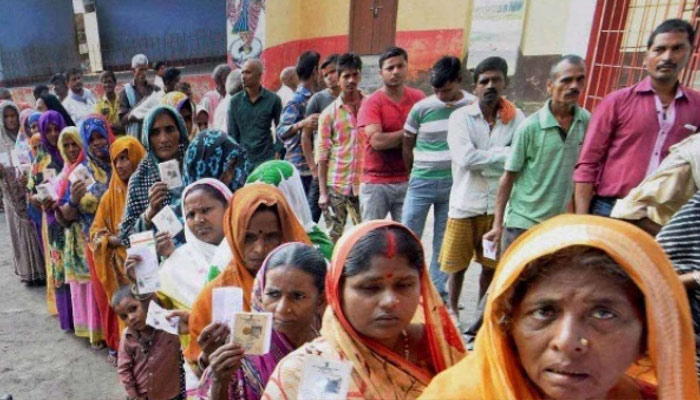
Two states where the Bharatiya Janata Party has struggled to break through are voting today—but all eyes are on West Bengal, where a fierce electoral battle is unfolding.
In Phase 1, voting is underway across 152 of the state’s 294 constituencies, spanning 16 districts and involving nearly 3.6 crore voters. Key battlegrounds include Nandigram and north Bengal hubs such as Darjeeling, Siliguri, Jalpaiguri, and Cooch Behar, with at least 80 seats expected to see tight contests.
For the ruling Trinamool Congress and the BJP, this is a high-stakes face-off, further intensified by controversy over voter list revisions.
After three consecutive terms since 2011, Chief Minister Mamata Banerjee is facing what many consider her toughest challenge yet. That said, similar predictions were made in 2021—when the Trinamool delivered a commanding win with 215 seats, leaving the BJP at 77.
Since then, the BJP has steadily eroded the Trinamool’s early dominance, sharpening its attack on corruption, governance, and law-and-order concerns. The Trinamool has countered by pitching the contest as a fight for Bengal’s identity, accusing the Centre of financial discrimination and portraying the BJP as an “outsider” force.
At the centre of the current political storm is the Election Commission’s Special Intensive Revision (SIR) of electoral rolls, which has reportedly removed around 89 lakh voters—roughly 11.6% of the electorate. The scale of the revision is significant, particularly in districts where past victory margins have been narrow, potentially altering the electoral equation.
Among the key candidates in this phase are Goutam Deb, Udayan Guha, Firhad Hakim, and Pabitra Kar for the Trinamool. For the BJP, Suvendu Adhikari is contesting from Nandigram, while also gearing up for a direct contest against Mamata Banerjee in Bhabanipur in the next phase. Other prominent BJP leaders in the fray include Nisith Pramanik and Dilip Ghosh.
Security deployment has been unprecedented, with over 2.4 lakh personnel from 2,407 companies of Central Armed Police Forces stationed across the state, effectively turning polling areas into high-security zones.
The second phase of polling will be held on April 29, with counting scheduled for May 4—milestones that could decisively shape the political future of Bengal.
Comments are closed.