
Trump pauses US Strait of Hormuz escort mission to allow Iran deal talks, blockade stays

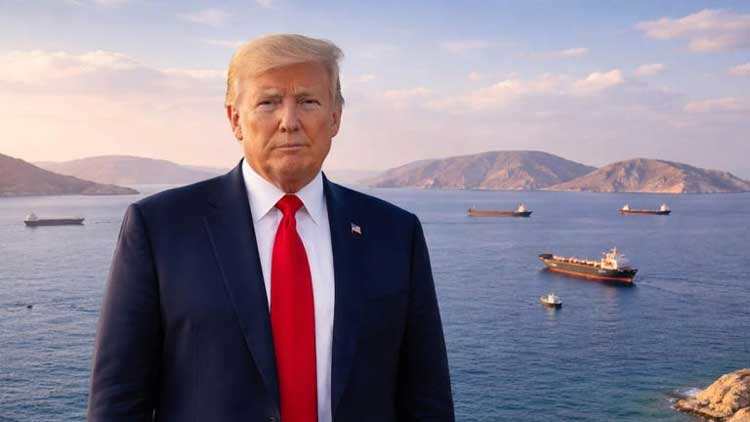
US President Donald Trump said Tuesday that Washington is temporarily suspending its effort to guide stranded commercial vessels through the Strait of Hormuz, citing possible progress toward a deal with Iran to end the conflict, though the broader US blockade of Iranian ports will remain in force.
In a social media post, Trump said the pause — just a day after the US launched the operation in the critical global energy corridor — was intended to create space for diplomacy with Tehran.
The decision, he said, came at the request of Pakistan and other countries, following what he described as “tremendous military success” during the US campaign against Iran and signs of movement toward a “complete and final agreement” with Iranian representatives.
The White House did not immediately elaborate on Trump’s claim of diplomatic progress. Formal negotiations remain largely stalled, although a ceasefire that took effect nearly a month ago has so far held.
The announcement came even as tensions remained high across the region. The United Arab Emirates, a close US ally, reported coming under Iranian drone and missile attack for a second consecutive day, while senior US officials insisted the ceasefire remained intact despite sporadic hostilities.
Secretary of State Marco Rubio said lasting peace would require Iran to accept Trump’s demands on its nuclear program and agree to reopen the Strait of Hormuz, one of the world’s most strategically important shipping routes.
“We would prefer the path of peace,” Rubio told reporters at the White House, adding that he hoped China would press Tehran during Iranian Foreign Minister Abbas Araghchi’s expected visit to Beijing to ease restrictions on the waterway.
US effort to reopen strait faces resistance
The US operation to restore maritime traffic entered its second day Tuesday. Rubio described it as a defensive mission to assist thousands of stranded civilian sailors.
“They’re sitting ducks, they’re isolated, they’re starving, they’re vulnerable,” Rubio said, adding that at least 10 sailors had already died.
The US military said it opened a shipping lane Monday and sank six Iranian boats that allegedly threatened commercial vessels. Only two merchant ships are known to have used the new corridor so far, leaving hundreds still stranded in the Arabian Gulf.
Iran’s effective closure of the strait — through which a significant share of global oil and gas supplies transit — has driven up fuel prices and rattled international markets.
Iran disputes US claims
Iran rejected Washington’s characterization of the operation.
Parliament speaker and chief negotiator Mohammad Bagher Qalibaf suggested Tehran had not yet fully responded to the US push.
“We know full well that continuation of the status quo is intolerable for America; while we have not even begun yet,” he wrote on X.
Iranian state media also disputed US claims that six military boats were destroyed, reporting instead that two civilian cargo vessels were struck Monday, killing five civilians.
US Defense Secretary Pete Hegseth and Joint Chiefs Chairman Gen. Dan Caine said recent Iranian actions had not escalated into “major combat operations.”
Caine said over 100 US military aircraft were currently patrolling the strait.
Washington has maintained a naval blockade on Iranian ports since April 13, cutting off critical oil revenue for Tehran.
Shipping firms remain cautious
Despite the US operation, commercial shipping companies remain reluctant to resume passage.
Shipping giant Maersk said one of its US-flagged vehicle carriers safely exited the strait Monday with American military assistance.
But German container major Hapag-Lloyd said its assessment remained unchanged and that passage through the strait was still “not possible” for its vessels.
Military analysts warn reopening the narrow 21-mile-wide waterway remains highly risky. Iran retains the capability to target ships using cruise missiles, drones, mines and fast attack craft.
Risk intelligence analyst Torbjorn Soltvedt said shipping and insurance companies were unlikely to return until stability is clearly restored.
“For shipping companies and for insurance companies, they still have to wait and see how this plays out,” he said.
Comments are closed.