
Yoweri Museveni to be sworn in for another term as son tightens grip on power in Uganda

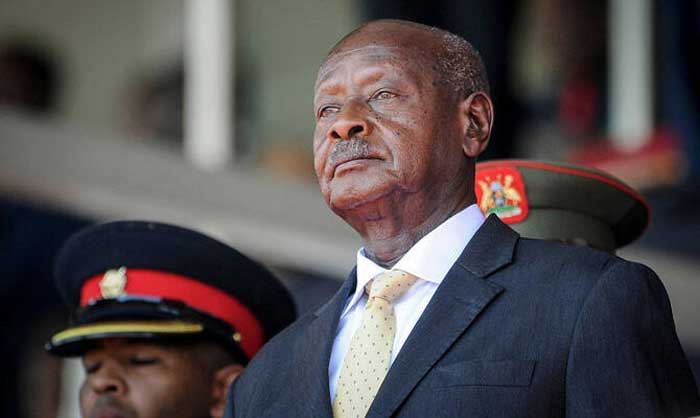
Forty years. That’s how long Yoweri Museveni has ruled Uganda.
The 81-year-old will be sworn in on Tuesday for another five-year term — one that could be his last, though perhaps not the last for the Museveni family. His son and presumed heir, Muhoozi Kainerugaba, has overseen days of rehearsals for the military parade marking Museveni’s eighth inauguration. Russian-made Sukhoi fighter jets roared over ceremonial grounds in Kampala ahead of the event.
Many Ugandans believe Museveni’s long presidency — the only leadership millions have ever known — is entering its final chapter. But uncertainty remains over how power will eventually change hands and whether the transition will be peaceful.
Two possible paths to power
Kainerugaba appears increasingly positioned as successor. He has openly declared his ambition to take over from his father, insisting recently that the mission is “unstoppable.” Analysts see two potential routes for him: either a military-backed but unconstitutional transfer of power, or a constitutional arrangement in which lawmakers from the ruling party — which commands a dominant parliamentary majority — formally endorse him as Museveni’s successor.
Winning a competitive election could prove more difficult. Kainerugaba would likely face strong opposition from Bobi Wine, the popular entertainer-turned-politician who has twice challenged Museveni for the presidency and rejected the results of January’s election.
Last month, parliamentary speaker Anita Among pledged support for Kainerugaba’s presidential ambitions while addressing lawmakers celebrating his birthday. “For the sake of MK, just assure MK that we will do whatever it takes,” she said, referring to Kainerugaba by his initials. “In the 11th parliament, opposition got swallowed. In the 12th parliament, it is going to be walloped.”
A growing number of political figures have publicly aligned themselves with Kainerugaba, reflecting both a scramble for survival and recognition of his expanding influence as Museveni ages and increasingly depends on the military establishment.
“Many Ugandans close to power have learned this lesson: that the president is old and exhausted, both intellectually and physically,” political commentator Andrew Mwenda, an ally of Kainerugaba, wrote recently in The Independent. “He has a limited ability to monitor many things across a large spectrum of sectors.”
Kainerugaba, 52, joined the military in the late 1990s. His rapid ascent through the ranks has long fueled allegations of a “Muhoozi Project” aimed at preparing him for the presidency. Both Museveni and Kainerugaba had previously dismissed claims of a succession plan. But over the past two years, the possibility of hereditary rule has become increasingly difficult to ignore.
Museveni has not indicated when he intends to retire and faces no serious challengers within the ruling party, strengthening the perception that the military will ultimately shape the succession process.
“While people are waiting for the legal transition from Museveni, the de facto transition has already happened,” said analyst Angelo Izama of the Uganda-based Fanaka Kwawote think tank. “Kainerugaba, more than the president, is the final voice on defense and security matters.”
A harder-edged political style
Supporters describe Kainerugaba as a disciplined military officer who avoids lavish displays of wealth. Educated at military institutions in the US and Britain, he previously led the presidential guard unit that later evolved into an elite special forces command.
Beyond the army, he also founded the Patriotic League of Uganda, a political movement backed by ministers, business figures and loyalists within the establishment. But unlike his father, Kainerugaba lacks a populist political style. Museveni has retained power for decades partly by negotiating with rivals and drawing some opponents into government.
Kainerugaba, by contrast, is viewed as more confrontational. His blunt social media posts have frequently stirred controversy, and he has ordered the arrest of several senior generals over alleged corruption — including some once considered close allies.
Museveni first seized power in 1986 after leading a guerrilla war that promised democratic reform following years of unrest and civil conflict. At the time, he argued that Africa’s central problem was leaders clinging to office for too long.
Over time, however, he shifted that position, saying his criticism applied only to leaders who ruled without electoral legitimacy.
A longtime Western ally on regional security issues, Museveni is credited by supporters with maintaining relative stability in Uganda. Critics, however, say his rule has become increasingly authoritarian, pointing to the removal of presidential term and age limits and the imprisonment or marginalization of political opponents.
Recently, lawmakers passed a controversial bill aimed at curbing foreign influence. Critics warn the legislation could severely restrict opposition groups and non-governmental organizations. The law bars any “agent of a foreigner” from receiving more than 400 million Ugandan shillings — about $110,000 — in foreign funding within a year without approval from the interior minister.
National Unity Platform, led by Bobi Wine, condemned the measure as “unconstitutional, irrelevant and brought in bad faith to further persecute those with divergent views.”
Comments are closed.