
Is Climate Change fuelling wars and conflicts across nations? Science says yes

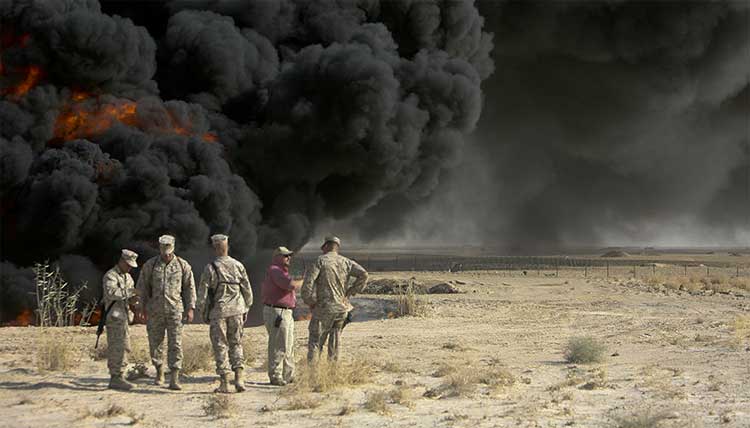
A new study by researchers at Rice University has found that large-scale climate patterns such as El Niño and the Indian Ocean Dipole (IOD) may significantly increase the risk of armed conflicts and civil wars in vulnerable regions around the world.
Published in the journal Proceedings of the National Academy of Sciences, the study analysed more than 500 conflict events recorded between 1950 and 2023 to understand how changing climate conditions may influence political and social instability.
“We wanted to understand whether armed conflict risk is linked to these climate patterns, and whether local conflict risk scales with how strongly the patterns influence local weather,” said lead author Tyler Bagwell.
El Niño linked to higher conflict risk in drought-hit regions
The researchers found that the increased risk of conflict during El Niño events is not evenly distributed across the globe. Instead, it is concentrated in areas where El Niño causes drier-than-normal conditions.
According to the study, droughts, crop failures and water shortages appear to be the key stress factors driving instability in these regions.
“Increased conflict risk during El Niño is primarily linked to regions that experience drier conditions,” Bagwell said. “In areas where El Niño is associated with wetter conditions, we do not find a credible relationship.”
Indian Ocean Dipole also raises instability concerns
The study also highlighted the role of the Indian Ocean Dipole, a lesser-known climate pattern caused by changes in sea surface temperatures across the Indian Ocean.
Researchers found that both wet and dry phases of the IOD were associated with increased conflict risk in parts of the Horn of Africa and Southeast Asia.
Unlike El Niño, which originates in the Pacific Ocean and influences global weather systems, the IOD acts more regionally but can amplify droughts or floods in already vulnerable areas.
“The Indian Ocean Dipole operates on shorter timescales and can shift rapidly, creating climate ‘whiplash’ that may disrupt already vulnerable regions,” said co-author Sylvia Dee.
Study may help create early warning systems
Researchers believe the findings could help humanitarian organisations and peacekeeping agencies prepare better for future crises, since both El Niño and the IOD can often be predicted several months in advance.
“We can’t say definitively that climate causes conflict,” said Frederi Viens. “But we can say that some climate patterns change the probability of conflict.”
The study comes as meteorological agencies have warned that El Niño conditions could return later this year, with some forecasts even predicting a possible “super El Niño.”
The researchers said the timing of their findings is especially important as climate-driven extreme weather events continue to intensify globally.
Comments are closed.