
Former India Captain Jude Felix Says P. R. Sreejesh Was ‘Insulted’, Hits Out at Hockey India

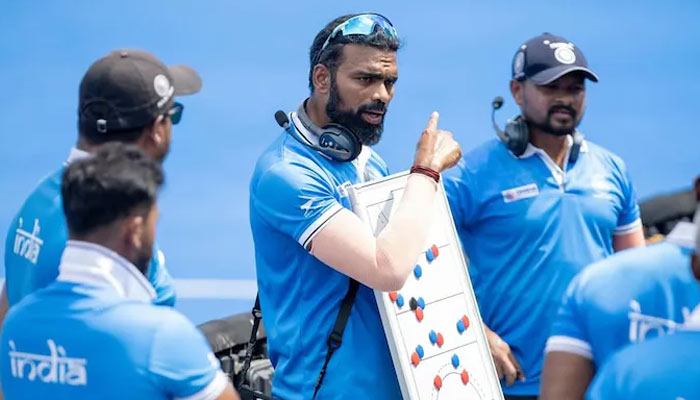
At the Hockey India Awards in March, P. R. Sreejesh appeared unusually distant. While players and coaches mingled freely with the media.
The former India goalkeeper stayed away from the spotlight, quietly declining interview requests through the evening. For someone known for his warmth and openness, the silence stood out.
Two months later, the reason became clear.
In a series of explosive social media posts, Sreejesh revealed that he was no longer the head coach of India’s junior men’s hockey team, despite taking charge immediately after India’s bronze-medal-winning campaign at the Paris Olympics and guiding the side to several notable results. The announcement sparked fresh turbulence within Indian hockey and raised difficult questions about how Hockey India handles its coaches.
The federation denied that Sreejesh had been “sacked,” saying he had instead been offered a role with the development squad as part of preparations for the Los Angeles 2028 Olympics. Hockey India also defended its decision to appoint experienced foreign coach Frederic Soyez to the junior setup, arguing that the team required greater coaching experience at that level.
But the explanation failed to calm the controversy.
Critics immediately questioned why Sreejesh had been appointed in the first place if the federation believed he lacked the experience necessary for the role. Others wondered why Hockey India, despite repeatedly speaking about promoting Indian coaches, appeared unwilling to persist with one of the sport’s most respected figures.
Among the strongest voices supporting Sreejesh was former India captain Jude Felix, who said the situation reflected a deeper pattern inside Indian hockey administration.
Felix admitted that Sreejesh’s appointment as junior coach initially surprised him because excelling as a player and succeeding as a coach are entirely different challenges. However, once Hockey India made that decision, Felix believes the federation had a responsibility to properly back him and provide clarity around expectations and long-term goals.
According to Felix, Sreejesh’s tenure cannot simply be dismissed as unsuccessful. The junior team delivered results and remained competitive under his leadership. If the federation expected gold medals or specific tournament victories, Felix argued, those objectives should have been clearly defined from the beginning.
The former captain also spoke from personal experience. Felix himself coached India’s junior team before being removed, and he described the treatment of coaches by Hockey India as a recurring problem. In his view, Indian coaches are often discarded before being given enough time to develop systems, understand players, and grow into their positions.
Felix also echoed Sreejesh’s criticism regarding the federation’s continued reliance on foreign coaches. India has experimented with multiple overseas appointments over the years, yet truly transformative results have remained limited. Felix questioned whether the resources and freedom given to foreign coaches had actually translated into meaningful progress for Indian hockey.
Reflecting on his own career, Felix pointed to India’s strong 1994 World Cup campaign under Indian coach Cedric D’Souza as evidence that local coaches can succeed at the highest level when trusted and supported properly.
He further argued that Hockey India’s emphasis on producing large numbers of coaches through development pathways means little unless those coaches are genuinely nurtured and retained. Felix cited the example of Shanmugham Pandurangan, whom he described as one of India’s promising coaching talents but another victim of frequent restructuring.
At the centre of Felix’s criticism was the issue of time.
He believes coaching development cannot happen within a year or two, especially in international hockey. If Hockey India truly viewed Sreejesh as part of the future, then abandoning the project after just 18 months only exposed flaws in the federation’s own planning.
For Felix, the situation ultimately amounts to disrespect toward one of India’s greatest hockey players because it suggests the federation either made the wrong appointment from the start or lost faith far too quickly.
The controversy has now reopened larger debates around Indian hockey’s direction — from the treatment of former players to the federation’s coaching policies and long-term vision.
For Sreejesh, though, the disappointment appears far more personal. What he believed was the beginning of a meaningful coaching journey has instead turned into another bitter chapter in Indian hockey’s long-running struggle with continuity and trust.
Comments are closed.