
Trump says US-China ties remain strong despite Taiwan, Iran tensions as Beijing trip ends

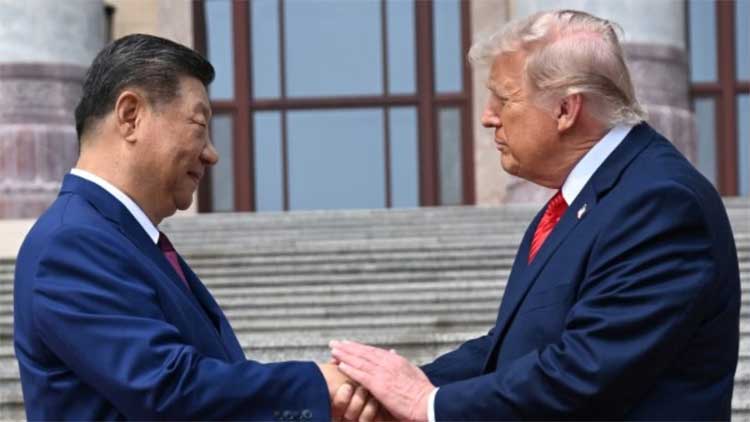
As President Donald Trump wrapped up his whirlwind China visit on Friday, he projected optimism about improving ties with Beijing despite sharp divisions over Iran, Taiwan and trade.
Trump began his final day in Beijing by highlighting what he described as warm personal exchanges with Chinese President Xi Jinping, insisting in a social media post that Xi had praised his “tremendous successes” and that remarks about the US being a “declining nation” were aimed at former president Joe Biden, not him.
But beneath the upbeat rhetoric, major tensions remain unresolved between the world’s two biggest powers.
Taiwan tensions dominate talks
Taiwan emerged as the most sensitive issue during Thursday’s talks, with Xi warning Trump privately that mishandling the self-ruled island could push the US and China toward “clashes and even conflicts,” according to Chinese officials.
Despite Trump’s repeated references to a “special relationship” with China, US Secretary of State Marco Rubio reaffirmed that Washington’s Taiwan policy remained unchanged and warned Beijing against attempting to seize the island by force.
“They always raise it on their side. We always make clear our position, and we move on to the other topics,” Rubio said after the meeting.
Beijing has increasingly emphasized Taiwan as sitting at the “core” of China’s national interests, particularly after Washington expanded military cooperation with Taipei. Trump has pushed Taiwan to increase defence spending, while the White House approved an $11 billion arms package for the island in December — the largest ever US weapons deal with Taiwan.
At the same time, Trump has pressured Taipei to boost investment in US semiconductor manufacturing and buy more American energy exports, fuelling speculation about whether his administration could eventually recalibrate support for Taiwan.
Iran conflict adds pressure
Iran was also central to the discussions as the war in the region continues to disrupt global energy markets.
Trump said Xi privately offered help in resolving the conflict and stressed the importance of reopening the Strait of Hormuz, through which roughly 20 percent of the world’s oil supply passed before fighting erupted on February 28.
“He’d like to see the Hormuz Strait open,” Trump told Fox News. “He said if I can be of any help whatsoever, I would like to help.”
The president also claimed Xi signalled interest in buying more US oil to reduce China’s dependence on Gulf energy supplies and opposed any tolls on ships crossing the strategic waterway.
Even so, Beijing has shown little public enthusiasm for becoming deeply involved in resolving the Iran conflict despite US pressure. China remains Iran’s largest trading partner and holds considerable leverage over Tehran, while also facing mounting economic risks from prolonged instability and rising energy prices.
Rubio argued the conflict was damaging global economies and warned the crisis could ultimately reduce demand for Chinese exports.
Trump eyes trade wins before departure
The White House entered the trip promising tangible economic outcomes, and administration officials are still seeking Chinese commitments to purchase more US soybeans and beef.
Trump also said Xi had indicated China could buy 200 Boeing aircraft from the United States.
The two sides discussed expanding agricultural trade and investment opportunities, while US officials floated the idea of creating a formal US-China Board of Trade to manage commercial disputes more effectively.
Chinese Premier Li Qiang separately met major American business leaders accompanying Trump’s delegation, including Elon Musk, Tim Cook and Jensen Huang, and stressed the need for stable cooperation between Beijing and Washington despite growing global turbulence.
Comments are closed.