

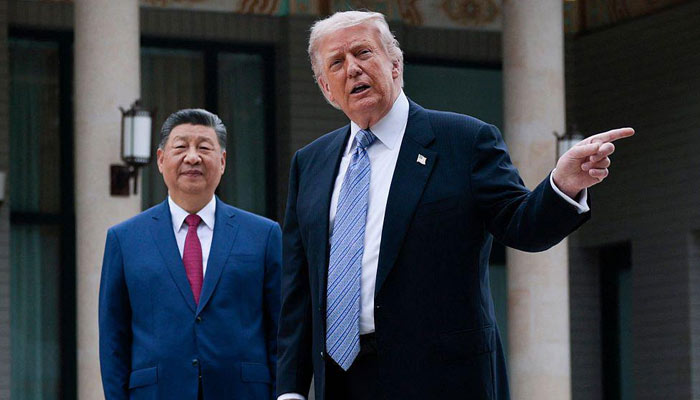
US President Donald Trump has triggered concern in Taiwan after suggesting future American arms sales to the island could be tied to negotiations with China.
In an interview with Fox News following his meeting with Chinese President Xi Jinping in Beijing, Trump said a proposed $14 billion weapons package for Taiwan may not automatically be approved. “I’m holding that in abeyance and it depends on China,” Trump said while discussing the deal.
Calling the proposed sale “a very good negotiating chip,” Trump added that the weapons package could become part of wider US-China discussions.
Why Taiwan Is Central To US-China Tensions
China views Taiwan as a breakaway territory and has long insisted that reunification with the mainland is inevitable — including through military force if required.
Taiwan, however, functions as a self-governed democracy with its own:
- Government
- Military
- Elections
- Currency
- Independent institutions
Beijing strongly opposes foreign military support for Taipei and considers such assistance interference in its domestic affairs.
US Support For Taiwan’s Defence
While Washington officially recognises Beijing under the “One China Policy,” American law also commits the United States to helping Taiwan maintain its defensive capabilities.
The US remains Taiwan’s biggest arms supplier.
Earlier, Trump and the US Congress had approved a separate $11 billion defence package for Taiwan, a move that prompted China to launch military drills around the island.
Concerns Over Taiwan Becoming A Negotiation Tool
Security analysts say Trump’s remarks may fuel fears that Taiwan could become leverage in broader negotiations involving trade, tariffs, or strategic cooperation with China. Some experts described the possibility as a “nightmare scenario” for Taipei, warning that Taiwan risks being treated as a bargaining point rather than an independent stakeholder.
Trump did not specify what concessions Washington might seek from Beijing in exchange for delaying or limiting weapons sales.
Trump Pushes Taiwan On Semiconductor Production
Trump also renewed pressure on Taiwan’s semiconductor sector, urging major chipmakers to expand manufacturing inside the United States. Taiwan dominates advanced semiconductor production through companies such as TSMC, the world’s leading contract chipmaker.
Trump said shifting more production to the US would be beneficial for both economic and national security reasons. Taiwanese firms have already announced major investments in semiconductor facilities across the United States.
Taiwan Responds Cautiously
Taiwan’s presidential office attempted to calm concerns after Trump’s comments, emphasising that official US policy toward Taiwan had not changed. Officials reiterated that Taiwan — formally known as the Republic of China — remains a sovereign democratic entity and thanked Washington for its continued support.
Trump later clarified that he opposed unilateral changes to the existing cross-strait status quo, while also criticising leaders in Taipei whom he accused of pushing too aggressively toward formal independence.
The remarks have intensified debate over whether Trump’s comments reflect a negotiating tactic or indicate a potential shift in future US policy toward Taiwan and China.
Comments are closed.