
Tamil Nadu Deal Gives Congress 5 Seats and 2 Ministers, Ending 59-Year Wait

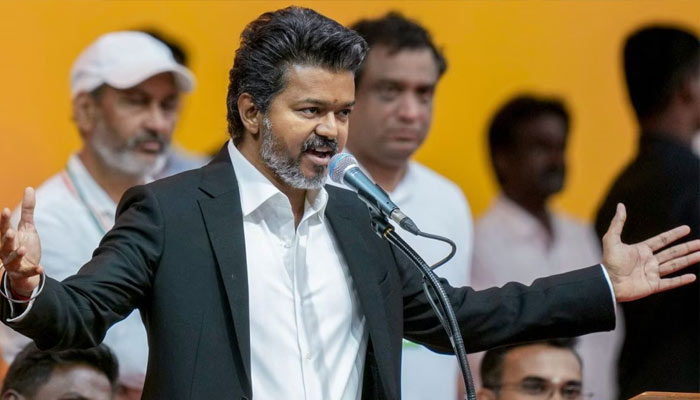
For the first time in nearly six decades, the Congress is back in the Tamil Nadu government — a political comeback made possible not by a sweeping mandate, but by the arithmetic of a fractured verdict and a timely alliance shift.
The party’s return to power comes 59 years after it last held cabinet positions in the state, back in 1967 — the year the Congress lost Tamil Nadu to the rising Dravidian movement led by CN Annadurai’s DMK. Since then, the state’s politics has largely revolved around the DMK and the AIADMK, leaving the Congress struggling for relevance in Assembly elections.
That long wait ended this week when Congress leaders Rajesh Kumar and P Vishwanathan took oath as ministers in Chief Minister Joseph Vijay’s Tamilaga Vettri Kazhagam (TVK) government.
The swearing-in capped a remarkable political turnaround following the 2026 Tamil Nadu Assembly election, which upended the state’s traditional political order. Actor-turned-politician Vijay emerged as the election’s biggest winner, with the TVK securing 108 seats in the 234-member Assembly and pushing both the DMK and AIADMK to the margins.
Despite the strong performance, the TVK fell short of the 118 seats needed for a majority. That is where the Congress — with just five MLAs — became central to government formation.
Though the party had suffered another disappointing election result, those five seats suddenly acquired outsized importance. The Congress’ support cut the TVK’s deficit nearly in half and helped create momentum for other smaller parties and independents to back Vijay’s bid for power.
The irony was striking: the Congress’ weakest electoral presence in Tamil Nadu in years ended up delivering its strongest political leverage in decades.
The roots of this realignment lay in tensions that had surfaced well before the election. During seat-sharing talks, the Congress had pushed the DMK for more constituencies and sought assurances of cabinet representation if the alliance retained power. The DMK resisted both demands, reportedly unwilling to dilute its authority within the government.
At the same time, speculation grew that sections within the Congress saw greater political opportunity alongside Vijay, whose popularity was rapidly expanding across Tamil Nadu.
Although the Congress eventually contested the election as part of the DMK-led bloc, the post-result scenario dramatically altered political calculations. Recognising the opportunity presented by the hung verdict, the Congress moved quickly to support the TVK after the election.
The party reportedly set one key condition — that no “communal forces” be accommodated in the alliance, a clear reference to the BJP, which had aligned with the AIADMK. Vijay’s own criticism of the BJP made the understanding easier to finalise.
The decision triggered anger within the DMK camp, which accused the Congress of abandoning its ally after the election. But with the TVK closing in on the majority mark and smaller parties also extending support, the new coalition soon took shape.
For the Congress, the development is politically significant far beyond Tamil Nadu.
The party has shown that in an era of fragmented mandates, even a small legislative presence can translate into substantial bargaining power. More importantly, it has re-entered a state government from which it had been absent for generations.
The Tamil Nadu breakthrough could also influence the Congress’ approach in other states where it remains electorally weak but strategically relevant, especially ahead of crucial Assembly elections next year.
Whether this signals the beginning of a broader revival in Tamil Nadu is still unclear. But after spending nearly six decades outside the corridors of power in the state, the Congress has finally managed to return — through strategy, timing, and the value of five crucial seats.
Comments are closed.