
US Air Pollution Rising Again as Wildfires Reverse Decades of Progress, Study Finds

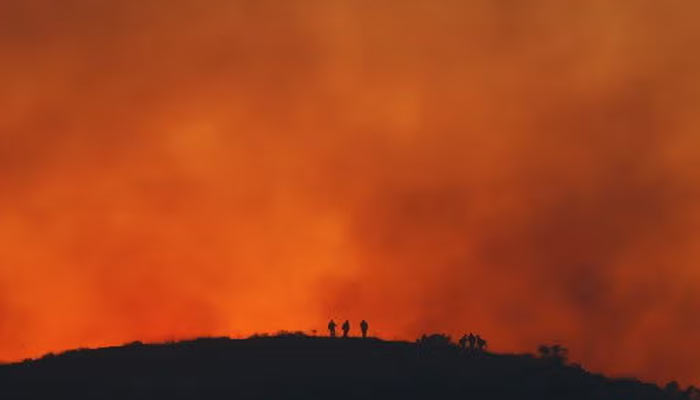
Wildfires Fuel Rise in US Smog Levels, Undoing Years of Air Quality Progress: Study
A decade of progress in reducing air pollution across the United States is being steadily eroded by increasingly severe wildfires, according to a new study that warns smoke-driven smog is making the nation’s air dirtier and more hazardous to public health.
Published in the journal Science, the study found that national ground-level ozone levels — commonly known as smog — fell by 11 per cent between 2003 and 2015 thanks to stricter environmental regulations targeting emissions from power plants, vehicles and diesel engines. However, that trend has reversed over the past decade, with ozone concentrations rising by about 4 per cent since 2015 as wildfire activity intensified across North America.
Researchers say that if wildfire smoke continues to increase at the current pace, national smog levels could return to those seen in 2003 within the next 20 years.
Smoke Becoming a Major Pollution Source
The research highlights how wildfire smoke is increasingly offsetting the benefits of decades of pollution-control measures. While wildfires do not directly emit ozone, they release gases and chemical compounds that react with sunlight to form ground-level ozone, a pollutant linked to respiratory illnesses and other health complications.
Scientists from the University of Iowa used satellite observations, weather records, pollution data and artificial intelligence to create a detailed nationwide map of ozone concentrations. Their analysis revealed pollution patterns that are often missed by traditional monitoring networks, which cover only a small portion of the country.
The team estimated that increased ozone pollution associated with wildfire smoke has contributed to roughly 318 additional deaths annually in the United States since 2013.
Health Impacts Stretch Across the Country
Experts warn that elevated ozone levels can aggravate asthma, increase hospital admissions and raise the risk of premature death. Unlike wildfire flames, which affect specific regions, smoke can travel thousands of kilometres, exposing millions of people to unhealthy air.
Recent wildfire seasons have demonstrated that reality. Massive fires in Canada during 2022, 2023 and 2024 sent thick smoke across large parts of the United States, creating hazy skies and poor air quality far from the source of the fires.
According to the study, around 43 million Americans were exposed to ozone levels that exceeded current safety standards during recent years marked by heavy wildfire smoke.
Climate Change Intensifying the Threat
Researchers pointed to climate change as a major factor behind worsening wildfire conditions. Rising temperatures, prolonged droughts and hotter weather have increased the likelihood of large, destructive fires across many regions.
At the same time, experts noted that wildfire behaviour is also influenced by land management practices, vegetation conditions, ignition sources and year-to-year weather variations.
The study found the sharpest increases in ozone pollution in the Northern Rockies and parts of the Midwest, areas heavily affected by smoke transported from wildfire zones.
Decades of Gains at Risk
For years, federal policies successfully reduced pollution from traditional sources, leading to cleaner air across much of the country. Scientists now warn that those gains are becoming increasingly vulnerable as wildfire seasons grow longer, larger and more intense.
The findings add to a growing body of evidence showing that wildfire smoke is emerging as one of the most significant environmental health challenges facing North America, with impacts extending far beyond the regions where the fires actually burn.
Comments are closed.