
Centre Approves Rs 13,000-Crore Great Nicobar Airport, Shelves INS Baaz Expansion Plan

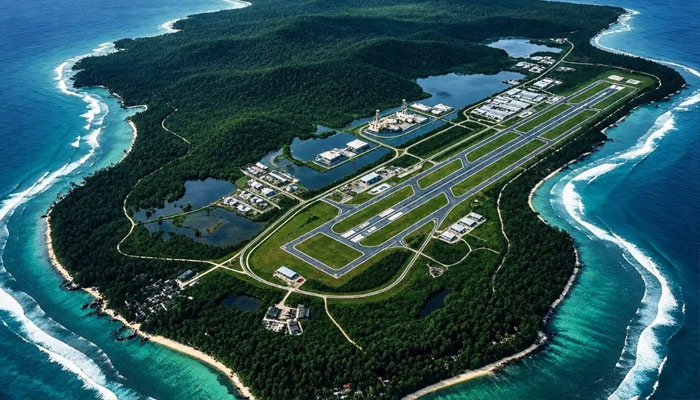
Centre Clears New Great Nicobar Airport, Drops INS Baaz Expansion Plan
The Centre has approved the construction of a new Rs 13,000-crore greenfield civil-military airport in Great Nicobar, opting against the expansion of the existing naval airfield at INS Baaz. The decision comes amid a growing political debate over the Rs 81,000-crore Great Nicobar Island Development Project, one of India’s most ambitious infrastructure initiatives.
The proposed dual-use airport will be built at Chingen, near Galathea Bay, and is expected to serve both civilian and military operations. Strategically located near the Malacca Strait, one of the world’s busiest shipping corridors, the facility is expected to enhance India’s operational capabilities in the eastern Indian Ocean while improving connectivity to the remote island territory.
Government and defence officials said studies examining the possibility of extending the runway at INS Baaz in Campbell Bay found significant limitations. Expanding the existing 4,500-foot runway to accommodate larger aircraft would require extensive infrastructure upgrades and face challenges related to terrain and navigation. Authorities also concluded that such an expansion could have a greater impact on nearby forests, wildlife habitats and tribal settlements than the proposed greenfield project.
The new airport is expected to be completed within five years and will remain under naval operational control while also handling civilian traffic. Officials believe the site offers greater flexibility for future expansion and will strengthen India’s surveillance, logistics and defence capabilities across the Andaman and Nicobar archipelago.
The airport forms a key component of the broader Great Nicobar Island Development Project, which also includes a transshipment port, power generation facilities and township infrastructure. The government has projected the project as a strategic and economic investment aimed at transforming the island into a major regional hub in the Indo-Pacific.
The announcement comes as the project faces renewed scrutiny from the Opposition. Congress leader Rahul Gandhi recently intensified criticism after visiting the Andaman and Nicobar Islands, describing the development as a threat to the region’s fragile ecosystem and indigenous communities.
Gandhi has alleged that the project could lead to large-scale rainforest loss, damage to coral reef systems and adverse impacts on the Shompen tribe, one of the island’s particularly vulnerable indigenous groups. Marking World Environment Day, he launched the “Green Over Greed” campaign and called for greater public scrutiny of the project.
The government, however, has maintained that the development is essential for national security, regional connectivity and economic growth. It has argued that the project balances strategic priorities with environmental safeguards and will strengthen India’s long-term presence in the Indo-Pacific.
The Congress has continued to demand a parliamentary discussion on the project, raising questions over environmental clearances, transparency, financial viability and the protection of tribal rights. The debate is expected to intensify as work progresses on one of the country’s largest and most closely watched infrastructure projects.
Comments are closed.