

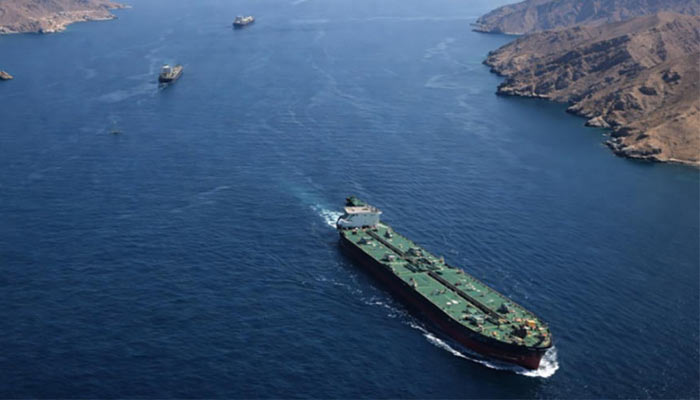
Iran Announces Strait of Hormuz Closure Amid Ceasefire Dispute, US Sees No Disruption
Iran’s top military command, Khatam al-Anbiya Headquarters, has announced the closure of the strategically vital Strait of Hormuz to vessel traffic, accusing the United States and Israel of violating a recently agreed ceasefire framework, according to Iranian state-linked media reports.
The announcement, carried by Iran’s Mehr News Agency, described the move as a response to what Tehran called a “clear breach of trust” and alleged continued Israeli violations in southern Lebanon despite a ceasefire agreement. Iranian authorities warned that further measures could follow if what they termed “aggression” persisted.
In a subsequent statement, the Islamic Revolutionary Guard Corps (IRGC) claimed that the Strait of Hormuz had been closed to all maritime traffic and cautioned vessels against approaching the waterway, saying their safety could be at risk.
The Strait of Hormuz remains one of the world’s most critical energy corridors, serving as a key route for global oil and natural gas exports. Any disruption in shipping through the narrow passage is closely watched by international energy markets and maritime operators.
US Downplays Closure Claims
The Iranian announcement came even as US Vice President JD Vance expressed confidence that the ceasefire arrangement between Washington and Tehran would remain intact.
Speaking to Fox News, Vance said the United States had not observed any evidence that maritime traffic through the Strait of Hormuz had been interrupted. He maintained that Washington expected the broader ceasefire framework to hold despite heightened regional tensions.
The contrasting statements from Tehran and Washington have created uncertainty over the actual situation in the waterway, a chokepoint that has frequently been at the center of geopolitical disputes in the Gulf.
Diplomacy Continues Amid Regional Tensions
The developments come at a delicate moment for regional diplomacy. Israel and Hezbollah agreed to a ceasefire in Lebanon on Friday after an escalation in hostilities raised fears of a wider conflict that could derail ongoing diplomatic efforts involving Iran.
At the same time, diplomatic engagement between Tehran and Washington appears set to continue. According to reports, US President Donald Trump’s special envoy Steve Witkoff is expected to travel to Switzerland for talks aimed at advancing discussions on a potential nuclear agreement with Iran.
Iranian state television reported that the country’s negotiating delegation is also heading to Switzerland for discussions related to an interim agreement tied to the broader regional conflict.
Foreign Ministry spokesperson Esmail Bagaei said the true measure of any diplomatic breakthrough would be its implementation.
“Any memorandum or agreement is ultimately tested when it enters the implementation phase,” Bagaei said, according to Iranian state media.
As negotiations move forward, attention is likely to remain focused on both the ceasefire’s durability and the security of shipping routes through the Strait of Hormuz, a waterway central to global energy supplies and regional stability.
Comments are closed.