
US Intelligence Warns Netanyahu Could Derail Iran Pact as Trump Praises Him

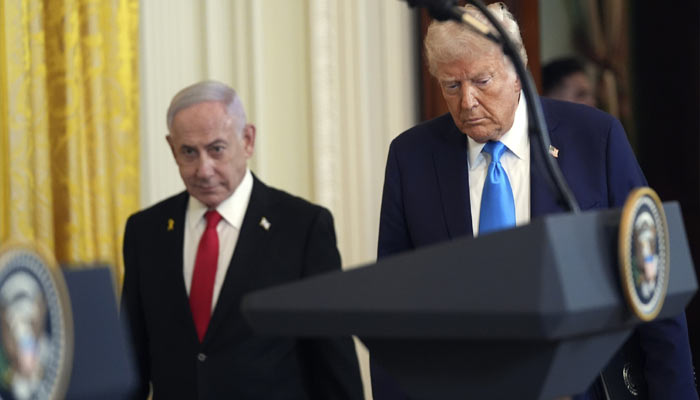
Trump Praises Netanyahu as ‘Warrior PM’ Amid Reports of Rift Over Lebanon Operations
US President Donald Trump on Saturday publicly backed Israeli Prime Minister Benjamin Netanyahu, calling him a “warrior prime minister” even as reports pointed to growing tensions between Washington and Jerusalem over Israel’s military actions in Lebanon.
Speaking near Washington after unveiling a replacement Air Force One aircraft gifted by Qatar, Trump praised Netanyahu’s leadership during the recent conflict with Iran and defended his Israeli counterpart amid mounting political pressure at home.
“We fought very well with Israel, and we’ve had a great relationship with Israel,” Trump said. “Bibi Netanyahu, he’s a warrior prime minister, and he should be acknowledged as that.”
Trump Signals Support, But Also Restraint
Despite the praise, Trump suggested that his relationship with Netanyahu requires careful management.
In an interview with Axios, the US president described ties with the Israeli leader as strong but indicated that Washington continues to exercise influence over Israeli decision-making.
“It’s good, but we have to keep him a little bit sane,” Trump said.
Asked whether he could restrain Israeli military action in the region, particularly any escalation in Lebanon, Trump expressed confidence in his ability to do so.
“They have a lot of respect for me, and they do as I say,” he said.
The remarks come against the backdrop of reports that Trump had privately expressed frustration with Israel’s continued operations against Iran-backed Hezbollah despite efforts to stabilise the region following the US-Iran peace agreement.
Reports of Tensions Behind the Scenes
According to reports, Trump and Netanyahu engaged in a heated phone conversation earlier this month after Israeli strikes in Lebanon reportedly complicated diplomatic efforts involving Iran.
The disagreement highlighted growing differences between Washington’s push for regional de-escalation and Israel’s determination to maintain military pressure on Hezbollah.
The friction has become increasingly visible as the White House attempts to preserve the momentum generated by the recently signed US-Iran framework agreement.
US Intelligence Raises Concerns
Adding to the uncertainty, The Washington Post reported that US intelligence agencies have warned the Trump administration that Netanyahu could take actions that may undermine the emerging peace arrangement with Iran.
According to the report, intelligence assessments indicate that Israel remains committed to continuing military operations against Hezbollah and is reluctant to embrace aspects of the diplomatic framework negotiated by Washington.
US officials reportedly believe domestic political considerations are influencing Netanyahu’s calculations ahead of national elections later this year.
With his political future tied closely to security issues, Netanyahu is said to be under pressure from supporters who favour a tougher military approach towards Hezbollah and Iran’s regional network of allies.
Israel-Hezbollah Ceasefire Offers Temporary Relief
The diplomatic tensions come just days after Israel and Hezbollah agreed to a ceasefire following a fresh round of deadly exchanges in Lebanon.
According to US officials, the truce was brokered with the assistance of American and Qatari mediators after consultations involving both Israel and Iran.
Israeli Ambassador to the United States Yechiel Leiter said Israel remained committed to the ceasefire, provided Hezbollah also abides by its terms and halts hostilities.
The agreement marks the second ceasefire attempt between the two sides this year after an earlier truce failed to end cross-border attacks.
Focus Shifts to Switzerland Talks
Attention is now turning to Switzerland, where US special envoy Steve Witkoff and Iranian Foreign Minister Abbas Araqchi are expected to hold talks aimed at advancing the broader US-Iran agreement.
The negotiations are seen as a critical test of whether the fragile diplomatic progress achieved in recent weeks can survive ongoing regional tensions and competing strategic interests among key players in the Middle East.
As Washington seeks to consolidate its breakthrough with Tehran, Israel’s next moves in Lebanon are likely to remain under close scrutiny from both US officials and regional observers.
Comments are closed.