
Iran Wants Gulf States to Jointly Toll Strait of Hormuz, Eyes $40 Billion

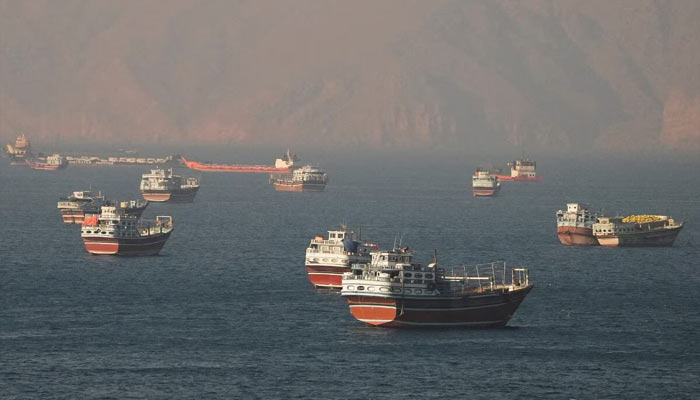
Iran has floated a proposal to charge ships transiting the Strait of Hormuz for maritime security.
And navigation-related services, pitching the idea to Gulf nations and China as a potential mechanism that could generate an estimated $40 billion in annual revenue.
According to The Wall Street Journal, Tehran wants the arrangement to operate as a joint regional framework rather than a unilateral levy, drawing inspiration from Turkey’s long-standing system of charging vessels using the Dardanelles Strait.
Iranian Parliament Speaker and senior negotiator Mohammad Bagher Ghalibaf said the management of the strategic waterway had entered a new phase following recent regional tensions.
“Everyone needs to know that management of the strait will never return to the way it was before,” Ghalibaf said during a visit to Oman, where he discussed the proposal with officials.
The proposal envisions ships paying fees for services such as maritime security, safety and environmental protection, with the participating Gulf states sharing the revenue.
Washington, however, has dismissed the idea outright.
US President Donald Trump said Iran had assured his administration that it would not impose tolls or any additional charges on commercial shipping through the Strait of Hormuz. “There are no tolls, no insurance costs & no other charges of any kind being sought or received by Iran on ships traveling the Strait of Hormuz,” Trump posted on social media.
US Secretary of State Marco Rubio echoed that position, arguing that international waterways cannot be subjected to unilateral charges. “The reality is that no country on earth has the right to charge for the use of international waterways, and that will never be an acceptable condition of any deal,” Rubio said during his Gulf visit.
The Wall Street Journal reported that Iran has also sounded out China and Egypt on the proposal and has indicated it would be open to the United States participating in such a payment arrangement in the future.
Tehran’s proposal is modelled on Turkey’s management of the Dardanelles, where the 1936 Montreux Convention allows Ankara to collect transit fees—known as the “gold franc”—to recover the costs of services including lighthouses, sanitation and maritime safety. The charge for the tariff year beginning July 1, 2026, has been set at $6.70 per tonne.
Maritime law experts, however, say Iran’s proposal faces major legal obstacles. James Kraska, a professor of maritime law at the US Naval War College, told the newspaper that the Strait of Hormuz is governed by international and regional agreements that prevent Iran from imposing charges on passing vessels.
“Iran has signed international and regional agreements that ban it from imposing unilateral payments on passing ships,” Kraska said.
The report added that any service-fee mechanism would require the approval of the International Maritime Organization (IMO), the UN body that regulates global shipping. Securing the support of the IMO’s 176 member states would be necessary, making the proposal difficult to implement without broad international consensus.
Comments are closed.