

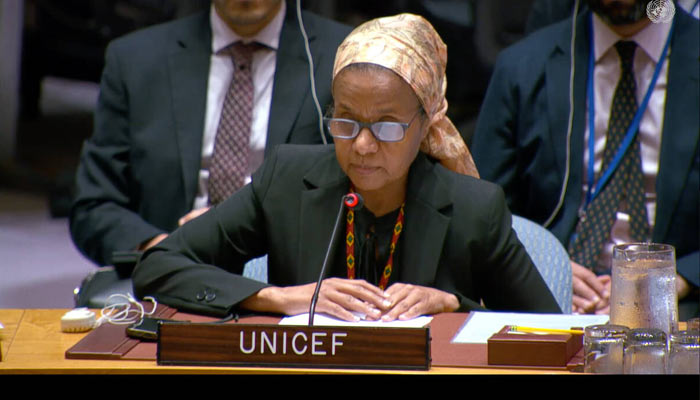
The United Nations has warned that Sudan could be headed toward another humanitarian catastrophe as the Rapid Support Forces (RSF) tighten their siege around El-Obeid, placing nearly half a million civilians at risk.
Addressing the UN Security Council on Friday, senior UN officials said the escalating violence in North Kordofan state mirrors the events that preceded the fall of El-Fasher last year, where an 18-month siege ended with widespread reports of ethnic killings, mass executions and sexual violence after the city was captured by the RSF.
A subsequent UN investigation concluded that the atrocities in El-Fasher could amount to war crimes and crimes against humanity.
UN warns window to prevent escalation is closing
Rosemary DiCarlo, the UN’s Under-Secretary-General for Political and Peacebuilding Affairs, said drone strikes around El-Obeid have intensified over the past two weeks as the RSF expands its military presence around the city.
She warned that a major assault would trigger another large-scale displacement crisis, deepen the humanitarian emergency and further complicate efforts to broker peace.
“The window to avert a wider escalation in El-Obeid is rapidly narrowing,” DiCarlo told the Security Council.
The warning echoed an earlier statement by UN High Commissioner for Human Rights Volker Türk, who cautioned that the offensive could lead to an “impending human rights disaster.”
‘Children cannot endure another El-Fasher’
UNICEF Deputy Executive Director Hannan Sulieman said Sudan’s children continue to pay the heaviest price in the civil war between the RSF and the Sudanese Armed Forces (SAF), which began in April 2023.
According to UNICEF, more than 5,000 children have been killed or maimed during the conflict.
“The children of Sudan cannot survive on expressions of concern. They need protection, food, water, healthcare and education. Above all, they need this war to end,” Sulieman said.
She urged the Security Council to establish humanitarian corridors to El-Obeid and strengthen protection services for children separated from their families.
“We must not allow history to repeat itself. Children cannot endure another El-Fasher,” she said.
Conflict pushes humanitarian crisis deeper
The UN said fighting continues across multiple fronts, with Kordofan remaining the epicentre of the conflict. Heavy clashes have also been reported around Dilling, Kadugli and Babanusa, while drone strikes on bridges and transport corridors across Darfur and Kordofan have disrupted humanitarian aid deliveries.
Violence has also intensified in White Nile and Blue Nile states, including the areas of Kurmuk, Geissan and Bau.
DiCarlo warned that the rainy season, which has traditionally slowed military operations, is unlikely to provide relief this year because both sides are increasingly relying on drones.
Sulieman cited last year’s attack on power infrastructure in White Nile state as an example of how damage to civilian facilities can trigger wider humanitarian crises. The strike shut down a major water-treatment plant, forcing residents to use untreated river water and contributing to a cholera outbreak that claimed lives and forced schools to close.
“In Sudan, one attack does not end when the explosion stops. It can deprive children of safe water, healthcare, education and protection,” she said.
The humanitarian situation continues to deteriorate. Nearly 19.5 million people face acute food insecurity, several areas are already at or approaching famine conditions, and around 825,000 children under five are expected to suffer severe acute malnutrition this year. Nearly 8 million children remain out of school as almost half of Sudan’s school buildings are no longer operational.
Regional tensions complicate peace efforts
DiCarlo also warned of rising tensions between Sudan and neighbouring Ethiopia and Chad following recent border incidents and accusations of interference in internal affairs. She said the disputes risk widening the conflict by drawing neighbouring countries more directly into the crisis.
On the diplomatic front, she said the Quintet—comprising the African Union, European Union, Intergovernmental Authority on Development (IGAD), League of Arab States and the United Nations—held consultations in Addis Ababa earlier this month with Sudanese civilian representatives, who backed a Sudanese-led political dialogue.
However, DiCarlo cautioned that mediation efforts alone would not be enough to end the conflict.
“Diplomatic initiatives cannot substitute for the political will needed to stop this war,” she said, urging the Security Council to act before El-Obeid suffers the same fate as El-Fasher.
Comments are closed.