
Middle East Conflict Escalates: US Strikes 140 Iranian Targets, Iran Targets UAE and Qatar

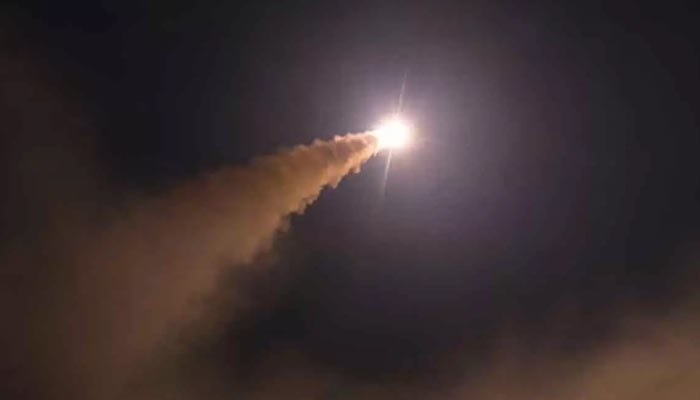
US Hits 140 Iranian Targets After Hormuz Closure; Iran Fires Missiles at Bahrain, Qatar, UAE and Kuwait
The Middle East witnessed a dramatic escalation on Sunday after the United States launched a fresh wave of strikes on Iran, hours after Tehran announced the closure of the Strait of Hormuz, a vital global oil shipping route. Iran responded by firing missiles and drones towards Bahrain, Qatar, Kuwait and the United Arab Emirates (UAE), raising fears of a wider regional conflict.
Iran Closes Strategic Waterway
The crisis intensified after Iran’s Islamic Revolutionary Guard Corps (IRGC) declared that the Strait of Hormuz would remain closed “until further notice.” Iran said the decision followed an encounter with a commercial vessel that allegedly ignored navigation instructions and continued on an “unauthorised route.” According to the IRGC, warning shots were fired before the ship was stopped.
The Guards warned that any military response to the incident would invite a “severe response.”
US Launches Third Round of Strikes
Soon after Tehran’s announcement, the US Central Command (CENTCOM) launched its third military operation against Iran in a week. The US said Iran had attacked a Cyprus-flagged container ship transiting the Strait of Hormuz, leaving one civilian crew member missing and the vessel heavily damaged by fire.
Acting on orders from President Donald Trump, US forces struck around 140 military targets across Iran.
CENTCOM said the targets included missile and drone launch facilities, naval assets, ammunition storage sites, military communications infrastructure and coastal surveillance systems. The military said the operation was intended to reduce Iran’s capability to threaten commercial shipping in the Gulf.
- US Defence Secretary Pete Hegseth said Iran had “made a poor choice” and would now “pay” for its actions.
- Blasts Reported Across Southern Iran
- Iranian state media reported explosions in several southern regions following the strikes.
The attacks reportedly hit areas including Bushehr, Asalouyeh, Bandar Abbas, Bandar-e Dayyer and Sirik, all strategically important locations near the Strait of Hormuz and home to key energy and naval facilities.
Gulf States Come Under Attack
Hours after the US operation concluded, Iran launched retaliatory missile and drone attacks targeting Gulf countries that host American military installations. The UAE said its air defence systems intercepted incoming missiles and drones, while Bahrain activated air raid sirens and advised residents to seek shelter.
Authorities in Qatar also issued missile alerts after explosions were reported, while Kuwait’s military said it had intercepted incoming projectiles. The latest strikes mark a significant expansion of the conflict beyond Iran and Israel, directly threatening countries that host US military assets.
- Hormuz Dispute Threatens Wider Crisis
- The renewed fighting has further undermined efforts to stabilise the region.
The Strait of Hormuz remains one of the world’s most critical maritime chokepoints, carrying a substantial share of global crude oil and liquefied natural gas exports. Any prolonged disruption is expected to have major implications for international energy markets.
The escalation also casts fresh doubt over diplomatic efforts after a ceasefire framework announced by Donald Trump and Iranian President Masoud Pezeshkian earlier this year effectively collapsed, with both sides resuming military operations.
With the Strait of Hormuz shut and cross-border strikes intensifying, concerns are mounting that the conflict could spiral into a broader regional war involving multiple Gulf nations.
Comments are closed.