
Trump Rules Out Iran Deal for Now as Tehran Threatens ‘Devastating’ Military Response

US President Donald Trump said Iran was not yet ready to accept what he called the “right deal” as Washington prepared to announce a new package of sweeping economic sanctions against Tehran.
Trump’s comments came as the United States looked to increase pressure on Iran nearly six months into the conflict. Speaking to reporters on Friday, he said Tehran wanted an agreement but was unwilling to accept Washington’s terms.
“They would love to make a deal, but they’re not ready to make the right deal,” Trump said, while also claiming that the US maintained extensive control over the region around the Strait of Hormuz.
US readies new economic pressure
US Treasury Secretary Scott Bessent said Washington would reveal details of new financial penalties against Iran on Monday. The measures are expected to significantly increase pressure on Tehran. Trump has also warned other countries against providing Iran with any form of economic lifeline.
Bessent described the planned measures as the toughest sanctions the US has prepared and said Washington wanted to put severe pressure on the Iranian government. The move comes as Iran’s economy continues to struggle with high inflation, a weakened currency, energy shortages and damage to critical infrastructure during the conflict.
- Tehran threatens retaliation
- Iran responded to the US warnings with a strong military message.
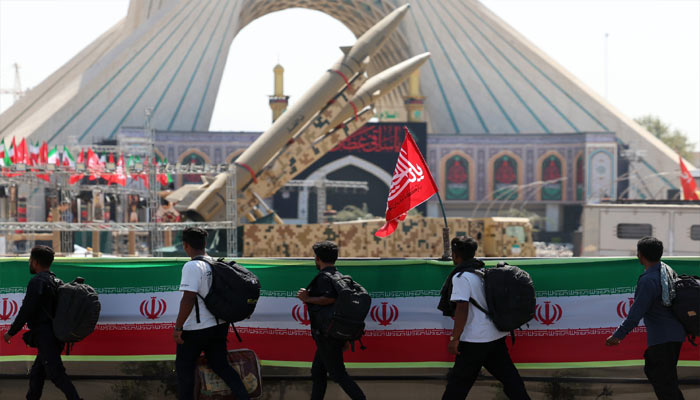
Major General Ali Abdollahi, chief of staff of Iran’s armed forces, said the country’s military was prepared to respond to any new threats.
Iranian media quoted Abdollahi as saying Iran was ready across land, sea, air, air defence and cyberspace and would deliver a “crushing, punishing and devastating” response to its adversaries.
Iranian officials have nevertheless acknowledged the growing economic pressure. Parliament Speaker Mohammad Baqer Qalibaf, who is also involved in mediated negotiations with Washington, said the US appeared to have realised that it could not achieve its goals through direct military confrontation alone.
But Qalibaf also stressed that Iran could not depend solely on its military capabilities, warning that economic activity, domestic production and people’s ability to meet basic needs were equally important.
Strait of Hormuz remains key flashpoint
The conflict has severely affected regional security and disrupted shipping through the Strait of Hormuz, a crucial route for global energy supplies.
Before the conflict, the waterway carried around one-fifth of globally traded oil. Its disruption has raised concerns about energy supplies and exposed Gulf states to Iranian attacks targeting energy infrastructure and desalination facilities.
The US and Iran have announced ceasefire agreements twice, in April and June, with efforts to restore freedom of navigation through the strait. Iran and Oman have also held talks on reopening shipping routes, although Washington has rejected arrangements that would require vessels to pay a toll.
NATO has separately begun discussions on supporting freedom of navigation. US Air Force General Alexus Grynkewich, NATO’s top military commander, held a video conference with allied defence chiefs to discuss possible assistance.
Oil prices rise amid sanctions threat
Oil prices climbed on Friday after Washington threatened penalties against countries continuing to trade with Iran. China, which is a major buyer of Iranian oil, urged Washington and Tehran to pursue diplomacy and argued that sanctions would not resolve the dispute.
Bessent said China had an incentive to cooperate because of its dependence on energy supplies from the Gulf, although further US pressure could also risk renewed tensions between Washington and Beijing.
Trump faces pressure over war objectives
The conflict has killed thousands and expanded beyond the original confrontation, involving several Gulf states and disrupting regional trade. Although US military action has weakened Iran’s conventional forces and damaged its economy, Tehran still retains missile and drone capabilities that could threaten regional targets and shipping.
Trump has also not achieved several of the objectives announced at the beginning of the conflict, including dismantling Iran’s nuclear programme and creating conditions for a change in its clerical leadership. The war has contributed to higher fuel prices and growing political pressure on the US president. A Reuters/Ipsos poll released this week showed Trump’s approval rating at its lowest point of his current term.
With Washington preparing fresh sanctions and Tehran promising a potentially devastating response, the confrontation remains centred on economic pressure, military deterrence and the possibility of another diplomatic breakthrough.
Comments are closed.