
China Issues Fresh Flood Warning After Nepal Disaster, Says Lake Could Burst at Any Time

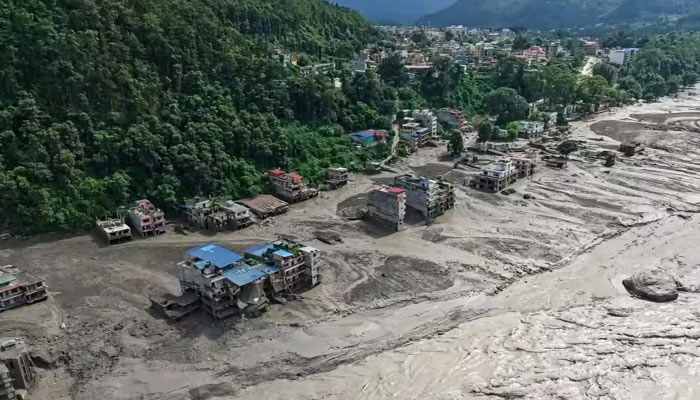
Nepal is facing a fresh flood threat days after a devastating flash flood killed hundreds, with China warning that a temporary lake formed upstream could breach its natural barrier at any time.
According to an India Today report, Chinese authorities alerted Nepal’s Ministry of Foreign Affairs after detecting changes in the lake, including a gradual darkening of the water. Beijing’s modelling indicates that a partial breach could send a maximum flow of around 500 cubic metres of water per second downstream.
WHAT TRIGGERED CHINA’S WARNING?
Chinese authorities said the changing colour of the temporary lake could indicate increasing instability.
“The colour of the lake that began forming the day before yesterday is continuously becoming darker. This means that it could burst,” the message sent to Nepal said.
China said the lake currently contains a relatively limited volume of water and that a breach would likely cause only a modest rise in downstream river levels. However, communities in vulnerable areas have been advised to remain cautious.
TEMPORARY LAKE HOLDS 2.5 MILLION CUBIC METRES
The lake formed in the upper Lhende river system after debris created a natural barrier following a glacial collapse. The event is believed to have contributed to the flash floods that struck Nepal and Tibet earlier this week.
The lake lies close to the confluence of the Chochen River in China and the Purepu River in Nepal.
China’s Ministry of Water Resources said around 2.5 million cubic metres of water had accumulated in the lake by Friday. Authorities had earlier estimated that another 3 million cubic metres could collect over the following three days.
CHINA MODELS POSSIBLE BREACH
Chinese authorities have conducted flood modelling to assess the consequences of a partial failure of the natural barrier.
“If part of the dam breaks, the maximum water flow could be 500 cubic meters per second. It will remain confined within the river’s banks,” the message said.
The area is being monitored through drones and satellite imagery to track changes in the lake and the surrounding terrain.
LAKE OVERFLOWS INTO RIVERS
The lake began overflowing into the Lhende Khola and Trishuli rivers on Friday. CCTV reported that the immediate threat from the overflow was considered manageable by midday.
However, concerns remain over the possibility of a larger breach as Nepal continues to deal with the aftermath of the earlier disaster.
NEPAL FLOOD DEATH TOLL RISES
Rescue and recovery operations are continuing across Nepal, where at least 579 people have been killed in the floods and landslides. At least seven deaths have also been confirmed in Tibet.
The latest warning has added to concerns for downstream communities, with authorities closely tracking the lake’s water level and the stability of the natural barrier.
Comments are closed.