
Pakistan Deployed Spies, Sleeper Cells to Track India’s S-400 Systems, Says Air Marshal Mishra

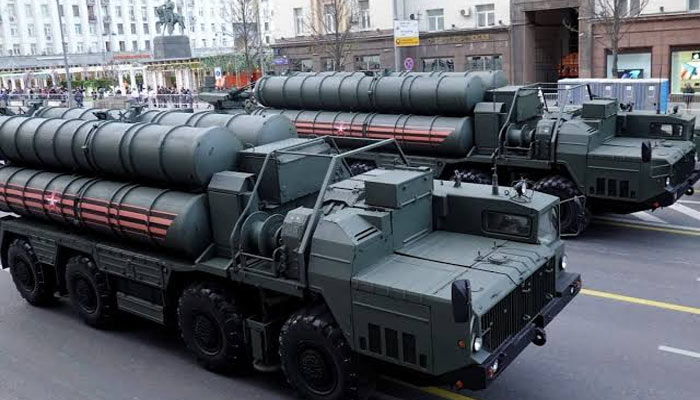
Retired Air Marshal Jeetendra Mishra has claimed that Pakistan activated spies and sleeper cells inside India to locate the Indian Air Force’s Russian-made S-400 air defence systems during Operation Sindoor last year.
Mishra, who served as the commander of the IAF’s Western Air Command during the operation, made the claim in an interview with ANI. He said the S-400 played a crucial role in deterring Pakistani fighter aircraft from approaching within 200 kilometres of the Indian border.
According to Mishra, Pakistan made extensive efforts to identify the locations of India’s S-400 batteries, including allegedly relying on satellite support from other countries and activating intelligence networks inside India.
“Pakistanis were desperate to find where these S-400s were. They used every available means. They were also getting satellite help from other nations,” Mishra said.
He claimed Pakistani aircraft faced a major threat from the S-400 whenever they attempted to enter the operational area.
“The S-400 was the biggest threat as far as they were concerned. They also activated spies and sleeper cells within India to find out where the S-400s were located,” he added.
S-400 PLAYED KEY ROLE IN OPERATION SINDOOR
India’s S-400 system, popularly referred to as “Sudarshan Chakra”, is a long-range surface-to-air missile platform designed to detect, track and engage multiple types of aerial threats.
The system can target fighter aircraft, surveillance platforms, cruise missiles and ballistic missiles at long ranges. Mishra said the S-400 was also deployed against drones launched by Pakistan during Operation Sindoor.
India received its fourth S-400 squadron in June this year, further strengthening its long-range air defence capabilities.
MISHRA PRAISES BRAHMOS MISSILE
Mishra also highlighted the BrahMos missile while discussing India’s push for defence self-reliance.
“In our self-reliance push, BrahMos is a major push. The most successful indigenous missile. After Op Sindoor, a lot of other nations were trying to buy it,” he said.
He described BrahMos as a highly capable supersonic missile and said its speed and flight profile make it difficult for enemy air defence systems to intercept.
“It goes up to 14-15 km up, accelerates to supersonic speed, it is difficult to intercept it. When it is coming down, it accelerates to Mach 3 speed, impossible to intercept,” Mishra said.
Mishra’s comments underline the importance of long-range air defence and precision-strike capabilities in India’s assessment of the military lessons from Operation Sindoor.
Comments are closed.