

Beyond Spas And Yoga, Water Is Becoming The New Wellness Destination
A wellness holiday once meant checking into a resort for spa treatments, yoga classes and detox menus. But travellers are increasingly looking beyond treatment rooms and structured programmes, choosing destinations where the water itself becomes part of the experience.
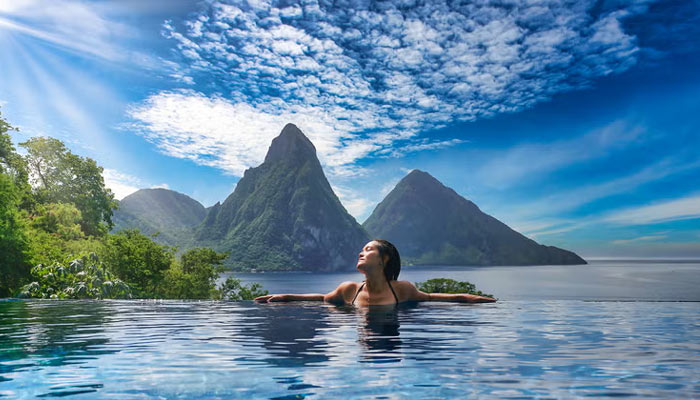
Seas, rivers, lakes, hot springs and lagoons are emerging as the centrepieces of slower, more restorative holidays—a trend increasingly described as blue wellness tourism.
The rise comes as wellness travel continues to expand globally. Grand View Research’s Wellness Tourism Market (2026–2035) report estimates that the global market was worth USD 990.4 billion in 2025. It is projected to reach USD 1,085.6 billion in 2026 and USD 2.4 trillion by 2035.
But blue wellness is not simply about booking a resort with a sea-facing room. It can mean soaking in a Japanese onsen, kayaking down a river, practising yoga beside a lagoon, snorkelling over a coral reef or simply taking a long, unhurried walk along the coast.
The underlying appeal is simplicity. After years of packed schedules, crowded sightseeing lists and constant digital connectivity, travellers are increasingly looking for holidays that leave room to pause.
When A Holiday Becomes A Reset
Burnout and digital fatigue are influencing not just how people spend their holidays, but how they plan them. Instead of trying to see everything, travellers are choosing fewer destinations, longer stays and more unstructured time.
“The language guests use has shifted noticeably in recent years. It’s less about vacation and more about recovery,” says Sara Siyam, Director of Marketing at Sun Siyam Resorts in the Maldives.
She says many guests arrive feeling exhausted and looking for a reset. In that setting, the ocean becomes more than a backdrop for photographs. Snorkelling, diving, paddleboarding, overwater therapies and simply spending time beside the shore allow visitors to slow down and reconnect with their surroundings.
Japan is seeing a similar change. Ryo Bunno, Executive Director of the Japan National Tourism Organization in Delhi, says Indian travel agents are increasingly receiving requests for relaxed itineraries rather than tightly scheduled trips.
“Rather than trying to cover as many places as possible, travellers now emphasise relaxation, keeping free time in their schedules and enjoying slower, more restorative journeys,” he says.
Japan: Where Water Meets Tradition
Japan offers one of the clearest examples of how water can become part of a wider wellness experience.
In onsen destinations such as Hakone and Beppu, hot-spring bathing is deeply embedded in local culture. A traditional ryokan stay can bring together mineral-rich baths, seasonal food, minimalist accommodation and rituals shaped by generations of Japanese tradition.
“Water is never just a spa amenity; it carries centuries-old meaning as a source of healing, purification and renewal,” Bunno says.
Travellers can build on that experience with Zen meditation, forest bathing, temple cuisine or yoga surrounded by volcanic landscapes. Okinawa offers another perspective, with experiences inspired by its longevity-focused lifestyle and close-knit communities. Ogimi Village, meanwhile, provides opportunities for rural tourism and educational homestays.
Japan’s relationship with water extends well beyond its famous hot springs. Visitors can kayak along the Kumano River, paddleboard on Lake Chuzenji in Nikko, canoe along the Toyohira River or experience takigyō—a traditional practice of standing beneath a waterfall associated with physical and spiritual purification.
Even Japan’s cities offer opportunities to slow down beside the water. Kyoto’s seasonal riverside dining along the Kamo River creates a calmer urban experience. Osaka’s waterways have helped earn it the nickname “City of Water”, while Tokyo’s Sumida riverfront combines contemporary public spaces with waterside life.
In The Maldives, The Villa Is Just The Beginning
The Maldives has long been synonymous with turquoise lagoons and overwater villas. What is changing is how travellers interact with that environment.
“The overwater villa used to be the destination five years ago; now it is the starting point,” Siyam says. “Guests want to be in the water, on it or near it, engaging with it intentionally.”
That could involve night snorkelling as manta rays feed below illuminated waters, learning about marine life alongside a biologist or participating in coral-restoration projects.
For those looking for something more restorative, resorts are offering ocean-based spa treatments, hydrotherapy, lagoon aerobics, beach yoga and silent sunset cruises.
Conservation is also becoming part of the experience. Some programmes allow visitors to monitor marine life, collect observations or contribute to coral restoration rather than simply viewing reefs as tourist attractions.
The shift reflects a larger expectation from modern travellers: a wellness experience should feel meaningful as well as relaxing. A destination loses some of its appeal when tourism comes at the expense of the natural environment that draws visitors there.
Different Generations, Different Reasons
Blue wellness is attracting a wide range of travellers, although each generation approaches it differently.
Travellers over 45 may be drawn to relaxation, health maintenance and longevity-oriented experiences. Millennials are often combining wellness with family holidays, cultural exploration and adventure.
Younger travellers, particularly Gen Z, are showing interest in digital detoxes, conservation and community-based experiences.
“They research experiences before they book, ask about marine-life encounters and want experiences that are meaningful, not just photogenic,” Siyam says.
The trend also fits naturally into multi-generational travel. A single destination can offer snorkelling for children, diving for parents and gentle cruises or waterside treatments for older family members.
Indian Travellers Are Looking Beyond The Usual Itinerary
Indian travellers are increasingly moving from conventional sightseeing towards experience-led holidays.
Japan recorded 315,100 tourist arrivals from India in 2025, compared with 175,896 in 2019, according to figures shared by Bunno.
First-time visitors typically follow the popular Tokyo-Kyoto-Osaka route. Repeat travellers, however, are increasingly exploring Japan’s hot-spring towns, lakes, rivers and coastal destinations.
“Indian travellers who return to Japan a second or third time are the ones seeking out a ryokan beside a hot spring, a kayaking experience on the Kumano River or a lakeside morning in Nikko,” Bunno says.
The Maldives has traditionally been popular with Indian honeymooners and couples celebrating milestones. Now, those trips are increasingly being paired with snorkelling, diving, paddleboarding, dolphin excursions and ocean-inspired wellness treatments.
Planning Your Own Blue Wellness Escape
A blue wellness holiday does not have to mean staying at an expensive luxury resort. The idea is less about price and more about choosing experiences that allow you to slow down and connect with your surroundings.
A few things are worth considering before booking:
Slow down: Choose longer stays and fewer destinations rather than constantly moving between hotels.
Match activities to your pace: Opt for onsen bathing and meditation if you want quiet, or kayaking, snorkelling and paddleboarding if you prefer activity.
Check the season: Weather, water visibility, river conditions and marine-life encounters can vary throughout the year.
Prioritise safety: Check swimming requirements, currents, age restrictions and whether activities are led by qualified guides.
Choose responsible operators: Look for tourism providers that minimise environmental impact and support conservation.
Set digital limits: A poor signal can be useful for a detox, but download essential maps, bookings and emergency details beforehand.
Respect local customs: Water can have cultural or religious significance, so check rules around bathing, clothing, photography and behaviour.
Could India Become The Next Blue Wellness Hotspot?
India has no shortage of destinations that could benefit from the growing interest in water-led wellness.
Kerala brings together backwaters, beaches and Ayurveda. The Andaman Islands offer diving and coral-reef experiences, while Varkala already combines coastal scenery with yoga and Ayurveda.
Gokarna could attract travellers seeking quieter beach escapes. Lakshadweep has considerable potential for water-focused wellness tourism if future development remains environmentally sensitive.
Goa, meanwhile, already has the infrastructure and international recognition. Its challenge would be developing a stronger wellness identity beyond its established nightlife and party image.
Why Blue Wellness Could Have Staying Power
Water has been associated with healing, reflection and renewal for centuries. Japanese onsen traditions, sacred rivers, island cultures and coastal retreats all demonstrate that the connection between water and wellbeing existed long before the modern wellness industry.
What has changed is the traveller’s motivation.
People are increasingly looking beyond simply photographing a beautiful coastline. They want to swim, paddle, snorkel, meditate, learn about marine ecosystems—or do nothing at all for a while.
And perhaps that is the real appeal of blue wellness: in an increasingly connected world, water offers travellers something increasingly difficult to find—a reason to slow down.
Comments are closed.