
BRICS Declaration: How India Worked Till 4 AM To Bridge Iran-Russia-China-UAE Differences

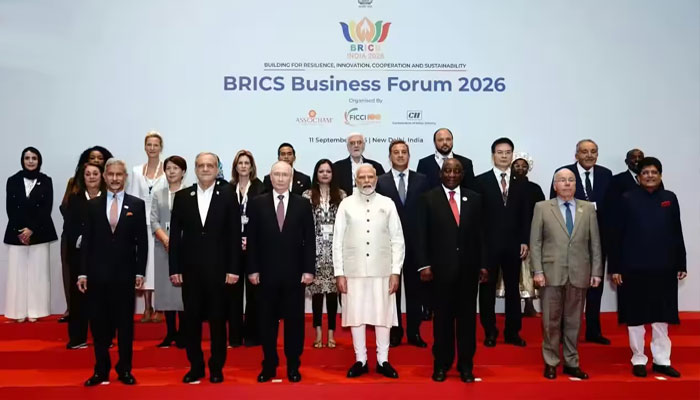
India’s successful push to secure the New Delhi Declaration at the BRICS Summit was the result of a high-stakes diplomatic exercise that continued until the early hours of Saturday.
Negotiations over some of the most sensitive portions of the document reportedly went on until around 4 am, as Indian negotiators worked to reconcile sharply conflicting positions within an increasingly diverse BRICS grouping. The difficulty was not simply about agreeing on words. The expanded bloc includes countries with competing interests and, in some cases, opposing positions on major geopolitical conflicts.
Iran and the UAE had different views on the West Asia crisis. Saudi Arabia had its own regional concerns, while Russia remained sensitive to any language that could be linked to the Ukraine war. China, meanwhile, wanted BRICS to reinforce the role of the Global South and challenge what it sees as an imbalanced global order.
- India ultimately managed to bring everyone behind a single declaration.
- The West Asia Dispute Was The Biggest Hurdle
- The toughest negotiations reportedly centred on the conflict in West Asia.
- Iran wanted the declaration to refer to what it described as a unilateral attack on its territory and a breach of the UN Charter. The UAE, meanwhile, wanted the document to acknowledge Iranian attacks on its sovereignty and territory.
For India, directly accepting either formulation risked upsetting the other side.
The solution was to avoid turning the declaration into a document that determined who was right or wrong.
Instead, the final text acknowledged that BRICS members retained their individual national positions while collectively calling for restraint and de-escalation.
The declaration expressed “deep concern” over the continuing escalation in West Asia and called for “maximum restraint”, while urging countries to avoid actions that could further worsen the situation.
The phrase “recalling our respective national positions” was particularly important.
It allowed individual members to preserve their existing positions while still signing a common document.
India Chose Diplomacy Over Blame
The final formulation focused on principles rather than accusations.
Sovereignty, territorial integrity, protection of civilians, de-escalation and dialogue became the central themes.
The declaration called for a long-term understanding through dialogue and diplomacy that could contribute to peace and stability in West Asia. It also underlined the importance of safeguarding international trade, supply chains and energy flows.
Former Indian ambassador to the UAE Sunjay Sudhir described India’s approach as keeping difficult conversations alive and creating a platform where countries with major differences could continue engaging.
That was effectively the heart of New Delhi’s strategy.
India did not have to persuade Iran and the UAE to agree with one another. It had to create wording that allowed both countries to disagree while still accepting the same BRICS document.
Iran-UAE Engagement In Delhi
Another development on the sidelines of the summit provided an important diplomatic backdrop. Iranian President Masoud Pezeshkian met Abu Dhabi Crown Prince Sheikh Khaled bin Mohamed bin Zayed Al Nahyan in New Delhi.
The meeting was significant given the tensions between Tehran and Abu Dhabi and the wider concerns facing the Gulf region. The two sides have strong reasons to keep communication open, particularly over regional stability, trade and the security of crucial maritime routes.
For India, such direct engagement was useful because multilateral consensus becomes easier when countries remain willing to talk to one another.
- Russia’s Concerns Also Had To Be Managed
- The negotiations extended beyond West Asia.
Russia was reportedly wary of language that could be interpreted through the prism of the Ukraine conflict. The absence of a direct Ukraine-related paragraph in the final declaration was therefore notable. Moscow had little interest in endorsing wording that could place it in a defensive position.
India, meanwhile, had another reason to avoid allowing the Russia-Ukraine war to dominate the BRICS document. The negotiators instead relied on broad references to sovereignty, territorial integrity, peaceful dispute resolution and diplomacy.
That allowed the declaration to address geopolitical tensions without turning the document into a direct judgment on any one conflict.
- China Wanted A Stronger Global South Voice
- China’s priorities were also reflected in the broader architecture of the declaration.
Beijing has consistently pushed for a greater role for developing nations in international institutions and for stronger cooperation among Global South countries. The New Delhi Declaration supported greater representation of developing countries in global governance and called for reforms to multilateral institutions.
It also criticised unilateral trade restrictions, tariffs and protectionist measures.
The language gave China considerable room to support the declaration while stopping short of turning BRICS into an explicitly anti-American grouping.
The same careful approach was visible in the treatment of trade. The document criticised protectionist policies without directly naming US President Donald Trump.
For India, this was an important distinction as it balanced the interests of China and Russia with its own strategic relationship with the United States.
The 4 AM Deal Had Been Months In The Making
The overnight negotiations were only the final stage of a much longer diplomatic process.
India had struggled to secure a common BRICS position on West Asia earlier this year. A meeting in April reportedly failed to produce consensus, forcing India to issue a Chair’s Summary instead of a joint statement.
- Differences continued into the May foreign ministers’ meeting.
- That history made the New Delhi agreement particularly significant.
Indian diplomats had spent months working through disagreements and testing formulations that could accommodate the positions of different members.
By the time leaders gathered in New Delhi, the declaration had effectively become an exercise in diplomatic precision: every word had to be acceptable enough for countries with fundamentally different interests.
The final stretch continued into the early hours, with negotiations reportedly running until around 4 am.
India’s Balancing Act Paid Off
The New Delhi Declaration does not mean BRICS members have suddenly resolved their differences over West Asia, Ukraine, trade or the future of the global order.
Its significance lies elsewhere.
India succeeded in creating enough diplomatic space for countries that disagree on major international issues to endorse a common document.
The declaration’s emphasis on dialogue, consultation and diplomacy therefore carries particular weight.
For New Delhi, those principles were not simply language in a summit document. They became the mechanism through which Iran, the UAE, Russia, China and the other BRICS members could remain on the same page—without having to abandon their individual positions.
Comments are closed.