

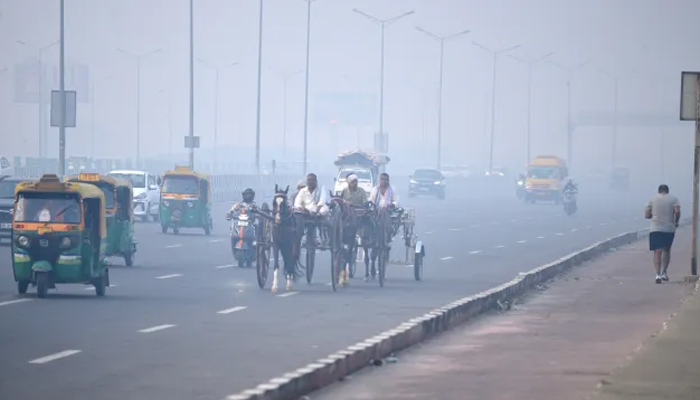
Delhi-NCR’s winter pollution problem is a recurring challenge, but this year authorities are attempting to get ahead of the season by stepping up inspections and enforcement months before the worst smog typically sets in.
The Enforcement Task Force (ETF) of the Commission for Air Quality Management (CAQM), at its 139th meeting on September 14, reviewed pollution-control measures undertaken across the National Capital Region. Between August 24 and September 7, enforcement teams conducted 150 inspections covering construction, industrial activities and diesel generator (DG) sets.
Of the total inspections, seven were carried out at construction and demolition (C&D) sites, 98 at industrial units and 45 involving DG sets.
Nuh Sees Focused Pollution Inspection Drive
A dedicated inspection campaign was conducted in Nuh, Haryana, on September 3. CAQM Flying Squads, accompanied by officials from the district administration, police and Haryana State Pollution Control Board (HSPCB), visited 35 premises.
Thirteen establishments were found to be complying with pollution-control requirements, while seven locked premises have been earmarked for another inspection. Officials have proposed measures including sealing one DG set, issuing directions in seven cases and recovering environmental compensation in six cases.
At the wider NCR level, proposed action includes shutting down three C&D projects and one industrial unit. Authorities have also proposed sealing 25 DG sets found to be violating applicable requirements.
Government PSU communications officer Irfan Rashid said enforcement agencies are maintaining a zero-tolerance approach towards violations. Statutory directions have been initiated against non-compliant entities, including closure orders, sealing of unauthorised DG sets, environmental compensation and show-cause notices that could lead to prosecution under environmental laws.
Units that have been sealed or stopped will not be permitted to restart until compliance has been physically checked and verified.
Why Authorities Are Acting Before Winter
Pollution from construction dust, industrial fuel combustion and diesel exhaust can form part of the local pollution load that becomes particularly problematic during winter.
As temperatures fall, thermal inversion can prevent pollutants from dispersing and keep them concentrated closer to the surface. Authorities therefore believe that reducing emissions before these weather conditions become frequent could help prevent pollution from building up rapidly.
The early inspections are focused on controlling major particulate-emission sources and taking action against heavily polluting equipment before the winter pollution season reaches its peak.
A Shift Towards Preventive Enforcement
Authorities are also seeking to change the timing of their response. Instead of concentrating enforcement only after air quality deteriorates, inspections and corrective measures have begun during late summer.
The objective is to identify violations, improve pollution-control arrangements and take action against non-compliant establishments before October.
The strategy includes targeted interventions at 13 major pollution hotspots in Delhi. Proposed measures include automated dust suppression systems, continuous patrols and road paving to reduce dust emissions.
Satellite-based monitoring and weather forecasting are also being incorporated into the Graded Response Action Plan (GRAP). The objective is to identify potentially adverse conditions three to four days in advance and initiate preventive measures before pollution levels escalate.
Pollution Control To Continue Beyond Winter
The broader strategy is not limited to the winter season. Authorities are working towards a year-round airshed management approach covering multiple sources of pollution across the NCR and neighbouring regions.
Notified industrial areas are being encouraged to move towards 100% use of piped natural gas (PNG) and other permitted cleaner fuels. The plans also include year-round availability of machinery for crop-residue management in neighbouring states, improved monitoring of municipal solid waste and mechanised sweeping along high-traffic roads.
On the clean-energy front, authorities are looking to expand electric public transport, strengthen metro connectivity and increase the use of solar and other green energy in public utilities.
Vehicle Emissions Also Under Watch
Vehicle pollution remains another key area of enforcement. Authorities are combining digital monitoring with physical inspections to strengthen the Pollution Under Control (PUC) system.
PUC centres are being connected to real-time CCTV monitoring and automated smoke-testing equipment to identify fraudulent certificates and irregular testing.
Commercial vehicle fitness checks are also being expanded through Automated Testing Stations (ATS), which use computerised and sensor-based systems to reduce manual intervention.
Enforcement is also being directed at de-registered end-of-life vehicles, including 10-year-old diesel and 15-year-old petrol vehicles. Automatic Number Plate Recognition (ANPR) cameras at border points and fuel stations are being used to identify vehicles that fall under enforcement restrictions.
The wider plan also includes phased requirements for zero-emission delivery and light goods vehicles.
With enforcement beginning well before the winter season, authorities are attempting to reduce pollution at its sources rather than waiting for severe smog to trigger emergency measures.
Comments are closed.