
Nidal Hasan to Face Firing Squad as Trump Approves Fort Hood Shooter’s Execution

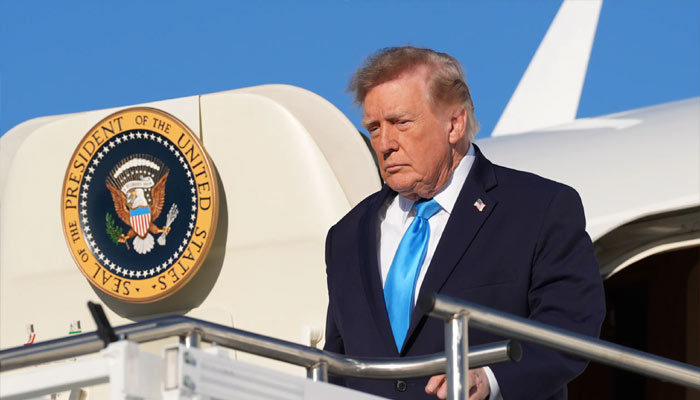
Nidal Hasan Faces Firing Squad After Trump Approves Fort Hood Execution
President Donald Trump has approved the execution of former US Army Major Nidal Hasan by firing squad, more than 16 years after he killed 13 people and wounded 32 others in the 2009 Fort Hood shooting in Texas.
The Pentagon announced the decision late Monday. Pentagon spokesperson Sean Parnell said Defence Secretary Pete Hegseth had recommended the execution and would determine when and where the sentence is carried out.
“Judgment day for Hasan has finally come,” Parnell said in a post on X while referring to the deadly attack.
Why Firing Squad?
Firing squad executions remain legal in five US states — Idaho, Mississippi, Oklahoma, South Carolina and Utah. South Carolina conducted three firing squad executions in 2025, while Utah last used the method in 2010.
The method is also available under US military law, although executions by the US military are exceptionally uncommon.
In a typical firing squad execution, the condemned person is restrained in a chair and a target is placed over the chest. Several trained executioners positioned at a distance then fire rifles simultaneously. In some procedures, one weapon may contain a blank round, preventing individual shooters from knowing which rifle fired the fatal shot.
The firing squad is also authorised as an execution method in countries including Indonesia, North Korea, Taiwan, Cuba, the UAE, Bahrain, Yemen, Somalia and Saudi Arabia. Brazil and El Salvador allow the method in certain wartime circumstances.
The Fort Hood Massacre
Hasan, an Army psychiatrist, carried out the attack on November 5, 2009, at the Soldier Readiness Processing Center at Fort Hood near Killeen, Texas.
He opened fire on soldiers preparing for deployment, killing 13 people and injuring 32. The victims included a pregnant soldier.
The shooting ended when civilian law enforcement officers confronted Hasan and shot him several times. He survived but was left paralysed from the waist down.
Authorities subsequently investigated Hasan’s contacts with extremist figures, including US-born radical cleric Anwar al-Awlaki, as part of their examination of his radicalisation.
Convicted and Sentenced to Death
Hasan was prosecuted under the Uniform Code of Military Justice and faced a court-martial in 2013. He represented himself during the proceedings and acknowledged carrying out the shooting.
He argued that his actions were intended to protect Taliban members and prevent US troops from deploying to Afghanistan.
A military jury convicted Hasan of 13 counts of premeditated murder and 32 counts of attempted premeditated murder. He was sentenced to death and transferred to military death row at the US Disciplinary Barracks in Fort Leavenworth, Kansas.
Hasan has remained there ever since, awaiting execution.
Trump’s approval now clears a key step toward implementing the military death sentence, though the execution could still face legal challenges and procedural delays.
Comments are closed.