
Andhra Pradesh Declares Drought in 21 Districts; YSRCP Hits Out Over Delay

Andhra Declares Drought in 21 Districts, YSRCP Questions Delay
Andhra Pradesh has declared an early drought in 21 districts for the 2026 Kharif season, but the decision has triggered a political row, with the Opposition YSR Congress Party (YSRCP) asking why the government waited until October despite worsening conditions on the ground.
The drought declaration, issued by the Revenue (Disaster Management) Department on October 1, covers 388 of the state’s 688 mandals. Of these, 283 have been categorised as “severely affected” and 105 as “moderately affected”.
YSRCP leaders have alleged that the government should have announced the drought much earlier, claiming that the situation had become critical by the first week of September.
YSRCP Flags Rayalaseema Crisis
The Opposition has particularly highlighted the situation in Rayalaseema, which accounts for a large share of the mandals included in the drought declaration.
Former Agriculture Minister Kurasala Kannababu and YSRCP state general secretary Gadikota Srikanth Reddy said 186 of the 388 drought-affected mandals are located in Rayalaseema. The region also accounts for 159 of the 283 mandals classified as severely affected.
The YSRCP claimed that nearly seven lakh borewells had dried up by August, leaving farmers struggling to protect crops and horticultural plantations. Mango and citrus orchards, it said, were showing signs of distress, with some farmers depending on tankers for water.
The party has also questioned why Nellore was left out of the drought declaration, alleging that several mandals in the district recorded inadequate rainfall.
Rainfall Deficit Behind Early Declaration
The government order cited a substantial rainfall shortfall between June and August as one of the key reasons for bringing forward the drought declaration.
Andhra Pradesh received an average of 197.6 mm of rainfall from June 1 to August 31, against the normal 424.3 mm, resulting in a 53.4% deficit.
The order also cited prevailing El Niño conditions and drought indicators assessed using data available for the June-August period.
A high-level committee that met on September 30 recommended declaring drought in 21 districts instead of waiting for the October 31 deadline for the 2026 Kharif assessment.
The decision has been taken under the Government of India’s Manual for Drought Management, 2016.
Which Districts Are Drought-Hit?
The 21 districts covered by the order are Srikakulam, Vizianagaram, Visakhapatnam, Anakapalli, Kakinada, East Godavari, Eluru, Krishna, NTR, Guntur, Bapatla, Palnadu, Prakasam, Markapuram, Kurnool, Nandyal, Ananthapuramu, Sri Sathya Sai, YSR Kadapa, Annamayya and Chittoor.
The declaration is aimed at enabling drought-relief measures in affected areas following the deficient monsoon.
Naidu Calls for Better Use of River Water
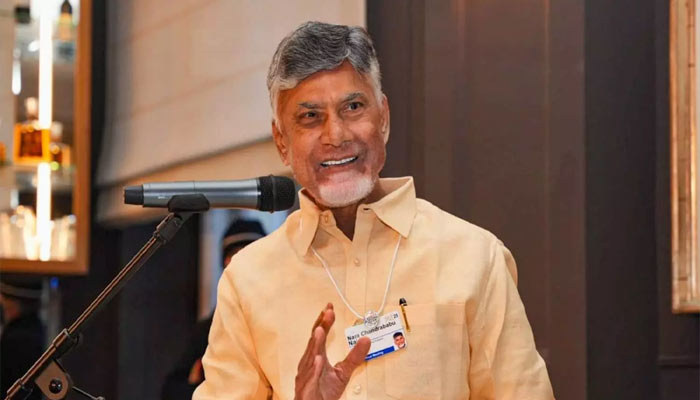
Chief Minister N Chandrababu Naidu, meanwhile, has focused on a longer-term solution to the state’s recurring water stress.
Speaking at the launch of the ‘Jal Jeevan Mission 2.0 – Amarajeevi Jaladhara’ programmes in Proddatur, Naidu said large quantities of river water were flowing into the sea even as parts of the state faced drought.
“While drought conditions prevail, 2,000 TMC of river water is flowing into the sea,” he said, adding that using at least 200 TMC of Godavari floodwater could transform Rayalaseema by providing water for agriculture and supporting greater greenery.
Naidu has also advocated interlinking the Godavari and Cauvery river systems, arguing that better integration of river waters could help southern states reduce their vulnerability to drought.
The early drought declaration has now brought immediate relief measures into focus, even as the political debate continues over whether the government acted quickly enough and whether all affected areas have been included.
Comments are closed.