
From Pakistan to India: Former Child Brides Hope Their Children Will Have a Better Future

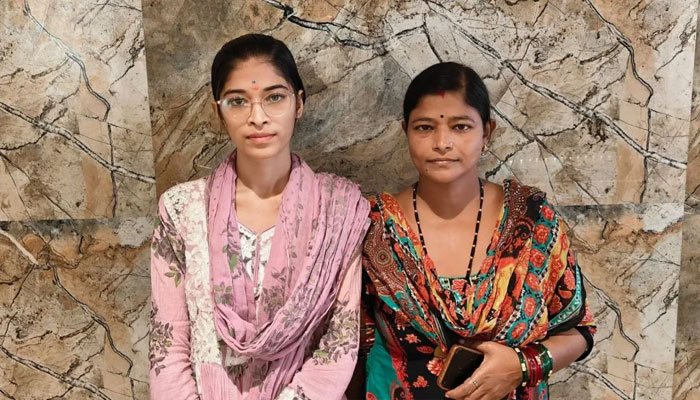
From Pakistan to a New Life in India: 158 Refugees Get Citizenship in Gujarat, One Dreams of Playing for the Country
For 31-year-old Rajnandini, receiving Indian citizenship is the culmination of a long struggle marked by displacement, discrimination and personal loss. A single mother of three who migrated from Karachi in 2008, she can now look forward to building a more secure future for her children in the country she chose to call home.
Rajnandini, also known as Saavi, was among 158 refugees who received Indian citizenship certificates at a ceremony in Ahmedabad on Tuesday. Gujarat Deputy Chief Minister Harsh Sanghavi acknowledged her from the stage during the event.
According to an official release, 126 people received citizenship under the Citizenship (Amendment) Act (CAA), while another 32 obtained it through the district collector’s office. Amendments to the CAA framework empowered designated collectors to grant citizenship in seven states and Union Territories.
For Rajnandini and others who migrated from Pakistan, the certificates represent years of waiting and the hope of greater stability.
‘I Never Wanted to Return to Pakistan’
Rajnandini arrived in India in 2008 with a group of around 50 to 60 people from Karachi. She recalled facing suspicion because of her Pakistani origins, with some people reluctant to rent houses to the migrants.
“People used to look upon us with suspicion. They say we have come from Pakistan and could be terrorists. Nobody would rent us a house and we spent many rainy days without a roof over our heads,” she said.
Her life became even more difficult when her husband, Rajendra, also known as Babur, died of COVID-19 during the pandemic. With her parents and siblings still living in Karachi, some people advised her to return to Pakistan.
Instead, she continued working as a seamstress while raising her three children on her own.
“I never thought of going back to Pakistan. Because however bad things appear to be here, there are worse things across the border… I don’t want to ruin the lives of my children by going back to Karachi,” she said.
Her parents, eight sisters and three brothers continue to live in Chanesar Goth, a neighbourhood in Karachi’s Sindh province. Rajnandini said her sisters also wanted to move to India but faced difficulties obtaining visas and lacked the financial means to pursue the process.
Poonam Gihara Still Hopes for Citizenship
At the Ahmedabad ceremony, 35-year-old Poonam Gihara sat beside her 22-year-old daughter, Kesar, and son-in-law, Rohan, hoping to secure Indian citizenship.
Poonam originally lived in Hyderabad, Pakistan, in Sindh province. She migrated to India in 2013 with a group of around 70 people, mostly members of her extended family. Some relatives had made the journey in 2008.
Her journey to India included travelling on the Thar Express, the cross-border train that connected Jodhpur in Rajasthan with Karachi. The service operated from 2006 to 2019.
After crossing the border at Munabao, the family travelled to Jodhpur and stayed at a gurdwara in Delhi for a week before settling in Ahmedabad.
Poonam said that even after years in India, her family continued to face taunts because of their Pakistani origins.
“We faced a lot of taunts and still do, even today. Even children have no qualms in calling us Pakistani on our faces. We try to avoid it, instead of fighting over it,” she said.
Asked whether citizenship would change people’s attitudes towards her family, she maintained that they did not need to prove themselves to anyone.
Early Marriage and Restricted Childhoods
Rajnandini and her close friend Saraswati, also known as Kanwal, share similar childhood experiences. Both belong to the Gihara Rajput community, a nomadic group originating in Rajasthan, many members of which settled in Sindh after Partition.
The two women said they were married when they migrated to India in 2008, at the age of 13.
They recalled that girls in their community often faced early marriages and strict restrictions on their movements and education.
Rajnandini said she was married at 12. Her eldest daughter is now 17, leaving an age gap of just 14 years between mother and daughter. Saraswati’s eldest child, a son, is 14.
Poonam also married young, at the age of 15, and has four children.
The women described how concerns about girls’ safety often prevented them from attending school or going outside independently.
Fear and Harassment in Their Former Neighbourhoods
Rajnandini recalled incidents of alleged abductions, sexual violence and harassment affecting Hindu women in parts of Karachi. She said gang violence, threats at gunpoint and police tear-gas shelling were familiar occurrences in her neighbourhood.
Saraswati described additional restrictions on women’s everyday lives. According to her, girls were expected to cover their faces when going outside, and families sometimes locked them in a room when workers such as plumbers or electricians visited their homes.
Fear of abductions also limited access to education. Some families arranged private tuition for their daughters when they could afford it.
The women said members of their community often used both Hindu and Muslim-sounding names in an effort to avoid discrimination.
The disruption also affected younger family members. Poonam’s daughter, Kesar, attended school in Pakistan but faced bullying over her Hindu faith. After migrating to India, she struggled to catch up academically and eventually left school after studying until Class 5.
‘We Could Drink Tea in the Open’
The women said their lives changed significantly after settling in Ahmedabad.
Rajnandini recalled feeling confined during her childhood in Karachi, where girls often depended on male relatives for everyday activities. In India, she discovered the freedom to walk outside, play in the rain, run behind cows and visit roadside shops.
She said that even something as ordinary as eating noodles at a roadside stall felt extraordinary because of the freedom it represented.
The women described these simple experiences as a contrast to the restrictions they had faced in their former homes.
Dharasindhu’s Dream of Representing India
Among the families who received citizenship certificates was that of Hariram Kachchhi, whose daughter Dharasindhu has overcome significant medical challenges and developed into a promising athlete.
Hariram’s wife, Baghan, was six months pregnant when the couple travelled from Sangar in Sindh to India on the Thar Express in March 2013, along with 25 others.
After arriving in Gujarat’s Anand district, Baghan went into labour at seven-and-a-half months. Dharasindhu was born weighing only 830 grams and spent 21 days in a neonatal intensive care unit.
Hariram said doctors had initially advised the family to take the baby home after her condition became critical. His elder brother, a paediatrician who had migrated to India in 2011, helped care for her.
Dharasindhu survived but faced multiple disabilities. Although her eyesight later improved and she learned to walk, she continued to experience hearing loss. Her family reported hearing loss of 70% in her left ear and 56% in her right.
Despite these difficulties, she played table tennis at the state level and later took up junior floor hockey, eventually reaching the national level.
Her family hopes she will be inducted into the Gujarat team. Hariram said citizenship is essential for obtaining the domicile certificate she needs to pursue that opportunity.
He now dreams of seeing his daughter represent India in floor hockey.
A New Chapter After Years of Uncertainty
The citizenship certificates issued in Ahmedabad mark an important milestone for 158 refugees seeking a secure future in India.
For Rajnandini, citizenship brings recognition after years of hardship and the opportunity to raise her children with greater stability. For Poonam’s family, it offers hope of overcoming the stigma associated with their migration. For Dharasindhu, it could help open the door to representing her state and country in sport.
Their experiences reflect the personal challenges faced by migrants rebuilding their lives, from interrupted education and social discrimination to the struggle for legal recognition.
For these families, citizenship is not merely a document. It represents the possibility of belonging, dignity and a future shaped by their own ambitions.
Comments are closed.