

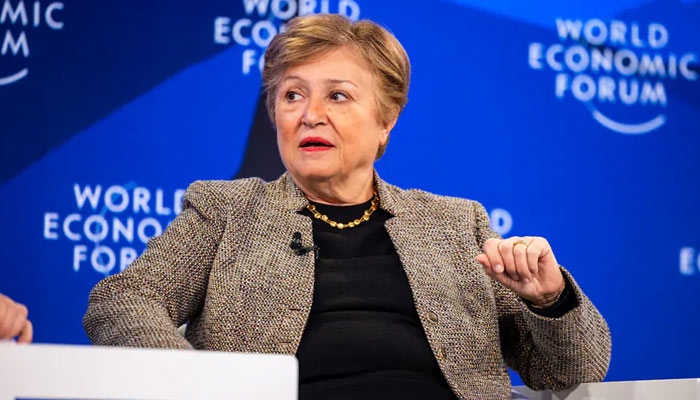
IMF Chief Kristalina Georgieva Warns Saudi Attacks Could Have Worldwide Economic Repercussions
International Monetary Fund (IMF) Managing Director Kristalina Georgieva has cautioned that recent attacks on Saudi Arabia could produce economic repercussions across the globe, as geopolitical tensions add to the uncertainties confronting the world economy.
Houthi strikes on Riyadh’s international airport over the weekend reportedly killed 13 people and disrupted airport operations. The incident was described as the most serious attack of its kind since 2015.
“The Saudi economy is important for the region and the world,” Georgieva said on Wednesday during a news conference at the IMF and World Bank Annual Meetings in Bangkok.
She warned that the developments could generate negative spillover effects well beyond Saudi Arabia, potentially affecting economies and people worldwide.
Rising Energy Costs and Debt Add to Economic Pressures
The IMF chief’s remarks came as policymakers and economists gathered in Thailand to discuss mounting global challenges. These include higher energy prices, growing government debt, inflationary pressures and uncertainty surrounding the rapid expansion of artificial intelligence investments.
Bond yields in several advanced economies have reached multi-decade highs, increasing borrowing costs and adding to concerns over public finances. Central banks also face pressure to raise interest rates if inflation remains elevated.
Georgieva urged governments to address their fiscal weaknesses before they become more difficult to manage.
“What is our loudest call to policymakers right now? Make urgent repairs to the fiscal house before the cracks widen,” she said.
She stressed the need to strengthen government revenues, review public expenditure and improve financial management.
IMF Raises 2026 Growth Forecast but Warns of Limits
In its latest World Economic Outlook, released on Tuesday, the IMF increased its forecast for global economic growth in 2026 by 0.1 percentage points to 3.1%.
Despite the upward revision, the Fund warned that the recovery remained uneven. While investment in artificial intelligence has generated new economic activity, many developing and low-income countries continue to struggle with rising energy costs and limited financial resources.
Georgieva said the world economy had continued to withstand repeated shocks, but its capacity to absorb further disruptions was coming under increasing strain.
She called for stronger support for low-income nations, saying they needed to reinforce their economic foundations to cope with future crises.
Debt Servicing Becomes a Growing Concern
Georgieva highlighted the mounting cost of servicing government debt as interest rates remain high. She said debt-servicing expenses had increased from about 6% of government revenues a decade ago to approximately 14% today.
The IMF’s Global Policy Agenda, also released on Wednesday, identified debt-servicing difficulties as a particularly serious challenge for low-income and vulnerable economies.
The Fund has urged governments to strengthen their public finances and take steps to contain rising debt levels.
China, US and Europe Urged to Address Imbalances
Georgieva also drew attention to persistent imbalances in the global economy, calling for policy changes among the world’s major economic powers.
“China needs to spend more, the US has to save more and Europe has to invest more,” she said.
China’s weak domestic demand has coincided with a significant increase in exports, resulting in large trade surpluses that have triggered growing concerns among trading partners.
Meanwhile, advanced economies have accumulated substantial debt since the Covid-19 pandemic and the conflicts in Ukraine and the Middle East. Increased government spending to cushion the impact of these crises has contributed to deteriorating fiscal positions.
IMF Calls for Fiscal Discipline
Commenting on the rise in bond yields and the challenges associated with reducing public debt, Georgieva said there was no simple solution.
She argued that governments needed to tighten fiscal policies and bring debt levels under control to strengthen economic stability.
“Fundamentals matter,” she said, urging IMF member countries to put their public finances in order.
Georgieva warned that failure to address these vulnerabilities could leave households and businesses bearing the cost of economic instability.
Comments are closed.