
India Urges COP31 to Ensure Fair Climate Action, Greater Funding and Technology Transfer

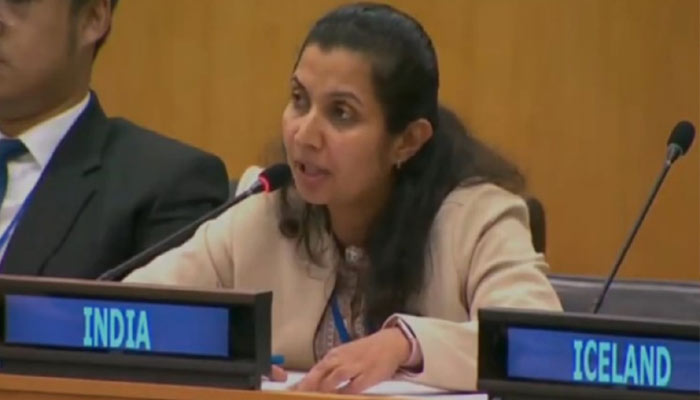
India Calls for Fair Climate Commitments, More Funding and Technology Support Ahead of COP31
India has urged countries to make climate finance, technology transfer and capacity-building for developing nations key priorities at COP31, emphasising that progress on climate action must be guided by fairness, equity and the effective implementation of existing global commitments.
Addressing a special event convened by the President of the United Nations General Assembly in New York, Soumya Nair, Counsellor at India’s Permanent Mission to the UN, said international climate cooperation must account for countries’ differing national circumstances, development requirements and capacities.
Recalling India’s position at the Pre-COP meeting in Fiji, Nair said the international community must focus on areas of common ground and rebuild trust through balanced implementation of climate commitments.
She stressed that developing countries need meaningful assistance to pursue their national climate strategies without compromising their economic growth and development priorities.
Climate Finance Remains a Key Concern
India has identified climate finance from developed countries as a central issue for COP31. New Delhi is calling for progress on financial commitments under Article 9.1 of the Paris Agreement, including discussions on their scope and implementation arrangements.
Nair also highlighted the role of cooperation under Article 6 in helping mobilise additional resources for climate action.
India called for improved access to climate-friendly technologies and faster deployment, urging efforts to address obstacles that prevent developing countries from obtaining and using such solutions.
On climate adaptation, the country emphasised the importance of predictable and accessible funding, technology and capacity-building, particularly for vulnerable populations. It also warned that complicated procedures and excessive reporting requirements could make it harder for developing nations to implement adaptation measures.
Nair said India was in the process of finalising its first National Adaptation Plan. She cited climate-resilient agricultural technology demonstrations in 448 villages across 151 vulnerable districts, as well as water conservation and rainwater harvesting initiatives under the Jal Shakti Abhiyan.
Push for a Just and Inclusive Climate Transition
India has called for COP31 to advance a just transition mechanism based on equity and the principle of common but differentiated responsibilities and respective capabilities (CBDR-RC).
The principle acknowledges that countries have different historical responsibilities for greenhouse gas emissions and unequal capacities to address climate change.
Nair emphasised that climate transition policies should protect livelihoods and allow countries to follow development pathways suited to their national circumstances.
India also raised concerns about unilateral trade measures, including carbon border adjustment mechanisms, arguing that such policies could place additional pressure on developing economies.
New Delhi maintains that climate-related measures should not undermine development opportunities or impose disproportionate costs on countries still addressing poverty, infrastructure gaps and energy access.
India Highlights Clean Energy Achievements
Highlighting domestic progress, Nair said India had reached the milestone of deriving 50 per cent of its installed electricity capacity from non-fossil fuel sources five years ahead of its 2030 target.
She pointed to the PM Surya Ghar rooftop solar programme and the National Green Hydrogen Mission as initiatives supporting the expansion of clean energy.
India is also working to promote international cooperation through platforms such as the International Solar Alliance and the Global Biofuels Alliance, which encourage collaboration in renewable energy and cleaner fuel technologies.
India’s position is that national climate efforts need to be reinforced by international finance, technology and cooperation, particularly in countries facing financial and technical constraints.
Global Stocktake Must Focus on Implementing Existing Pledges
India has stressed that climate negotiations should remain inclusive and based on consensus. It wants the global stocktake under the Paris Agreement to concentrate on improving the implementation of existing commitments, particularly those relating to finance and support for developing countries.
Nair cautioned against using the process to introduce additional mitigation obligations or sector-specific prescriptions outside the United Nations Framework Convention on Climate Change (UNFCCC).
The global stocktake assesses collective progress towards the Paris Agreement’s goals and helps inform future climate action. India maintains that it should support implementation rather than create new obligations beyond the agreed framework.
India Ready to Engage in COP31 Discussions
Concluding her remarks, Nair expressed support for the COP31 presidencies and said India was prepared to contribute through dialogue, technical cooperation and targeted capacity-building.
She reiterated that the needs of vulnerable nations and communities must remain central to global climate negotiations.
India’s position ahead of COP31 is that stronger climate ambition must be accompanied by practical support. Its priorities include the fulfilment of climate finance commitments, greater access to technology and climate policies that recognise the development needs and differing responsibilities of countries.
The summit will offer countries an opportunity to address outstanding differences over climate funding, adaptation, technology transfer and the equitable sharing of responsibilities while advancing implementation of the Paris Agreement.
Comments are closed.