
BRI Green Innovation Conference Calls for More Climate Finance for Developing Nations

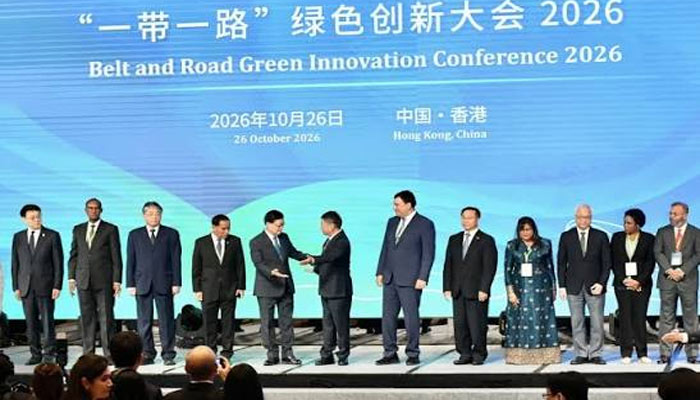
Belt and Road Green Innovation Conference 2026 Urges Stronger Climate Finance and Technology Support for Global South
The Belt and Road Green Innovation Conference 2026 in Hong Kong has called for stronger international cooperation to tackle climate change in the Global South, emphasising the urgent need for greater financial assistance, technology transfer and institutional support for developing countries.
Held on Monday, the conference brought together more than 300 government representatives, academics and industry leaders from 17 Belt and Road partner countries, alongside participants from around 40 provinces and cities across mainland China. Discussions centred on green finance, clean technology, climate resilience and sustainable economic development.
The event was jointly organised by China’s Ministry of Ecology and Environment, the Hong Kong Special Administrative Region (SAR) government and the International Green Development Coalition for the Belt and Road Regions. It aimed to strengthen practical partnerships and accelerate the transition towards greener economies.
Report Highlights Urgent Climate Adaptation Needs
A major highlight of the conference was the release of Green Development Outlook of the Global South 2026: Joining Hands for a Climate-resilient Future.
The report identified climate adaptation as an increasingly urgent priority for developing nations, with consequences for public welfare, economic growth and the long-term security of vulnerable communities.
It outlined several areas requiring immediate attention, including water and food security, climate-resilient agriculture, improved monitoring and early warning systems, ecosystem conservation and public health protection.
The report also highlighted persistent obstacles to adaptation, particularly inadequate financing, limited access to advanced technologies, gaps in technical expertise and governance-related challenges.
It called on developed countries to strengthen their assistance to developing economies and fulfil their relevant international obligations, enabling vulnerable nations to respond more effectively to escalating climate risks.
China Signs Climate Cooperation Agreements With Three Countries
The conference also saw China sign three memoranda of understanding through its Ministry of Ecology and Environment, expanding cooperation with Mongolia, Cambodia and Kenya.
The agreements covered environmental and climate cooperation with Mongolia, material assistance to Cambodia for climate-related projects, and collaboration with Kenya on climate change.
Organisers described Hong Kong’s hosting of the conference as a significant milestone, marking the first time the event had been held outside mainland China. The move is intended to broaden international engagement and deepen green development partnerships under the Belt and Road Initiative (BRI).
Beijing Reaffirms Commitment to Green Development
China’s Minister of Ecology and Environment, Huang Runqiu, highlighted Hong Kong’s role as a gateway for international engagement and pledged continued support from the central government for the SAR and the Guangdong-Hong Kong-Macao Greater Bay Area.
He said the two regions could use their respective strengths to advance green transformation and expand sustainable development cooperation across the Global South.
Huang also outlined China’s existing efforts under the BRI, noting that the country had signed more than 80 cooperation documents with relevant authorities in over 50 countries and regions. It had organised more than 300 training courses, with over 10,000 instances of participation by environmental officials from developing countries.
He urged governments and regions to coordinate their green development strategies, strengthen practical collaboration, promote technological innovation and build a more open and inclusive framework for green investment and financing.
Hong Kong Positions Itself as a Green Finance Hub
Hong Kong Chief Executive John Lee Ka-chiu emphasised the territory’s potential to connect international investors, sustainable development projects and emerging green technologies.
He highlighted Hong Kong’s role in linking green projects with financing, facilitating the commercial adoption of environmentally friendly technologies, promoting cross-border cooperation through recognised technical standards and developing expertise for the green economy.
Lee also pointed to Hong Kong’s standing in the international green and sustainable bond market, saying the SAR accounted for approximately 40 per cent of the Asian market in 2025.
According to Lee, Hong Kong’s financial infrastructure and global connections could help mobilise capital for sustainable projects and strengthen cooperation between economies pursuing low-carbon development.
Uzbekistan and Kenya Seek Deeper Partnerships With China
Participants from Uzbekistan and Kenya outlined proposals to expand practical cooperation with China in environmental protection, green investment and technology.
Aziz Abdukhakimov, adviser to Uzbekistan’s president on environmental issues and chairman of the country’s National Committee on Ecology and Climate Change, proposed a platform to help Uzbek industries adopt greener practices using China’s experience.
He also called for a joint advisory council, a dedicated working group on green investment and a unified online portal to connect Chinese investors with environmental projects in Uzbekistan, facilitating access to capital and technology.
Ali Mohamed, Kenya’s special envoy for climate change in the Executive Office of the President, advocated stronger China-Africa cooperation in green finance, the development of a green and low-carbon trade network, and common standards for digital solutions, including green data centres.
Their proposals highlighted the growing emphasis on converting international climate commitments into practical projects involving investment, technology transfer and industrial transformation.
Green Finance and Digital Innovation Take Centre Stage
Beyond the formal announcements, the conference explored ways to harmonise green finance frameworks, encourage technological innovation, strengthen industrial partnerships and use digital tools to accelerate sustainable development.
Participants stressed that developing countries need reliable access to financing, technical expertise and innovative solutions to address climate threats while pursuing economic growth.
The discussions also highlighted the importance of collaboration between governments, financial institutions, businesses and research organisations in making green development more accessible and effective.
As climate change increasingly threatens vulnerable communities and economies, the conference called for international partnerships that deliver measurable results. Its central message was that stronger financial support, wider technology access and sustained institutional cooperation are essential to building climate resilience and advancing a low-carbon future for the Global South.
Comments are closed.