
Mumbai Not the Worst Hit: These Maharashtra Cities Saw Higher Pollution Levels After Diwali

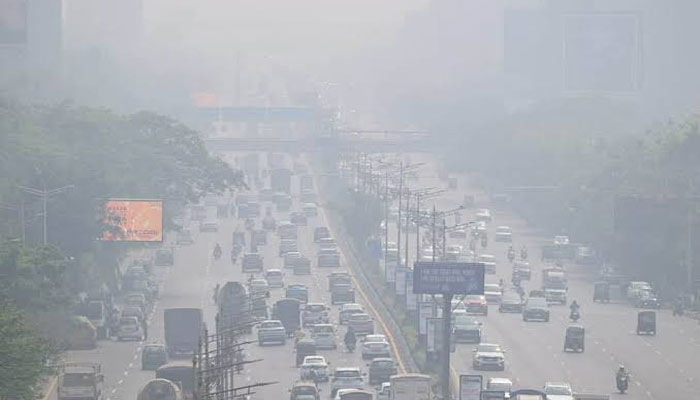
Several cities across Maharashtra experienced a significant rise in air pollution following Diwali, with inland areas recording worse air quality than Mumbai.
Pimpri Chinchwad emerged as the most polluted city, with its AQI crossing 300, while Pune witnessed pollution levels nearly 2.5 times higher than last year. On November 9, a total of 13 cities in the state recorded air quality in the ‘poor’ or ‘very poor’ categories.
The deterioration was particularly evident when compared with last year’s post-Diwali readings. Among the 10 worst-affected cities this year, only Nanded had reported poor air quality on the corresponding day last year. This time, all 10 cities fell into the poor or very poor categories. Mumbai, by comparison, recorded an AQI of 172, remaining in the moderate category.
Pimpri Chinchwad records Maharashtra’s highest AQI
Data from the Central Pollution Control Board (CPCB) dashboard, recorded at 4 pm on Monday, showed Pimpri Chinchwad leading the list with an AQI of 301. Nanded was next at 296, followed by Pune at 288 and Malegaon at 273. Nagpur, the home constituency of Chief Minister Devendra Fadnavis, recorded 268.
The other cities reporting high pollution levels were Jalna (266), Parbhani (246), Jalgaon (243), Nashik (234), Akola (230), Belapur (218), Chhatrapati Sambhajinagar (211) and Chandrapur (202).
Pune and other cities see major deterioration
The comparison with October 22 last year, the day after Diwali, shows a substantial increase in pollution across Maharashtra’s worst-affected cities.
Pune’s AQI surged from 115 to 288, while Malegaon recorded an increase from 123 to 273. In Akola, the reading climbed from 109 to 230, and Pimpri Chinchwad saw its AQI rise from 154 to 301. Nanded also recorded a nearly 37 per cent increase from last year’s level of 216.
Mumbai benefits from coastal weather conditions
Mumbai recorded a comparatively better AQI of 172. Other parts of the Mumbai Metropolitan Region also remained largely in the moderate category. Bhiwandi recorded 195, Dombivli 176, Kalyan 170 and Navi Mumbai 160.
However, pollution trends differed across the region. Mira-Bhayandar’s AQI improved from 256 to 148, whereas Bhiwandi witnessed an increase from 111 to 195.
Gufran Beig, an atmospheric scientist at the National Institute of Advanced Studies (NIAS), attributed Mumbai’s relatively better air quality to favourable coastal winds. He explained that an anticyclonic circulation developing over the Himalayas from November 10 brought easterly winds towards coastal areas, helping disperse pollutants.
According to Beig, cities such as Pune, Pimpri Chinchwad and Nagpur do not enjoy the advantage of sea breezes. He also pointed to slower wind movement associated with El Niño conditions, which has allowed pollutants from extensive firecracker use to remain suspended in the atmosphere.
Former National Environmental Engineering Research Institute (NEERI) scientist Tuhin Banerjee said changing sea temperatures and local pollution sources had further aggravated the situation. He noted that industrial emissions, particularly in districts such as Chandrapur, along with firecracker smoke, were contributing to the worsening air quality.
Maharashtra authorities tighten restrictions on firecrackers
The Maharashtra Pollution Control Board (MPCB) attributed the statewide deterioration in AQI primarily to firecracker bursting. Satish Padval, joint director (Air) at MPCB, said directions had been issued to municipal corporations, tehsil offices and district administrations to immediately restrict firecracker use. The police department was also instructed to take action against people bursting crackers in public places.
Thane District Collector Shrikrishna Panchal separately prohibited rockets and other aerial firecrackers across the district, citing public safety concerns. The Brihanmumbai Municipal Corporation subsequently introduced a similar restriction.
The ban will remain effective until November 25 in Mumbai and January 8, 2027, in Thane district. The restrictions cover the Mumbai region, excluding Vasai-Virar and Panvel.
The decisions followed a rise in fire incidents during Diwali. BMC data showed that the Mumbai Fire Brigade received 142 fire-related calls on Sunday, including 137 incidents linked to fireworks. In Thane, all 44 calls received by the fire brigade until Sunday night were attributed to firecrackers.
Understanding AQI and PM2.5 pollution
An AQI reading between 101 and 200 falls under the moderate category, while 201-300 is classified as poor and 301-400 as very poor. Moderate pollution can affect sensitive groups such as children and senior citizens, whereas poor and very poor air quality can cause health problems across age groups, including respiratory irritation and cardiovascular complications.
PM2.5 was identified as the main pollutant at the monitored locations. These fine particles, measuring 2.5 micrometres or less, are commonly produced by smoke and combustion. Due to their tiny size, they can enter deep into the lungs and pose significant health risks.
Comments are closed.