
Muslim Population May Surpass Christians By 2035, Report Predicts Declining Hindu Share Globally

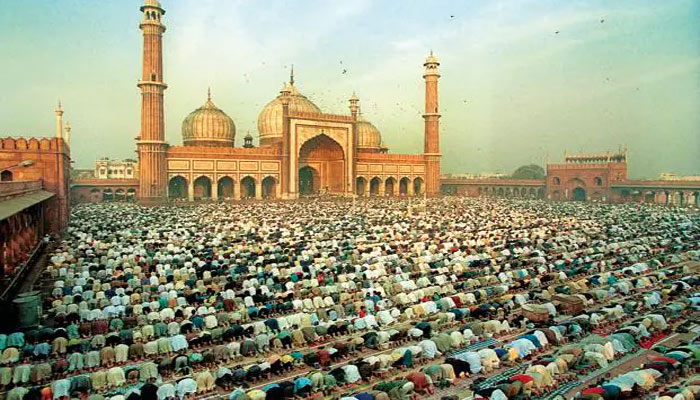
Muslim Population May Surpass Christians By 2035; Hindu Share Of Global Population Set To Fall
The global religious landscape could undergo a major demographic shift over the next decade, with Islam projected to overtake Christianity as the world’s largest religion by 2035, according to estimates by the Pew Research Center. The changing balance is primarily being driven by differences in birth rates, with Muslim populations growing faster than Christian communities.
A PTI report citing Pew’s findings said higher fertility among Muslim women is the biggest factor behind the projected change. Religious conversions and shifts in individual faith are expected to contribute much less to the overall population trends.
Pew senior demographer Conrad Hackett summed up the trend by saying, “It’s the babies.”
Between 2020 and 2025, Muslim women had an average of 3.1 children, compared with 2.5 among Christian women. The average fertility rate among women from other religious groups was 1.6, considerably below the replacement level of 2.1 children per woman.
Islam Could Take The Top Position By 2035
According to Pew’s estimates, Christians numbered approximately 2.27 billion worldwide in 2020, while the global Muslim population stood at around 2.02 billion.
The projections indicate that the number of Muslims could climb to 2.57 billion by 2035, slightly ahead of the estimated 2.52 billion Christians. If existing demographic patterns continue, the Muslim population could exceed 3.6 billion by 2070, while the Christian population is expected to remain just below 3 billion.
The research examines possible changes in the world’s major religious communities between 2020 and 2070, taking into account fertility, age distribution, migration and changes in religious identification.
Hindu And Jewish Population Shares May Shrink
Pew expects the absolute number of Hindus and Jews to increase over the coming decades. However, their share of the world’s total population is projected to decline as other religious communities grow at a faster pace.
The Buddhist population is expected to experience a decline in both numbers and global share. Falling populations in countries such as China, South Korea and Japan are among the factors contributing to this projection.
The study estimates that the world’s overall population will grow by 29% between 2020 and 2070. During the same period, the Christian population could increase by 30%, while the Muslim population is projected to expand by 80%.
Sub-Saharan Africa To Account For Major Population Growth
Africa, particularly the region south of the Sahara, is expected to play a central role in the changing religious demographics. Higher fertility rates and increasing life expectancy are projected to drive population growth among both Christians and Muslims in the region.
By 2070, more than half of the world’s Christians could be living in sub-Saharan Africa. The Democratic Republic of Congo is projected to become the country with the largest Christian population, overtaking the United States. Its Christian population could triple to approximately 270 million.
Europe is expected to follow a different demographic trajectory. Its total population could decline by 17% by 2070, while the number of Christians is projected to fall from 505 million in 2020 to 324 million.
In contrast, the Muslim share of Europe’s population could rise from 6% to 13% during the same period.
US And Canada Could Lose Christian Majorities
The Pew projections also point to a gradual decline in Christianity’s share of the population in North America.
Christians currently account for around 62% of the US population. However, their share is projected to fall below 50% by 2065. The number of Christians in the country could decline from approximately 217 million in 2020 to 174 million by 2070.
Canada could lose its Christian majority even earlier, with Christians projected to account for less than half of its population by 2030.
The growing number of people identifying as atheists, agnostics or having no religious affiliation is a major factor behind these changes. This group, commonly described as the religiously unaffiliated or “nones”, could account for 41% of the US population by 2070 and outnumber Christians in Canada.
The unaffiliated already form a majority in 10 countries, including Japan, the Czech Republic, the Netherlands, New Zealand, Uruguay and Vietnam. France, South Korea and the United Kingdom are also projected to reach this position by 2070.
Muslim Mothers Account For Highest Number Of Births
Pew’s estimates show that Muslim women gave birth to approximately 252 million babies between 2020 and 2025. Christian women accounted for around 208 million births during the same period.
Muslims are projected to be the only major religious group to record an increase in the number of births in the coming decades. Birth numbers among other religious communities are expected to remain stable or gradually decline.
The geographical distribution of Muslim populations is also expected to change. By 2070, Pakistan could have the world’s largest Muslim population, followed by India, Nigeria and Indonesia. Indonesia currently holds the top position.
Researchers Urge Greater Understanding Between Religions
The projected demographic changes have renewed attention on relations between Christian and Muslim communities.
Gina Zurlo, a senior researcher at Harvard Divinity School who specialises in religious demographics, described Christian-Muslim relations as “extremely important” in light of the changing population patterns.
She said the idea of a “clash of civilisation” continues to influence some religious communities and contributes to misunderstandings about both faiths. Zurlo called for greater interfaith education and more personal interaction between people belonging to different religious backgrounds.
Alan Cooperman, Pew’s director of religion research, cautioned against interpreting the projections as evidence that the growth of one religion is taking place at the expense of another.
“I don’t think this is a situation in which the growth of Muslims is coming at the expense of Christians,” he said. Cooperman noted that most population growth among both communities would occur in countries where they already have a substantial presence, while religious conversion would account for only a small part of the change.
The study also highlights the continued expansion of the religiously unaffiliated population. Excluding China, where the unaffiliated population is already substantial but the overall population is expected to decline, this group could grow by more than 180 million by 2070.
Overall, the projections underline how fertility rates, population age structures and regional demographic changes could reshape the world’s religious composition by 2070. While Islam is projected to move ahead of Christianity by 2035, both faiths are expected to remain major components of the global population.
Comments are closed.