
ASEAN Forum Calls for Urgent, Stronger Measures to Address Climate Change

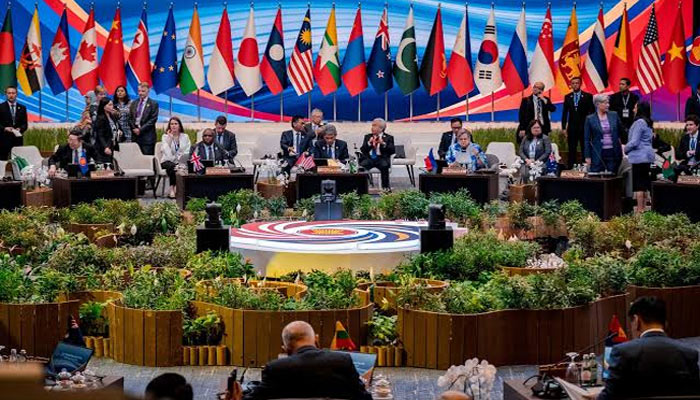
Climate resilience has become an economic priority for Southeast Asia as extreme weather, fragmented governance and ageing infrastructure increasingly threaten the region’s growth and competitiveness, experts said at a regional forum in Bangkok.
The issue was discussed during an ASEAN Forum 2026 panel on “Strengthening ASEAN’s Physical Resilience” in August. Experts stressed that climate risks should be integrated into economic and development planning rather than being treated solely as an environmental issue.
Thailand’s Growing Climate Vulnerability
Witaya Wannasuphoprasit, dean of engineering at Chulalongkorn University, identified erratic rainfall, rapid urban expansion and fragmented water management as key challenges facing Thailand.
He said drainage systems built around historical weather patterns are increasingly struggling with heavier and unpredictable rainfall. Meanwhile, unplanned urban development has reduced natural floodplains and weakened the ability of cities to absorb excess water.
Water management remains another major concern, with around 50 government agencies handling different aspects of the sector through separate budgets and priorities, while data sharing remains limited.
Witaya also argued that water should be seen as an economic resource rather than solely as a climate threat. Referring to UN data covering about two decades, he said water productivity — the economic value generated per cubic metre of water — has remained largely stagnant across Southeast Asia despite improvements in other parts of the world.
He called for stronger community participation and suggested initiatives such as “water schools” to help residents better understand flood and drought risks.
Shift Towards Nature-Based Infrastructure
Wannaporn Phornprapha, founder and managing director of landscape architecture firm P Landscape Company, said Southeast Asian countries remain heavily dependent on “gray” infrastructure, such as concrete-based drainage and flood-control systems.
She said fragmented planning is one of the region’s biggest weaknesses, with projects often designed to address risks within limited areas without considering their impact on surrounding communities and ecosystems.
“Water has no boundary,” she said, highlighting the need for infrastructure and urban planning that extends beyond administrative borders.
Wannaporn also pointed to gaps in regulations and data, as well as the perception that climate-resilient infrastructure adds unnecessary costs. She argued that benefits such as improved public health, liveability and long-term economic gains are often overlooked because they are difficult to quantify.
Regional Cooperation Needed
Satoshi Iemoto, an expert associated with a Japan International Cooperation Agency project, said climate adaptation requires cooperation because rivers, coastlines and other natural systems extend across national borders.
He called for greater knowledge-sharing among countries facing similar disaster risks, stronger involvement of local governments and communities, and a combination of modern technology with traditional and community-based knowledge.
Tackling Fragmentation
Panelists said Southeast Asia’s resilience challenge is not primarily a lack of technical expertise but fragmentation across government agencies, data systems, infrastructure projects and national policies. They urged countries to make better use of existing resources by sharing data, expanding nature-based infrastructure, incorporating local knowledge and strengthening cross-border coordination.
Experts stressed that building climate resilience will require a coordinated approach across governments, communities and economic sectors, with climate adaptation treated as a long-term investment in Southeast Asia’s economic stability and competitiveness.
Comments are closed.