
Special Parliament Session Before Winter Session? Centre Weighs Move To Pass Women’s Reservation, Delimitation Bills

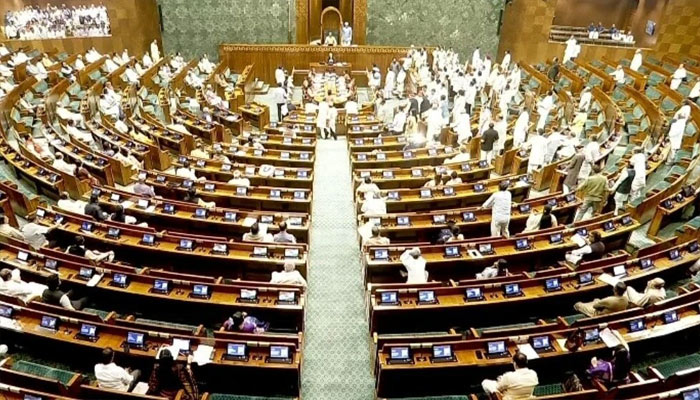
Centre May Call Special Parliament Session Before Winter Session To Push Women’s Quota And Delimitation Bills
The Centre is considering convening a special session of Parliament before the Winter Session to move forward with legislation related to delimitation and the implementation of 33% reservation for women in the Lok Sabha and state assemblies.
The proposed move comes after the government’s earlier attempt to secure parliamentary approval for the legislative package failed in April due to a lack of the required majority. However, BJP leaders are now expressing confidence that the ruling NDA can gather sufficient support to pass the constitutional amendments.
According to government sources, the Winter Session could begin on November 30 or December 4. This leaves the government with the option of holding a brief special sitting before the regular session. However, no official announcement has been made regarding the dates.
A senior Union Minister indicated that there was no constitutional requirement for the Winter Session to begin in the third week of November. NDA leaders are reportedly considering both a special session and the Winter Session as possible opportunities to introduce the pending Bills.
Delimitation Plan Could Increase Lok Sabha Strength To 850
The legislative package includes a Constitution Amendment Bill, the Delimitation Bill and the Union Territories Laws (Amendment) Bill.
The proposed legislation seeks to establish a Delimitation Commission to redraw parliamentary constituencies and increase the strength of the Lok Sabha from its existing 543 seats to a maximum of 850.
The exercise is also linked to bringing the Women’s Reservation Act into effect ahead of the 2029 Lok Sabha elections. The legislation provides for 33% reservation for women in the Lok Sabha and state legislative assemblies.
The government is yet to formally announce the proposed special session. However, the possibility has gained attention because the Monsoon Session, which was adjourned sine die on August 13, has not been prorogued. This could allow Parliament to reconvene the existing session without the usual 14-day notice required for summoning a fresh session.
NDA Needs Opposition Support To Clear Constitutional Amendment
Securing the necessary parliamentary numbers remains a major hurdle for the government.
A constitutional amendment requires a majority of the total membership of each House, along with the support of at least two-thirds of members present and voting. The legislation cannot be passed through a joint sitting of Parliament.
According to BJP sources, the NDA has 320 members in the Lok Sabha and 155 in the Rajya Sabha. If all members are present and voting, the government would need 360 votes in the Lok Sabha and 161 in the Rajya Sabha.
The earlier constitutional amendment proposal was defeated in the Lok Sabha on April 17, exposing the government’s difficulty in securing the required support.
BJP leaders now claim that fresh discussions with political parties have improved their position. Some government sources have indicated that the NDA could secure a margin of 15 to 18 votes beyond the required threshold, although the details of these calculations have not been made public.
DMK Seeks Written Assurance On Southern States’ Representation
The DMK’s position is expected to be particularly important in the government’s efforts to secure support.
The southern party has raised concerns that population-based delimitation could increase the parliamentary representation of northern states while reducing the relative influence of southern states that have successfully controlled population growth.
The DMK is reportedly seeking a written commitment from the Centre that no southern state will lose its proportional share of representation.
The BJP has indicated that it is considering a formula under which the Lok Sabha seat allocation of every state could be increased by 50%, irrespective of population growth. The proposal is intended to address concerns among states that have made progress in population control.
Tamil Nadu Chief Minister and TVK leader C Joseph Vijay has also called for a clear legislative guarantee protecting the parliamentary representation of southern states.
BJP leaders believe that a change in the TVK’s position could help persuade the DMK to reconsider its stand. However, the DMK’s final decision will depend on the assurances provided by the Centre. <FileCite ref_id=”turn605024search1″ />
Samajwadi Party’s Stand Adds Another Dimension
The Samajwadi Party is another important party whose position could influence the outcome of the proposed legislation.
The SP’s 37 Lok Sabha MPs had opposed the constitutional amendment during the April vote. However, BJP leaders believe the party may face political difficulties if it opposes delimitation, given the potential increase in Uttar Pradesh’s parliamentary representation.
At the same time, supporting a BJP-backed Bill ahead of next year’s Uttar Pradesh Assembly elections could create its own political challenges for SP chief Akhilesh Yadav.
One possibility being discussed is that opposition MPs could abstain rather than vote against the legislation. Such abstentions would reduce the effective strength of the House and potentially lower the number of votes needed for a two-thirds majority.
Special Session Could Be A Crucial Opportunity For The Centre
The government is continuing its efforts to engage regional parties and address concerns over the distribution of parliamentary seats.
With the 2029 Lok Sabha elections approaching, the proposed legislative changes have become an important part of the government’s parliamentary agenda. Whether the Bills are introduced in a special sitting or during the Winter Session will depend largely on the Centre’s ability to secure the required constitutional majority.
For now, the possibility of a special Parliament session remains under consideration, while negotiations over delimitation and women’s reservation continue.
Comments are closed.