
CJI’s Remark to Quota Rotation Plea: ‘You Have Dialled the Wrong Number, Go Protest’

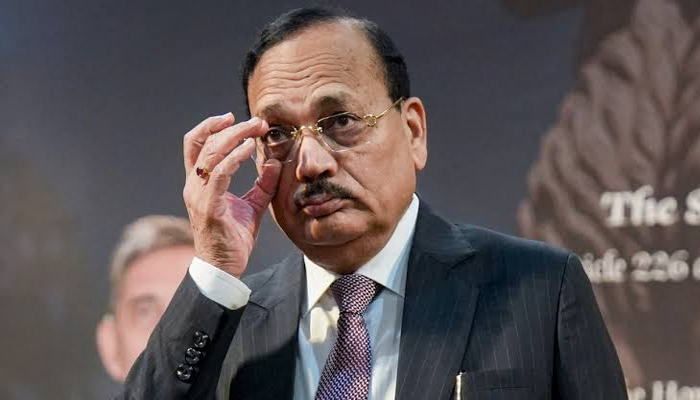
‘Wrong Number! Go Protest’: CJI Surya Kant’s Response to Plea for SC/ST Quota Rotation
Chief Justice of India (CJI) Surya Kant made a witty observation while hearing a petition demanding periodic rotation of constituencies reserved for Scheduled Castes (SC) and Scheduled Tribes (ST), suggesting that the issue should be addressed by Parliament rather than the Supreme Court.
“You’re dialling the wrong number. This is the good season for protests and naarebaazi (slogans). You can also do that,” the CJI told the petitioner during the hearing.
The remarks came as a bench headed by CJI Surya Kant and comprising Justice Joymalya Bagchi considered an appeal against the continued reservation of certain constituencies without rotation.
The petitioner claimed that several constituencies had remained reserved since 1972, allowing the same three or four families to repeatedly contest elections. The plea argued that this practice restricted electoral choices and sought a system of periodic rotation.
The petitioner also relied on recommendations contained in the Delimitation Commission’s 2008 report, contending that the failure to rotate reserved seats affected voters’ freedom of choice.
Urging the petitioner to take the demand to lawmakers, the CJI said, “Muster some strength and raise their voice and say that the time is ripe for the legislature to do something.”
SUPREME COURT SAYS IT CANNOT ACT AS A THIRD CHAMBER
During the proceedings, Justice Joymalya Bagchi observed that the matter involved legislative and constitutional decisions that could not simply be changed through judicial intervention.
“The option may be limited, but your right to vote is there,” Justice Bagchi remarked, explaining that restricted candidate choices did not mean voters had lost their fundamental right to vote.
He further stated that the judiciary could invalidate a provision or read it down in cases of manifest arbitrariness, but could not independently rewrite constitutional arrangements to introduce constituency rotation.
“We cannot play the role of a third chamber of Parliament,” the judge said.
The bench also suggested that citizens could approach their elected representatives and make the rotation of reserved constituencies an electoral issue. The CJI indicated that voters could demand legislative changes and communicate their dissatisfaction through the ballot.
WHAT WAS THE PETITIONER’S ARGUMENT?
The appeal challenged Section 9(1)(c) of the Delimitation Act, questioning the failure to rotate SC/ST-reserved constituencies despite recommendations made by the Delimitation Commission.
The petitioner’s counsel also referred to the commission’s observations regarding rotation in municipal and panchayat elections.
However, the bench said delimitation was a legislative exercise and that the guidelines applicable to the process did not mandate continuous rotation of reserved constituencies.
Justice Bagchi pointed out that rotation in local body elections was governed by separate legislative provisions.
Ultimately, the Supreme Court dismissed the appeal, declining to interfere with the High Court’s decision. The High Court had observed that although rotation could be desirable, deciding whether to introduce such a mechanism was within the legislature’s jurisdiction.
The Supreme Court left the petitioner free to approach elected representatives and pursue the demand for implementing the rotational principle in accordance with the Delimitation Commission’s recommendations.
Comments are closed.