
Climate Change Expands Heavy Rainfall Zones Worldwide, Study Finds

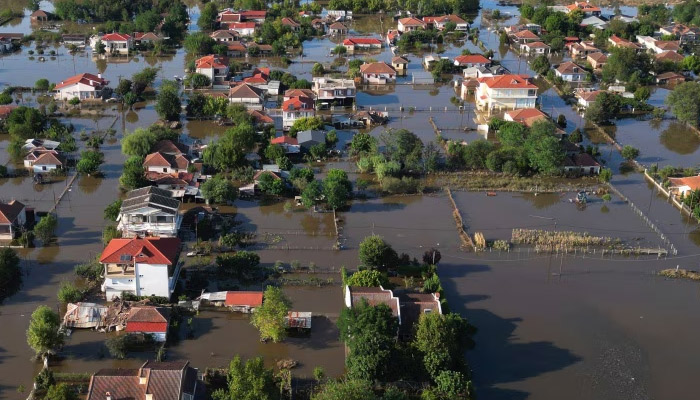
Climate Change Is Expanding Heavy Rainfall Zones, but Population Shifts Will Shape Future Flood Risks: Study
Climate change is causing heavy rainfall events to spread across larger areas of the world, but a new study suggests that future flood risk will depend on more than just where storms become stronger.
Researchers have found that population growth, migration and urbanisation could play an equally important role in determining how many people are exposed to extreme rainfall in the decades ahead.
The study, led by Han Zhou of Wuhan University and published in the journal Earth’s Future, examined how the geographical footprint of heavy rainfall is expected to change under different climate scenarios. The researchers combined climate projections from the CMIP6 model ensemble with future population forecasts to assess both hazard and human exposure.
Scientists have long known that a warming atmosphere can hold more moisture. As global temperatures rise, the atmosphere retains approximately 7 per cent more water vapour for every 1°C increase, increasing the likelihood of intense rainfall events and flooding.
However, the new research argues that understanding rainfall patterns alone provides only part of the picture.
Instead of focusing solely on rainfall intensity, the study analysed the expansion of daily precipitation events exceeding 50 millimetres and compared these changes with projected population distributions.
The findings revealed a striking contrast between climate hazards and human exposure.
Under the high-emissions SSP5-8.5 scenario, areas experiencing heavy rainfall are projected to expand nearly three times faster than under the moderate-emissions SSP2-4.5 pathway. Yet population exposure to those rainfall zones is expected to increase most rapidly under the moderate-emissions scenario.
According to the researchers, this apparent contradiction is driven by demographic trends rather than climate alone.
As populations grow, migrate and become increasingly concentrated in urban centres, more people may end up living in areas vulnerable to extreme rainfall—even in scenarios where the increase in climate hazards is relatively slower.
The study found that parts of Asia and South America could witness a decline in the number of people exposed to heavy rainfall despite stronger storms and expanding rainfall zones. In contrast, North America, Africa and Oceania are expected to experience growing exposure as population increases coincide with expanding areas of intense precipitation.
Researchers described this pattern as an “adaptation trap”, where slower growth in climate hazards masks a more rapid rise in human exposure.
“Our results reveal an adaptation trap, in which a slower-growing hazard masks a faster-growing exposure, challenging conventional risk assessments and redefining priorities for sustainable climate adaptation,” the authors wrote.
The findings highlight the need for policymakers to move beyond traditional climate projections when planning for future flood risks. Factors such as migration, population density, land-use patterns and urban development could significantly influence where the greatest vulnerabilities emerge.
The study concludes that as climate change reshapes global rainfall patterns, future flood risk will increasingly be determined by the interaction between environmental change and human settlement decisions.
In other words, the question may not simply be where heavier rain falls, but where people are living when it does.
Comments are closed.