

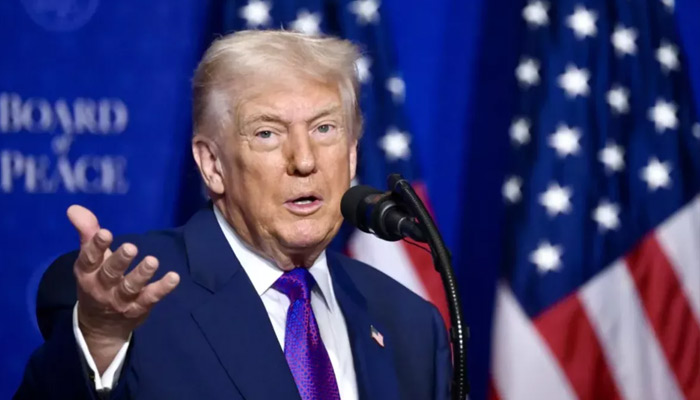
Talks between the United States and Iran finally got underway in Islamabad on Saturday after a delay of over five hours, with Donald Trump warning of a potential “reset” if negotiations fail.
Confirming the start of discussions, Trump struck a guarded tone, saying he had “no idea” how the talks would unfold and would assess Iran’s intent “in a very short period.” He also suggested the Strait of Hormuz could reopen soon, even as he hinted at alternative global oil routes.
Delayed start, high stakes
The meeting marks one of the most significant engagements between Washington and Tehran in decades.
US representatives, including JD Vance, Steve Witkoff and Jared Kushner, sat across the table from Iranian officials led by Mohammad Bagher Qalibaf and Foreign Minister Abbas Araghchi.
Talks lasted about two hours before being paused, with Pakistan playing host and facilitator. Prime Minister Shehbaz Sharif had earlier helped bring both sides to the table despite disagreements over preconditions.
Mistrust shapes early exchanges
Confusion and conflicting claims quickly underscored the fragile nature of the dialogue.
A US official said American naval vessels had passed through the Strait of Hormuz — a key global energy chokepoint — but Iranian media and Pakistani officials disputed the claim. Trump, meanwhile, asserted that US forces were securing the route and that Iran’s naval strength had been reduced.
Another flashpoint emerged over reports of a possible release of frozen Iranian funds. While Iranian sources described it as a goodwill gesture, US officials denied any agreement, and Qatar, where some funds are reportedly held, remained silent.
Iran’s demands, regional complications
Tehran has entered talks with firm conditions: guarantees over Hormuz, access to financial assets, compensation for conflict-related losses, and a wider ceasefire across the region.
A major sticking point is the ongoing conflict in Lebanon. Iran has pushed for a halt to hostilities involving Hezbollah, but both Washington and Israel insist that issue lies outside the scope of these negotiations.
Iranian spokesperson Fatemeh Mohajerani captured the mood, saying Tehran would negotiate “with our finger on the trigger,” reflecting deep mistrust.
Risks beyond the table
Even as talks proceed, Israeli strikes and surveillance continue over Beirut, with Hezbollah responding in kind, keeping regional tensions high. Within Pakistan, security has been tightened, highlighting the sensitivity of the moment. Analysts warn that failure of the talks could escalate tensions and potentially draw in regional players, particularly given Islamabad’s ties with Saudi Arabia.
Uncertain path forward
These talks — the most significant since the collapse of the 2015 nuclear deal — open a narrow diplomatic window.
But with deep mistrust, competing demands, and conflict continuing on multiple fronts, the risk of breakdown remains high, with Trump’s “reset” warning underscoring how quickly the situation could escalate.
Comments are closed.