
Delhi Red Fort Blast: CCTV Footage Points to Suspected Suicide Bomber Linked to Faridabad Terror Module

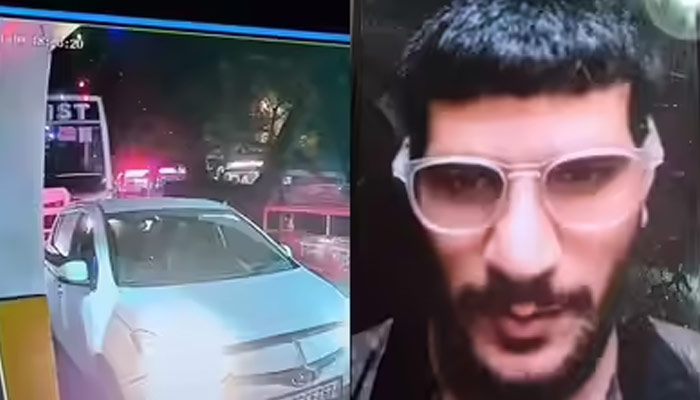
Investigations into the Red Fort car blast in Delhi have pointed to a chilling terror link involving a Faridabad-based doctor, Dr Umar U Nabi, originally from Pulwama, Jammu & Kashmir, according to sources cited by CNN-WNS.
Forensic analysis and CCTV footage suggest Dr Umar’s direct involvement in the explosion that killed nine people and injured over 20 during Monday’s evening rush hour. A severed hand recovered from the site is believed to belong to the car’s driver — suspected to be Dr Umar. Investigators have collected DNA samples from his family in Kashmir to confirm the identity.
CCTV footage also shows a man in a blue shirt moments before the blast — believed to be Dr Umar, who was serving as a faculty member at Al-Falah Medical College in Faridabad.
Born on February 24, 1989, Dr Umar, the son of Gh Nabi Bhat and Shamima Banoo of Koil, Pulwama, was reportedly academically gifted but radicalised in recent years. His mother and two brothers have been detained by police, while other family members are under surveillance.
According to officials, Dr Umar completed his MD in Medicine from Government Medical College, Srinagar, worked as a senior resident at GMC Anantnag, and later moved to Delhi. He is believed to have been part of a radical network of medical professionals, dubbed the “Faridabad module,” operating through encrypted Telegram channels. The group reportedly included Dr Adeel, another suspect under investigation.
Sources say Dr Umar may have been planning a larger coordinated attack, but triggered the blast prematurely out of fear of being caught after recent crackdowns in Jammu & Kashmir and Haryana. A senior official said, “After the Faridabad and J&K police operations, Dr Umar, who was absconding, may have panicked and detonated the explosives he had access to.”
The Hyundai i20, packed with high-grade explosives, detonated near the Red Fort Metro Station, sending shockwaves across central Delhi. The National Investigation Agency (NIA) is now expected to formally take over the probe. Authorities fear that the case could expose a wider network of radicalised professionals working covertly under digital anonymity — a development that has raised serious concerns within the national security establishment.
Comments are closed.