
‘E20 Has Turned Into 420’: Rahul Gandhi Questions Petrol Quality, Launches Attack on PM Modi

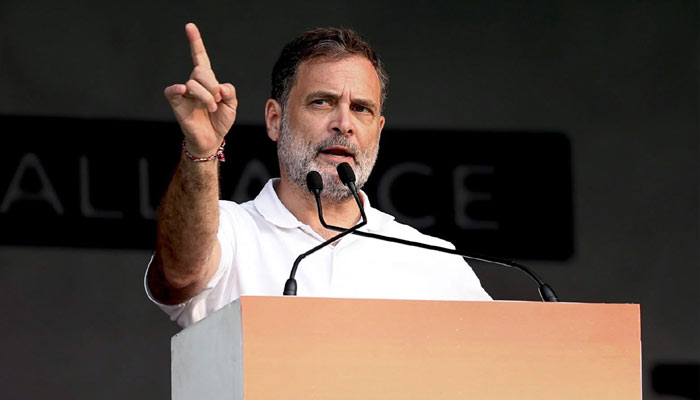
Rahul Gandhi Questions E20 Petrol Quality, Claims 11 of 14 Samples Had Excess Ethanol
Leader of the Opposition in the Lok Sabha Rahul Gandhi has questioned the quality of E20 petrol being sold in India, alleging that several major oil companies supplied fuel containing ethanol beyond the prescribed 20 per cent limit.
In a post on X on Saturday, Gandhi shared findings from laboratory tests of 14 petrol samples collected across seven districts of Karnataka. He claimed that 11 samples recorded ethanol concentrations above the permitted level, raising concerns over fuel quality and consumer protection.
Taking a swipe at the Centre’s ethanol-blending initiative, Gandhi remarked, “E20 turned into 420 – stealing petrol from the public’s cars!” He alleged that both public and private oil marketing companies were responsible for supplying fuel with excessive ethanol content.
Among the findings cited by him were ethanol concentrations of 31.2 per cent in an Indian Oil Corporation (IOCL) sample and 30.5 per cent in a sample associated with Hindustan Petroleum Corporation Limited (HPCL).
The samples were reportedly collected from Bengaluru, Kolar, Chikkaballapura, Bengaluru Rural, Ramanagara, Mangaluru and Tumakuru. Gandhi also mentioned Bharat Petroleum Corporation Limited (BPCL), Nayara Energy and Shell in connection with the testing exercise.
He further alleged that the companies’ internal laboratories had not provided adequate information about the ethanol content detected in the samples.
Questioning Prime Minister Narendra Modi, Gandhi demanded clarity on the actual ethanol concentration in petrol supplied across the country and asked when action would be taken against companies allegedly exceeding the prescribed limit. He also indicated that the issue would feature in his proposed debate with the Prime Minister.
KARNATAKA GOVERNMENT RAISES FUEL QUALITY CONCERNS
The controversy has emerged amid a disagreement between the Karnataka government and oil marketing companies over the ethanol content of petrol sold in the state.
Karnataka Food, Civil Supplies and Consumer Affairs Minister Rizwan Arshad had previously said that tests conducted by Bengaluru-based Shriram Research Institute, an NABL-accredited and ISO-certified laboratory, detected ethanol levels above 20 per cent in multiple samples.
The state government maintained that samples had initially been sent to the in-house laboratories of IOCL and BPCL, but the reports did not disclose the ethanol concentration. This prompted officials to seek independent laboratory testing.
OIL MARKETING COMPANIES CHALLENGE TEST RESULTS
IOCL, BPCL and HPCL have rejected the conclusions drawn from the Karnataka government’s testing exercise, asserting that their E20 petrol meets the applicable Bureau of Indian Standards specification, IS 17021.
In a joint statement, the companies questioned the sampling procedure used during the October 2026 exercise. They said their representatives were not present during sample collection and that they had not been provided with retention samples, outlet-wise details or complete laboratory reports.
They also raised concerns about the technical information accompanying the third-party laboratory certificates, arguing that the available documentation was insufficient to independently verify the reported ethanol concentrations.
The companies disputed estimates of Rs 62,000 crore in annual mileage losses and Rs 39,000 crore in vehicle repair expenses, saying these figures required proper scientific and technical evidence.
They have sought access to the complete sampling records and corresponding samples to enable independent testing at an authorised laboratory in the presence of state government representatives.
ETHANOL BLENDING POLICY FACES FRESH QUESTIONS
The dispute has renewed the debate surrounding the Centre’s E20 petrol programme and its implications for vehicle owners.
E20 fuel is a blend containing up to 20 per cent ethanol and is part of the government’s strategy to reduce dependence on imported crude oil, promote domestic ethanol production and lower emissions.
However, motorists have raised concerns about possible changes in mileage and the long-term impact of higher ethanol blends on vehicle components, particularly in older vehicles that may not have been designed for E20 compatibility.
The Karnataka government has called for action if violations of the prescribed blending standards are established, while oil companies have demanded independent verification of the test results.
The disagreement has brought fuel quality monitoring, laboratory transparency and consumer safeguards back into focus, with the actual ethanol content of the disputed samples remaining a central point of contention.
Comments are closed.