

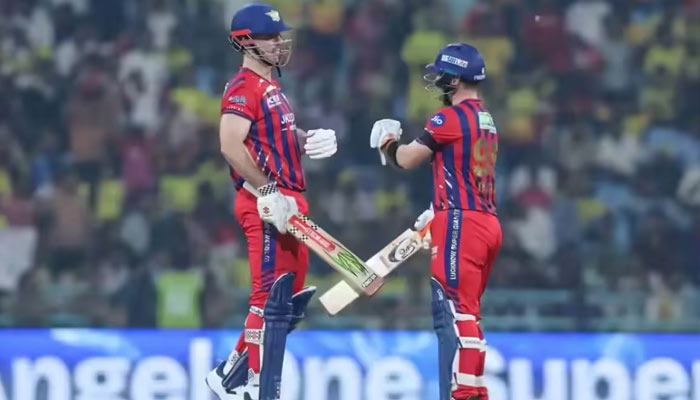
Two separate bursts of four consecutive sixes defined Chennai Super Kings’ downfall as their defence of 187 against Lucknow Super Giants collapsed at the Ekana Stadium on Friday.
In a crucial IPL 2026 clash with playoff implications, CSK’s inability to adjust under pressure proved costly. After a slow start to the season, CSK had regained momentum with four wins in their last five matches, briefly reviving their hopes of a top-four finish. However, those aspirations took a major hit following a dominant batting display from Mitchell Marsh, whose explosive 90 set up Lucknow’s commanding chase.
Marsh was in destructive form, striking seven sixes and nine boundaries before being run out in the 12th over. By then, however, he had already done significant damage to the CSK attack.
Earlier, CSK posted 187 on a surface offering bounce and carry, with useful contributions from Kartik Sharma and Shivam Dube. The total looked competitive, but only if the bowling unit could execute with discipline and consistency.
That plan unravelled quickly.
Marsh launched the assault in the fifth over, hammering Anshul Kamboj for four consecutive sixes. Persisting with a hard-length strategy, Kamboj repeatedly bowled into Marsh’s hitting arc, allowing the Australian batter to capitalise on the pace and bounce on offer.
The West Australian, well accustomed to lively conditions from his formative years in Perth, dominated the matchup from the outset. Kamboj endured a forgettable outing, finishing with figures of 2.4-0-63-0—among the most expensive spells of the season.
CSK’s failure to alter their approach—by varying lengths, lines, or pace—allowed Marsh to settle into a devastating rhythm. Questions were also raised over on-field adjustments, with skipper Ruturaj Gaikwad unable to effectively disrupt the flow from mid-off.
The damage compounded in the 17th over when Nicholas Pooran targeted Kamboj again, smashing another sequence of four consecutive sixes. It marked the second instance in the match where CSK conceded four sixes in four balls, underlining their tactical collapse.
By that stage, the result was effectively sealed, but the punishment continued. After the match, Gaikwad defended the strategy, saying CSK had backed the hard-length plan based on the conditions.
“We were looking to hit that hard length, proper Test-match length. We felt there was something in it, and the ball was nibbling around, but they played some extraordinary shots. We missed execution in a few areas,” he said.
The defeat highlighted deeper concerns for CSK as they continue to reshape their identity in the post-MS Dhoni era. On this occasion, the difference was not just execution—but a lack of timely adaptability under pressure.
Comments are closed.