

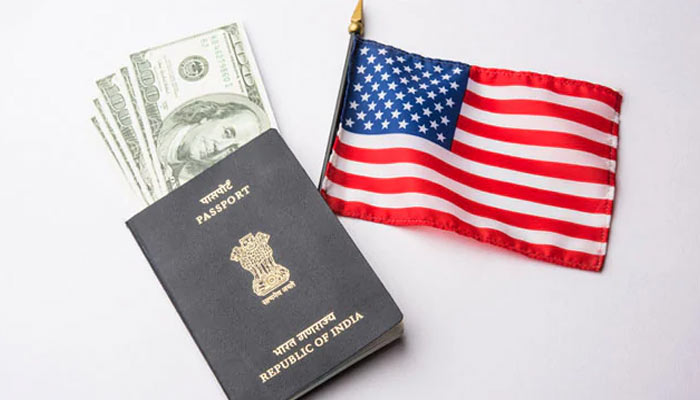
The Trump administration is considering sweeping changes to US immigration programmes that could significantly increase costs for foreign workers and international students, with Indian nationals likely to face a major impact.
The Department of Homeland Security is proposing to increase the H-1B visa fee to $103,265, according to a Federal Register posting on Monday. If approved, the proposal could raise the cost of hiring foreign professionals for US companies while making the transition from university to employment more expensive for international students.
WHY INDIANS ARE PARTICULARLY AFFECTED
The proposed H-1B fee hike is especially significant for Indians, who make up more than 70% of H-1B beneficiaries. US Citizenship and Immigration Services approved 399,402 H-1B petitions in 2024. Indian-born beneficiaries accounted for about 71% of those approvals.
Immigration law firm Fragomen said the proposals have already passed through the White House Office of Management and Budget review process. A proposed rule involving Optional Practical Training fees was submitted to OMB on August 20, while a separate proposal concerning fees on certain H-1B petitions was received and cleared by the agency on August 19.
$100,000 OPT FEE ALSO POSSIBLE
The DHS could also propose a new $100,000 fee linked to certain OPT applications, according to Fragomen. OPT allows eligible international students on F-1 visas to work in the US after completing their studies. A substantial new fee could therefore affect both graduates seeking employment and companies hiring them.
Fragomen also said the proposed H-1B charge could be connected to ongoing litigation over the administration’s earlier attempt to introduce a $100,000 H-1B petition fee. The exact details remain confidential and are expected to become public only after the proposals are formally released.
POSSIBLE END TO 60-DAY GRACE PERIOD
The potential fee increases come as DHS considers another major change affecting H-1B workers.
The department has proposed ending the 60-day grace period available to certain H-1B workers after their employment ends. Currently, eligible workers generally have up to 60 days, or until their authorised stay expires, to find another job or otherwise maintain lawful status.
If the proposal becomes final, affected workers and their dependants could face pressure to leave the US almost immediately after employment ends.
POTENTIAL IMPACT ON INDIAN PROFESSIONALS
The combination of higher visa costs and tighter employment rules could create additional uncertainty for Indian professionals, students and families in the US.
More than 5.2 million people of Indian origin live in the country, according to recent estimates based on US Census data. For now, the measures remain proposals. Their final scope, effective dates and exemptions will depend on the formal rules released by the US government and any subsequent legal challenges.
Comments are closed.