
Harmanpreet Kaur Could Bid Farewell to Captaincy on a High After India’s Success

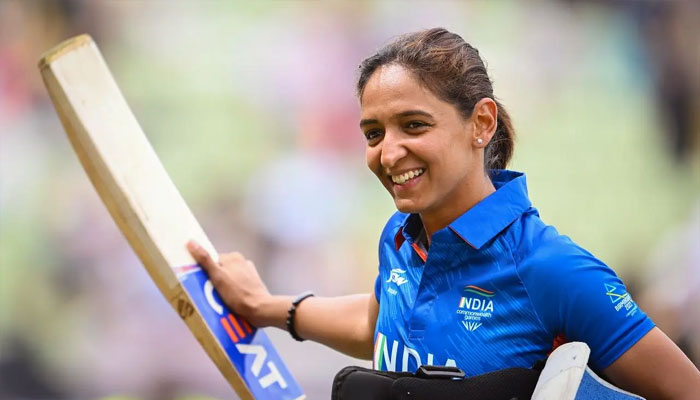
Harmanpreet Kaur has once again reached a moment that could mark the end of one chapter of her captaincy career.
India’s second successive women’s cricket gold medal at the Asian Games came with another emphatic victory, as the team defeated Sri Lanka by 147 runs in the final in Nagoya on Tuesday. Smriti Mandhana’s 79 provided the platform for a commanding win and another major medal for Harmanpreet’s India.
The triumph comes with a familiar question. Is this the moment for Harmanpreet to consider handing over the captaincy to Mandhana?
THE MOMENT HAS COME AGAIN
Harmanpreet had already encountered what appeared to be an ideal exit point last year. India won their maiden senior women’s ODI World Cup, bringing an end to years of near misses and giving their captain the biggest trophy of her career.
Yet she continued in the role.
India’s early departure from the Women’s T20 World Cup subsequently brought the captaincy debate back into focus. Now, another major title has arrived, giving Harmanpreet a fresh opportunity to decide whether she wants to continue leading or make way for the next phase.
The timing is significant. India have two years before the Los Angeles Olympics and the 2028 T20 World Cup, leaving considerable room for a new leadership group to establish itself.
HER CONTRIBUTION IS ALREADY SIGNIFICANT
Whatever Harmanpreet decides, her place in Indian women’s cricket is firmly established.
From the unforgettable 171 against Australia in the 2017 World Cup semi-final to leading India to their first senior ODI World Cup title, she has been central to some of the team’s most important moments.
The Asian Games gold now joins that list.
Former India captain Diana Edulji believes the transition should begin sooner rather than later.
“We are holding back Smriti Mandhana for a long time. By the time the next World Cup comes along, Harman will be nearing 40, so let’s give a good run to Smriti and look at two youngsters as vice-captains,” Edulji told Mid-Day.
Her argument is not limited to replacing one captain with another. It also underlines the need for India to build a wider leadership pipeline so that the next transition is not forced by circumstance.
MANDHANA ALREADY HAS LEADERSHIP EXPERIENCE
If Harmanpreet does step aside, Mandhana would enter the conversation with considerable experience behind her.
She has captained India in Harmanpreet’s absence and has been part of the national team’s leadership structure for years. Her stint as captain of Royal Challengers Bengaluru in the Women’s Premier League has also given her experience of leading a team at the highest domestic level.
Mandhana has already indicated that she is comfortable with the possibility of taking charge.
“Yes, of course. I am ready,” she said when asked whether she was prepared to captain India.
The transition, therefore, would not necessarily require India to start from scratch. Mandhana knows the senior group, has worked alongside Harmanpreet and has already experienced captaincy.
INDIA ALSO NEED TO LOOK BEYOND MANDHANA
A leadership change would not end with Mandhana. India’s selectors will also need to identify players who can eventually take over from the next captain.
Niki Prasad is among the emerging names to watch. She led India to the Women’s U19 T20 World Cup title and has since spent two seasons with Delhi Capitals in the Women’s Premier League.
Her recent India A performances have added to her credentials. Prasad scored 54 off 31 balls against Australia A in a T20 and followed it with an unbeaten 32 in the opening one-day match, helping India A secure a four-wicket victory.
Her ability to contribute with both bat and ball, combined with previous captaincy experience, makes her an interesting long-term option.
Vrinda Dinesh has also shown promise, hitting 69 from 41 balls against Australia A. All-rounder Anushka Sharma is another player India could assess as the squad evolves.
The next step for these players is greater exposure. Strong performances at domestic and India A level need to be followed by opportunities in the senior team if India are to develop a reliable leadership pipeline.
ZIMBABWE SERIES COULD BE A TESTING GROUND
The upcoming home series against Zimbabwe could provide selectors with an opportunity to experiment.
With squads yet to be announced, India can assess different combinations, introduce emerging players and test potential batting and bowling options. It could also provide valuable senior-team exposure to players who have impressed at the India A level.
The series arrives at a useful point in the calendar, with India beginning to build towards the next major cycle leading into the 2028 T20 World Cup.
For Harmanpreet, the Asian Games victory has once again created a natural pause point. She can continue pursuing more milestones, or eventually leave the captaincy after a tenure that includes an ODI World Cup and two Asian Games gold medals.
The decision will shape the next phase of India’s leadership. But regardless of when the baton changes hands, the transition will be smoother if the next generation gets enough time and opportunities to prepare for it.
Comments are closed.