

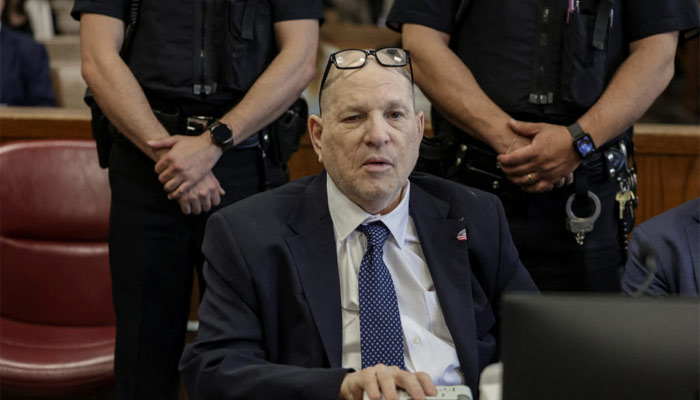
Prosecutors once again cast Harvey Weinstein as a once-dominant Hollywood figure.
Who allegedly used his power to commit sexual assault, presenting a familiar yet complex narrative on Tuesday as his rape retrial opened—nearly eight years after his arrest. “This case will come down to power, control and manipulation,” Manhattan Assistant District Attorney Candace White told jurors during opening statements. Manhattan District Attorney Alvin Bragg was present in the courtroom.
Weinstein’s lawyer, Jacob Kaplan, countered that the case is fundamentally “about consent, choice and regret,” maintaining the long-standing defense that the accuser has reframed a consensual encounter as a crime.
Since becoming a central figure in the #MeToo movement nearly a decade ago, Weinstein has faced multiple trials across the United States, resulting in a mix of convictions, acquittals and dismissed charges. However, a rape allegation tied to a 2013 encounter in a Manhattan hotel remains unresolved after a prior conviction was overturned and a subsequent jury failed to reach a verdict.
What’s different this time
While the core allegation remains unchanged, this retrial is narrower in scope. Unlike earlier proceedings that included multiple accusers and charges, this case focuses solely on what transpired between Weinstein and hairstylist-actor Jessica Mann in a hotel room. Jurors will, however, hear details about their broader relationship.
Weinstein has also assembled a new legal team, signaling potential shifts in defense strategy. His lawyers have indicated they may limit discussion around a compensation fund established for women who accused him of misconduct.
Prosecutors, meanwhile, are seeking to introduce new testimony, including from a close friend of Mann. They have also suggested calling a court officer who claims Weinstein made a remark in 2020—if Weinstein chooses to testify, which he has not done in previous trials. The defense opposes both moves.
Presiding Judge Curtis Farber is also revisiting aspects of the case. On Tuesday, he restricted questioning about a “friends of Harvey” list used by Weinstein’s team for event invitations. Jurors were told Mann and another expected witness were on the list, but unlike earlier trials, they were not informed that it included only women.
Weinstein, now 73 and incarcerated, has pleaded not guilty. Earlier this year, he acknowledged personal wrongdoing but denied any assault, stating he had been unfaithful but “never assaulted anyone.”
Once a towering figure in Hollywood, Weinstein produced acclaimed films such as Pulp Fiction, Shakespeare in Love, and Gangs of New York, and was also behind television projects like Project Runway. His career collapsed in 2017 amid a wave of public accusations that fueled the global #MeToo movement, leading to criminal cases in New York and Los Angeles.
The accuser and her account
Mann was 27 when she met Weinstein at a Los Angeles-area party in early 2013. Struggling financially and aspiring to build an acting career, she initially sought a professional connection. She later testified that their relationship became consensual but complicated.
According to her testimony, during a March 2013 trip to New York, Weinstein allegedly forced her into a hotel room encounter despite her protests. She said she complied out of fear, wanting only to leave the situation.
Prosecutor White argued that Weinstein’s influence allowed him to dominate both professionally and personally. “Behind closed doors, power meant him taking what he wanted,” she told jurors. Weinstein appeared to react in court as prosecutors claimed he intimidated Mann into silence. She has said she did not disclose the alleged assault for years.
Despite the alleged incident, Mann continued interacting with Weinstein—meeting him, seeking career support and sending friendly messages. She has explained this as an attempt to avoid angering him.
The defense, however, pointed to these interactions to challenge her claims. “This isn’t a ‘he said, she said’ case,” Kaplan argued. “It will be her word against her own word.” Mann has agreed to be publicly identified, which is why her name is used in reporting on the case.
Comments are closed.