

India has restructured its defence attache network abroad to boost military exports, prioritising countries likely to buy Indian weapons rather than those supplying arms to India, officials said on Monday.
The phased reshuffle aims to help India achieve its goal of doubling defence exports to ₹50,000 crore by 2029‑30, up from ₹23,682 crore in FY 2024‑25, a 12% rise over the previous year.
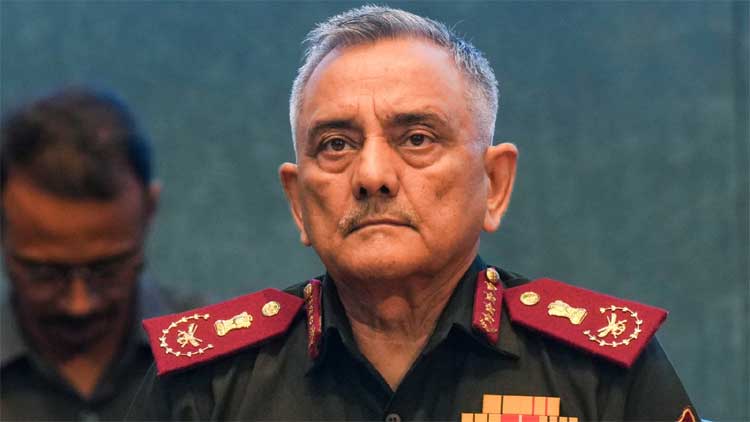
General Anil Chauhan discussed the attache realignment during a session with the Parliamentary Standing Committee on Defence, noting that many attaches previously posted in equipment-supplying countries have been redeployed to markets with export potential.
“This is part of our military diplomacy strategy as an exporter,” Chauhan told the committee. “We have withdrawn attaches from countries we import from and distributed them to nations where defence equipment is likely to be exported.”
As a result, India is reducing its defence diplomatic footprint in countries such as Russia, France, Israel, and the US, while increasing presence in Southeast Asia, Africa, and Latin America. Between 2021–2025, Russia supplied 40% of India’s arms imports, followed by France (29%) and Israel (15%).
India exported military hardware to around 100 countries in FY 2024‑25, with the private sector contributing ₹15,233 crore and defence public sector undertakings (DPSUs) ₹8,389 crore. Over 100 domestic firms and DPSUs export a range of systems, including missiles, artillery, rockets, armoured vehicles, offshore patrol vessels, protective gear, radars, surveillance systems, ammunition, and components.
High-potential export platforms include the Light Combat Aircraft (LCA Mk‑1A), Advanced Light Helicopter, and the BrahMos supersonic cruise missile. India and Indonesia are close to finalising a BrahMos deal, which would make Indonesia the second foreign customer after the Philippines, which received three missile batteries under a $375 million deal signed in 2022.
India is also positioning itself as a global shipbuilding hub, inviting international partners to co-develop next-generation maritime capabilities and resilient supply chains.
Policy reforms in recent years — such as easing industrial licensing, removing parts and components from the license regime, and simplifying export authorisation — have strengthened the defence industry. The government issued 1,762 export authorisations in FY 2024‑25, up 16.9% from the previous year, with the number of exporters rising 17.4%.
While India’s arms imports fell 4% between 2016–20 and 2021–25, it remains the world’s second-largest importer of military hardware, accounting for 8.2% of global weapon imports, according to the Stockholm International Peace Research Institute (SIPRI).
Comments are closed.