

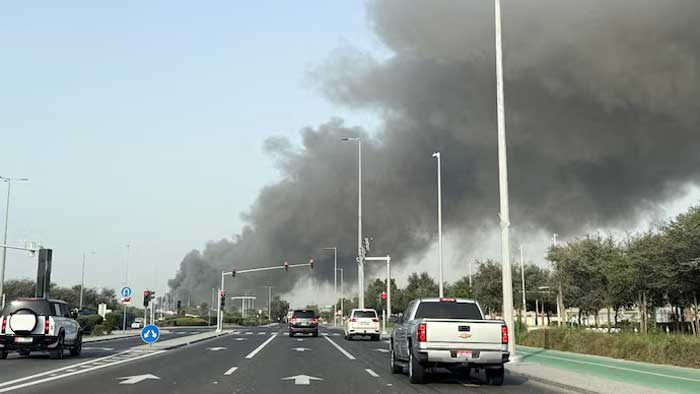
The Middle East plunged back into turmoil on Wednesday as fresh strikes hit Iran, the UAE, Kuwait, Bahrain and Lebanon, despite a recently announced two-week ceasefire between the US and Iran—raising serious questions over the truce’s durability.
The escalation was particularly severe in Lebanon, which is not covered by the ceasefire. At least 89 people were killed and around 700 injured in one of the deadliest waves of Israeli strikes on the country in recent weeks.
A new wave of attacks—ranging from strikes on Iran’s oil infrastructure to Iranian missile and drone fire targeting Gulf nations, alongside intensified Israeli operations in Lebanon—has cast immediate doubt on whether the ceasefire can hold.
Just hours after Washington and Tehran agreed to pause hostilities, the UAE, Bahrain and Kuwait activated air defence systems to intercept incoming threats. The truce, reportedly brokered with Pakistan’s involvement, was meant to halt a six-week conflict that has destabilised the region.
In the UAE, authorities said air defences were actively intercepting missiles and drones launched from Iran. The Defence Ministry confirmed that explosions heard across multiple locations were due to interception operations involving ballistic missiles, cruise missiles and UAVs. A gas processing facility in Abu Dhabi was also set ablaze, underscoring the vulnerability of key energy infrastructure.
Kuwait reported sustained drone attacks from early Wednesday, with its military intercepting 28 UAVs targeting critical sites, including oil facilities, power stations and desalination plants. Officials described the assault as intense and said it caused significant infrastructure damage.
In Bahrain, falling debris from intercepted drones injured two people and damaged several homes in the Sitra area. Explosions were heard in the capital, Manama, while emergency teams contained a fire at a targeted facility on Sitra Island, a major energy hub.
The conflict also disrupted regional energy supplies. Saudi Arabia’s East-West oil pipeline was reportedly struck, affecting a key route that carries crude to the Red Sea port of Yanbu, especially significant as the Strait of Hormuz faces ongoing disruption.
Iranian media said an oil refinery on Lavan Island was also hit, with firefighters working to contain the blaze.
Meanwhile, Israel intensified its parallel campaign in Lebanon against Hezbollah. A major wave of airstrikes targeted multiple areas in Beirut and beyond, with the Israeli military stating that 50 fighter jets hit around 100 targets in just 10 minutes under an operation codenamed “Eternal Darkness.”
Lebanese officials said they were not part of the ceasefire agreement and had received no assurances of protection under it. Reports also indicated continued shelling in southern Lebanon, including a strike near a hospital that killed four people.
Iran has warned it may withdraw from the ceasefire if Israeli attacks on Lebanon continue.
The ceasefire itself came together shortly before a deadline set by US President Donald Trump, which included demands such as reopening the Strait of Hormuz—a vital global oil transit route—or facing potential US strikes.
With roughly one-fifth of the world’s oil passing through the strait, continued disruptions have rattled global energy markets.
Wednesday’s developments underscore the fragility of the ceasefire, with violence persisting across multiple fronts. Despite diplomatic efforts, including backchannel talks involving Pakistan, the conflict appears far from contained, leaving the region on edge and raising fears of a broader war.
Comments are closed.